
Article: Are Chinos Formal? A Guide to Dressing Them Up
Are Chinos Formal? A Guide to Dressing Them Up
A client lunch at noon, an office presentation at three, dinner reservations at seven - this is where a versatile pair of pants earns its place. So, are chinos formal? Not in the strictest sense. Chinos are not a substitute for a tuxedo, suit trousers, or traditional wool dress pants at a black-tie event. But with the right fit, fabric, color, shirt, and shoes, they can look distinctly polished in many settings that call for more than casual clothing.
For the modern professional, that range is exactly what makes chinos a wardrobe foundation. They offer a clean, tailored appearance with the comfort and mobility needed for a full day of work, travel, or social plans.
Are Chinos Formal Enough for Work?
Chinos are a strong choice for business-casual offices, smart-casual meetings, networking events, dinners, and daytime celebrations. They sit between jeans and dress trousers: sharper than denim, more relaxed than tailored wool pants. That makes them ideal when the dress code is polished but not suit-required.
The key is to judge the setting, not just the garment. A navy or charcoal chino worn with a crisp button-up shirt, leather belt, and polished loafers can look appropriate in an executive office. The same pants paired with a graphic tee and sneakers are clearly casual. Chinos adapt to the rest of the outfit.
They are usually not formal enough for black tie, white tie, highly traditional weddings, court appearances, or conservative business events where a dark suit is the stated expectation. When an invitation says "formal" without further direction, a suit remains the safer and more respectful choice. If it says business casual, smart casual, cocktail casual, or dressy casual, chinos are often exactly right.
The Difference Between Formal and Polished
Formalwear follows established rules. Think tuxedos, dinner jackets, tailored suits, pressed dress trousers, and dress shoes. Fabric, construction, and presentation all signal occasion.
Polished dressing is more flexible. It is about looking intentional, well-fitted, and appropriate for the environment. Chinos excel here. A refined pair gives you the clean line of tailored pants while keeping the outfit comfortable enough to wear beyond the event itself.
That distinction matters because many men overcorrect. They either wear jeans to every relaxed office or reach for a suit when the situation calls for approachable confidence. Chinos occupy the practical middle ground.
What Makes Chinos Look More Formal?
Not all chinos carry the same level of polish. Details such as color, fit, fabric weight, pocket style, and finishing can shift a pair from weekend-ready to office-ready.
Choose a Clean, Tailored Fit
Fit is the first signal people notice. Formal-looking chinos should sit cleanly at the waist, follow the leg without pulling, and break lightly at the shoe. Excess fabric around the thigh or a stack of material at the ankle makes even a premium shirt and leather shoes look less considered.
A contemporary tailored fit is often the most versatile option. It gives definition through the leg while allowing room to move, sit, and travel comfortably. Stretch construction is especially valuable here. It helps chinos maintain a sharp silhouette without the stiffness that can make traditional pants feel restrictive after a long workday.
Avoid overly skinny fits for professional settings. They can look trend-driven rather than refined, particularly with a tucked-in dress shirt. On the other hand, overly loose chinos can read as casual and unstructured. The goal is clean, balanced proportion.
Start With Elevated Colors
Navy, black, charcoal, stone, and deep olive are the most adaptable chino colors for dressier outfits. Darker shades generally appear more formal because they create a smoother visual line and pair easily with dress shirts, blazers, and leather footwear.
Khaki is a classic choice, but its formality depends on styling. A light khaki chino can look refined with a navy blazer and white shirt, especially for spring or summer business-casual events. It becomes more casual when paired with rugged boots, a polo, or relaxed layers.
Bright colors, prominent prints, heavy fading, and contrast stitching have their place, but they are not the first choice when you need a chino to pass for dressier attire. A solid, saturated color offers more mileage and makes the rest of the outfit easier to build.
Pay Attention to Fabric and Finish
A smooth cotton twill with a subtle stretch feels more elevated than a heavily washed, visibly worn fabric. Look for chinos with a clean surface, consistent color, and enough structure to hold their shape through the day.
Stretch does not make pants casual. Poor fit and sloppy styling do. Well-designed stretch chinos offer a useful advantage: they move with you during a commute, presentation, dinner, or flight while retaining a tailored appearance. That combination of comfort and polish is what makes performance-driven chinos a smart alternative to rigid cotton pants.
Wrinkles can also affect how formal chinos look. They do not need the sharp crease of dress trousers, but they should be clean and pressed. A quick steam before a meeting or event is a small step that changes the entire impression.
How to Dress Up Chinos
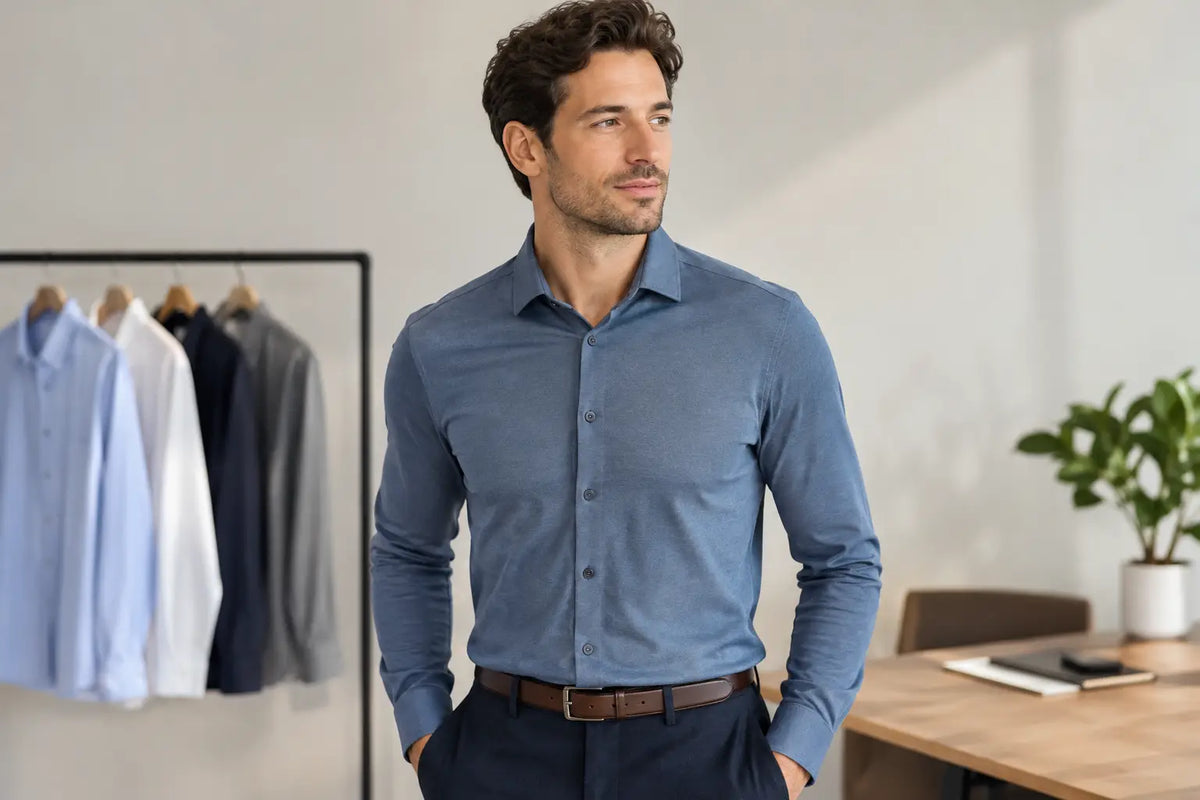
A chino becomes dressier through the pieces around it. Start with a button-up shirt that has a structured collar and a close, comfortable fit. A white, light blue, navy, or subtle patterned shirt creates an immediate business-ready foundation. Tuck it in for meetings, dinners, and occasions where the goal is polished rather than relaxed.
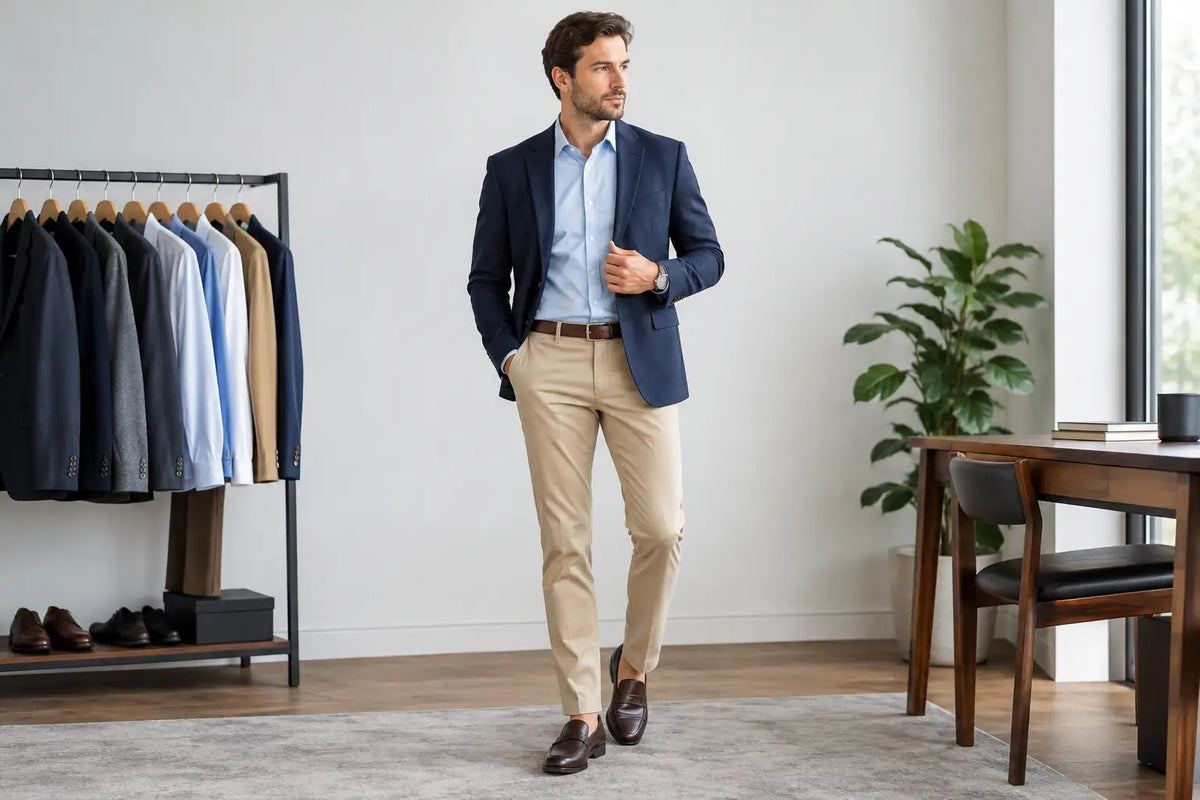
A blazer is the fastest way to elevate chinos. Navy chinos with a light blue shirt and gray blazer create a dependable office look. Stone chinos with a white shirt and navy blazer work well for warm-weather events. Keep the blazer tailored and the shirt crisp so the outfit looks intentional rather than pieced together.
Footwear completes the transition. Leather loafers, derbies, brogues, and sleek Chelsea boots make chinos look more formal. Clean, minimal leather sneakers can work in creative offices or smart-casual settings, but they lower the formality level. Athletic sneakers, flip-flops, and heavily distressed boots do not belong in a dressier chino outfit.
Your belt should support the shoes, not compete with them. Brown leather works naturally with navy, olive, and khaki chinos. Black leather is the strongest match for black or charcoal chinos. Finish with a simple watch and restrained accessories. The best business-casual outfits feel considered without looking overworked.
When Chinos Are the Better Choice Than Dress Pants
Dress pants are the right call when tradition, ceremony, or a clearly formal dress code leads the way. Yet chinos are often better for the way men actually dress now. They make sense when you need one outfit to move from office hours to dinner, when travel is involved, or when a blazer is appropriate but a matching suit would feel excessive.
They are also a better fit for workplaces where comfort and performance matter. An entrepreneur meeting investors, a sales professional on the road, or an office worker managing a packed calendar needs pants that look sharp after hours of movement. In those situations, a refined stretch chino offers more utility than delicate dress trousers that are reserved for the boardroom.
LEVINAS super-stretch chinos are designed around that kind of versatility, pairing a contemporary fit with the comfort needed for long days and the clean finish required for polished dressing.
When You Should Skip Chinos
There are moments when chinos ask too much of the outfit. If the invitation specifically calls for black tie, formal attire, or a dark suit, wear the suit. If you are attending an evening wedding at an upscale venue and are unsure of the expectation, tailored trousers with a blazer are the more reliable choice.
Likewise, chinos may not be appropriate for highly conservative interviews, legal proceedings, or formal ceremonies. A good rule is to consider the host, venue, time of day, and industry. A tech office may view chinos as standard professional attire, while a traditional finance firm may expect wool trousers and a jacket.
When in doubt, it is better to be slightly overdressed than noticeably underdressed. You can always remove a blazer. You cannot make an overly casual outfit more formal once you arrive.
Build a Chino Outfit That Works Harder
The strongest chino outfits begin with the right pants, then rely on disciplined styling. Choose a tailored fit, a versatile dark or neutral color, and a smooth fabric with enough stretch to keep its shape. Add a well-fitted button-up, polished shoes, and a blazer when the setting calls for it.
That approach gives you more than an answer to whether chinos are formal. It gives you an easy, reliable way to look prepared for the moments where confidence matters most.

Leave a comment
This site is protected by hCaptcha and the hCaptcha Privacy Policy and Terms of Service apply.