
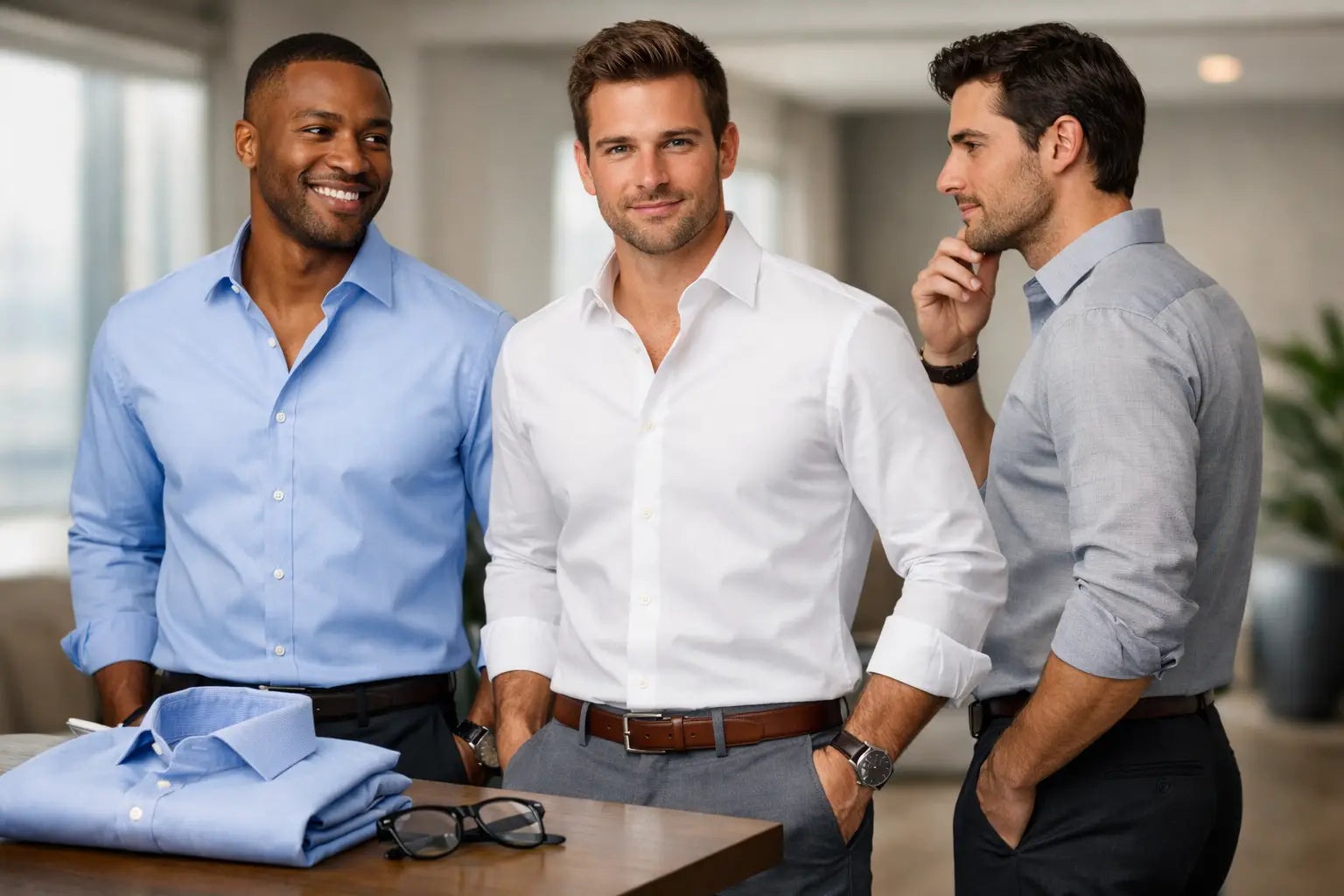
Business Casual Shirt Fit Guide for Modern Men
A shirt can be made from premium cotton, finished with sharp contrast details, and styled in the right color, yet still look wrong if the fit is off. This business casual shirt fit guide is built around the details that decide whether a shirt looks polished at your desk, comfortable through a dinner reservation, and refined after a full day of movement.
Business casual has more flexibility than formal tailoring, but that does not mean anything goes. The right shirt should follow the shape of your body without restricting it. It should look intentional tucked into chinos, clean when worn untucked where appropriate, and comfortable enough that you do not spend the day pulling at the sleeves or adjusting the collar.
Business Casual Shirt Fit Guide: Start With the Shoulders
Shoulders are the first fit point to assess because they are the hardest to alter and the most noticeable when wrong. The shoulder seam should end at the edge of your natural shoulder, where the shoulder begins to slope toward the arm. A seam that falls too far down the upper arm makes the shirt look oversized. One that sits too high can create pulling across the chest and upper back.
Raise your arms, reach forward, and sit down while trying on a shirt. A well-fitting business casual shirt should move with you without lifting dramatically at the waist or tightening across the back. Stretch fabric adds welcome ease, particularly during long workdays, but stretch should support a clean fit rather than compensate for a shirt that is too small.
If your shoulders are broad relative to your waist, prioritize a shirt that fits the shoulder line first. You can choose a more tapered silhouette through the torso, but a narrow shoulder measurement rarely becomes comfortable with wear.
Choose the Right Fit Profile
The best business casual shirt fit depends on your build, how you wear your shirts, and the level of formality your workplace expects. Contemporary fit and tailored fit are not interchangeable, even when both are designed to look refined.
Contemporary fit: polished with room to move
A contemporary-fit shirt offers a clean outline with additional comfort through the chest, midsection, and back. It is a strong choice for men with an athletic build, a broader chest, or a preference for less restriction. It also works well for commuting, travel, and office days that run from meetings into evening plans.
The goal is controlled ease, not excess fabric. You should be able to pinch a small amount of fabric at either side of the torso, but the shirt should not billow when tucked in. If you see large folds at the waist or a loose balloon effect at the lower back, size down or consider a more shaped fit.
Tailored fit: a sharper, closer silhouette
A tailored-fit shirt is shaped closer to the body through the chest and waist. It creates a more defined appearance under a blazer and delivers a crisp, elevated look with chinos or performance pants. This fit is ideal for men who prefer a trimmer profile or whose office leans more polished than casual.
A tailored shirt should contour the body without pulling. Watch the buttons across the chest and stomach. If they strain, gap, or form horizontal lines, the shirt is too tight. Moving up a size may solve the issue, though men with a significant chest-to-waist difference may be better served by a stretch shirt with a tailored cut.
Check the Collar Before Anything Else
The collar frames your face and determines how finished the shirt looks, whether you wear it open or with a tie for an occasional formal meeting. With the top button fastened, you should fit one to two fingers comfortably between your neck and the collar. Less room feels restrictive. More room can make the collar collapse or look loose.
For most business-casual settings, an open collar is the natural choice. It should sit cleanly against the neck with the points lying flat, not spreading outward or curling upward. A structured collar brings definition to a soft stretch fabric, while contrast inner-collar detailing adds a deliberate touch when the top button is left open.
If you regularly wear a tie, select a collar with enough structure to hold its shape. If ties are rare, focus on how the collar performs unbuttoned. That is how the shirt will be seen most often.
Get the Chest and Waist Balance Right
A business casual shirt should not fit like a formal compression layer, nor should it hang like a weekend overshirt. Stand naturally with your arms relaxed. The button placket should lie flat from collar to hem. There should be no pulling at the chest, no opening between buttons, and no excess fabric bunching at the waist.
The back matters just as much. Look for vertical drag lines that run from the shoulder blades toward the sides, which often signal a shirt that is too tight across the upper back. Too much loose fabric below the shoulder blades, on the other hand, can make an otherwise premium outfit look unfinished.
Men who carry more weight through the midsection generally get a better result from contemporary fit than from forcing a slim shirt to work. A shirt that skims the body and drapes cleanly will look more refined than a smaller size that pulls at every button. The most flattering fit is the one that preserves a sharp line while allowing you to move confidently.
Sleeve Length Should Look Intentional
Your shirt sleeves should end at the wrist bone when your arms are at your sides. When wearing a jacket, about a quarter to half inch of cuff should show beyond the jacket sleeve. This small detail keeps the outfit balanced and prevents the shirt from looking either borrowed or undersized.
A cuff that reaches into the palm is too long. One that sits well above the wrist will ride up whenever you type, drive, or reach for a coffee. Dual-cuff details can add versatility, but the underlying length still needs to be correct.
Pay attention to the upper arm as well. The sleeve should sit close enough to look tailored but allow natural movement. If the bicep area feels tight when you bend your arm, the shirt may be too small or cut too narrowly for your build. Knit-stretch constructions are especially effective here because they maintain a polished appearance while offering added flexibility.
Decide Whether You Will Tuck It In
How you plan to wear a shirt changes the ideal length. For a tucked-in look, the hem should be long enough to stay in place when you sit, stand, and move around. A shirt that repeatedly comes untucked creates bulk at the waistband and undermines an otherwise sharp outfit.
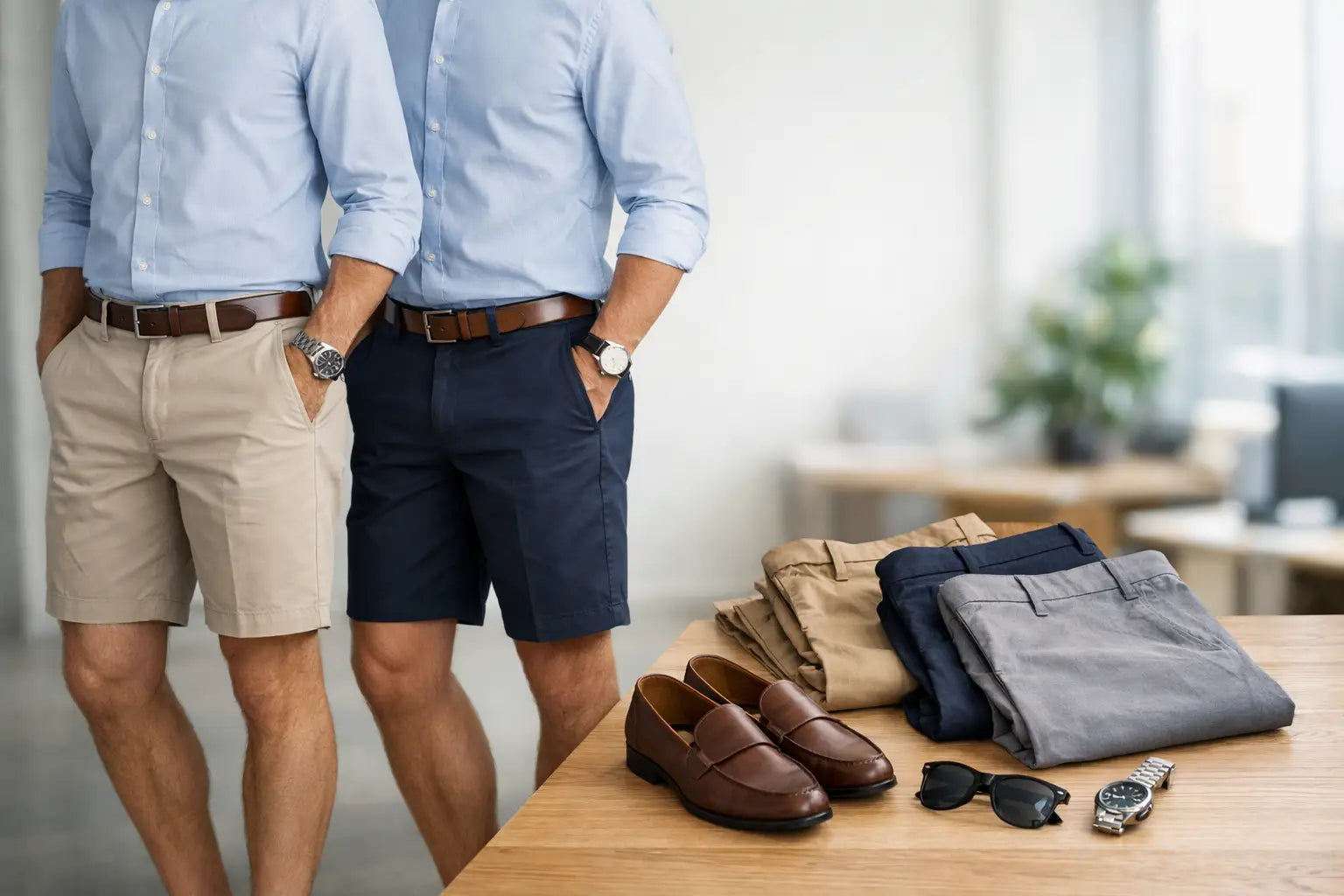
For an untucked business-casual look, the hem should generally fall around the middle of the fly, never extending far below it. A shirt that is too long can make the legs appear shorter and read more like a dress shirt that was simply left untucked. A shorter, cleanly proportioned hem pairs naturally with chinos, tailored shorts, and casual trousers.
This is one area where workplace culture matters. A tucked-in shirt with a belt is the safer choice for client meetings, presentations, and traditional offices. An untucked button-up can look equally polished in a creative office, at a casual business lunch, or during travel, provided the shirt is designed and proportioned for it.
Fabric Changes How a Shirt Fits Through the Day
Fit is not only about measurements. Fabric weight, weave, and stretch determine how a shirt feels after eight hours of sitting, walking, and moving between settings. Crisp woven cotton delivers classic structure, while cotton knit-stretch fabrics offer a softer hand and greater flexibility. Neither is automatically better. The right choice depends on the occasion and the level of structure you want.
A woven shirt often holds a sharper line for presentations, dinners, and more formal business-casual environments. A stretch shirt can be the stronger daily option for commuting, travel, or active office days. Look for fabric that recovers after movement. If the elbows, chest, or waist look stretched out by the end of the day, the shirt will lose the clean shape that made it appealing in the first place.
At LEVINAS, fit-driven shirt options are designed around this balance: elevated structure where it matters, with stretch and comfort that make the shirt practical beyond the first hour of wear.
A Fast Try-On Test Before You Commit
Before removing the tags, button the shirt fully, then sit, reach forward, and raise both arms. Check that the collar stays comfortable, the shoulder seams remain in place, the buttons lie flat, and the cuffs land at the wrist. Then view the shirt untucked and tucked in. A versatile business-casual shirt should look composed both ways when its hem length supports the styling choice.
Do not judge fit only from the front. Turn sideways and check the back in a mirror. A clean side profile, a smooth upper back, and a controlled waistline are what make a shirt look considered from every angle.
The right shirt fit gives you one less decision to make before a demanding day. Choose a silhouette that suits your body, fabric that matches your schedule, and proportions that work with the way you actually dress. When those details are right, the shirt becomes the dependable foundation of a stronger business-casual wardrobe.


Leave a comment
This site is protected by hCaptcha and the hCaptcha Privacy Policy and Terms of Service apply.