
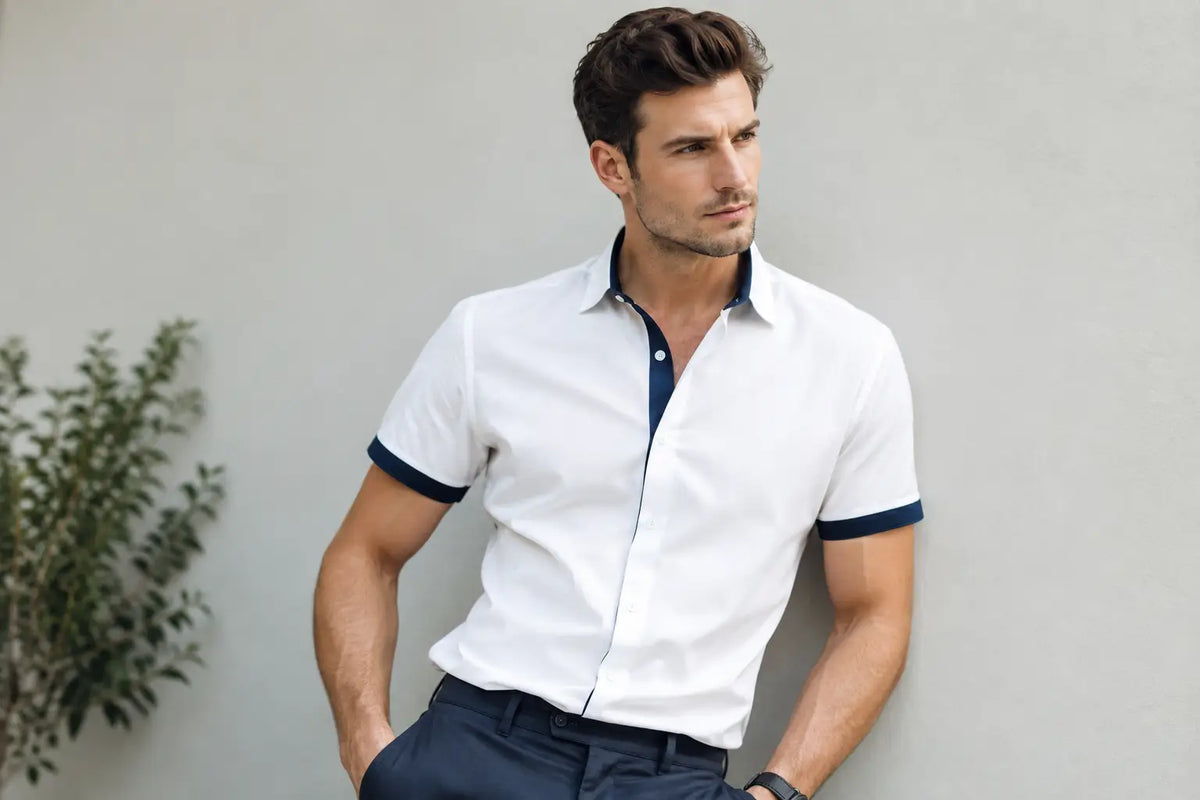
Contrast Trim Shirts for Sharper Daily Style
A shirt can fit well, feel comfortable, and still disappear into the rest of the outfit. Contrast trim shirts solve that problem with a detail that is noticeable up close but controlled from a distance. A contrasting fabric at the inner collar, placket, cuffs, or sleeve adds definition without turning a business-casual staple into a statement piece.
For men who move between meetings, commutes, dinners, and weekend plans, that balance matters. The right contrast detail makes a button-up look more intentional, while stretch fabric and a contemporary fit keep it practical through a long day.
What Makes Contrast Trim Shirts Different?
Contrast trim is a secondary fabric, color, or pattern placed in selected areas of a shirt. It may appear beneath the collar, inside the cuffs, along the button placket, or under the sleeve tab. Most of the shirt remains classic. The contrast is there to create depth and a more finished impression when the collar is open or the sleeves are rolled.
This is not the same as wearing a heavily patterned shirt. A bold all-over print can dominate an outfit. Contrast detailing works in smaller doses, which makes it easier to wear at the office and easier to pair with the pants already in your closet.
The strongest designs use contrast with discipline. A navy shirt with a subtle light-blue inner collar, for example, has more character than a plain navy shirt while remaining appropriate for client-facing work. A white shirt with a dark geometric cuff lining can look sharp after hours, especially when the sleeves are rolled once or twice.
Why the Detail Works in a Business-Casual Wardrobe
Business-casual dressing often depends on small choices. You may be wearing chinos, a button-up, and leather shoes, the same formula worn by most men in the room. Fit, fabric, and finishing details are what separate a polished look from an ordinary one.
Contrast trim gives a shirt a built-in point of distinction. It frames the areas people notice first: the collar near your face, the placket at the center of the shirt, and the cuffs when you reach for a handshake, coffee, or presentation remote. It adds personality without requiring a louder tie, pocket square, or jacket.
There is also a practical advantage. A thoughtfully detailed shirt can do more work in your rotation. Worn buttoned up with tailored performance pants, it reads professional. Open the top button and pair it with stretch chinos for a more relaxed setting. Roll the cuffs, and the contrast becomes more visible for dinner or a casual event.
That versatility is especially useful for professionals whose dress code changes throughout the week. The key is choosing details that complement the shirt rather than compete with the rest of your look.
How to Choose Contrast Trim Shirts That Stay Versatile
Start With a Reliable Base Color
The base color determines how often you will wear the shirt. White, light blue, navy, charcoal, black, and soft gray are strong starting points because they pair easily with navy, khaki, gray, olive, and black pants.
For maximum versatility, select a trim that is one or two steps away from the main fabric rather than dramatically different. A blue shirt with a navy trim, a white shirt with a gray or blue detail, or a black shirt with a subtle tonal pattern offers contrast without feeling overly styled.
Brighter trims have their place, but they require more care. Red, yellow, or highly graphic interior details can work for a social setting, yet may feel too casual in conservative offices. If your shirt needs to perform across both environments, restrained contrast is usually the smarter investment.
Match the Pattern Scale to Your Routine
Solid shirts with patterned trim are the easiest entry point. The body of the shirt stays clean, while a small check, print, or textured fabric adds interest at the collar and cuff. This combination works particularly well with solid chinos and performance pants.
If the shirt itself has a pattern, keep the trim quieter. A fine check shirt can handle a solid contrast lining. A narrow stripe can pair with a tonal trim. Combining a bold shirt pattern with an equally bold cuff or collar lining can make the outfit look busy, particularly without a jacket to bring it together.
Think about viewing distance. At a desk or across a conference room, the shirt should still read as refined. The best details reward a closer look rather than demanding attention from across the room.
Prioritize Fit Before Detail
Contrast trim draws attention upward and toward the center of the shirt. That makes fit nonnegotiable. A collar that gaps, shoulders that pull, or excess fabric at the waist can undermine even the most elevated finishing details.
A contemporary fit gives many men the right middle ground: clean through the chest and torso without the restrictive feel of a traditional slim shirt. Tailored-fit knit-stretch shirts offer a closer, more athletic profile while allowing movement through the shoulders and body. The right choice depends on your build and how you prefer a shirt to sit under a blazer or untucked over chinos.
Check sleeve length as carefully as chest and waist fit. If you plan to wear the cuffs down for work and rolled for casual occasions, the cuff should land cleanly at the wrist and the sleeve should have enough room to roll without bunching.
Fabric Matters as Much as the Finish
A contrast detail may catch the eye, but fabric determines whether you will reach for the shirt again next week. Cotton remains a strong choice for its familiar, breathable feel and crisp appearance. Add stretch, and the shirt becomes more comfortable for commuting, driving, reaching, and sitting through a full workday.
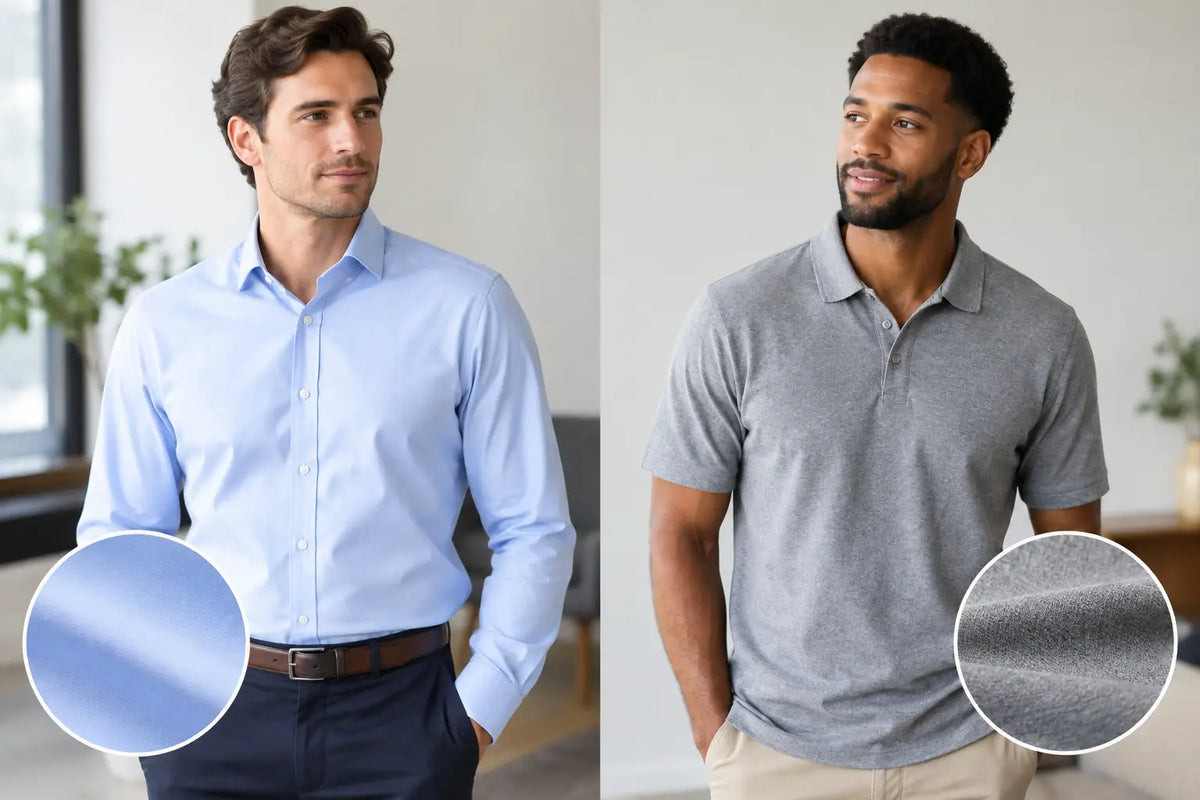
Knit-stretch constructions can offer a softer hand and greater mobility, making them particularly useful for men who want the polished look of a button-up without the stiffness associated with traditional dress shirts. Woven stretch shirts often provide a more structured appearance, which can be the better option for offices, events, or occasions when you want a sharper collar and cleaner drape.
Neither option is automatically better. It depends on where you wear it. A structured woven shirt may be your first pick for a presentation or dinner reservation. A knit-stretch shirt may become the one you rely on for travel, active workdays, and weekends. In both cases, quality construction helps the collar hold its shape and keeps contrast elements looking intentional after repeated wear.
Styling Contrast Trim Shirts Without Overdoing It
The shirt already provides a point of interest, so the rest of the outfit should stay focused. Pair a light-blue contrast trim shirt with navy chinos and brown leather shoes for a dependable office combination. A white shirt with dark cuff detail works well with charcoal performance pants and a clean belt. A navy shirt can anchor tan chinos, dark denim, or gray trousers depending on the setting.
When wearing a blazer, choose a solid jacket whenever possible. Navy, charcoal, medium gray, and soft olive layers allow the collar and cuffs to show without clashing. Keep the tie simple if the shirt has visible patterned trim. A solid knit tie or a subtle textured tie is usually enough.
For a more relaxed look, leave the top button open and wear the shirt with fitted chinos or clean dark jeans. Rolling the cuffs once reveals the contrast in a deliberate way. Avoid rolling them too high in professional settings, where the effect can shift from polished to overly casual.
Accessories should support the shirt, not compete with it. A classic watch, leather belt, and coordinated shoes create a stronger result than adding several attention-grabbing pieces. Contrast trim is most effective when it looks like part of a considered wardrobe, not the entire outfit's reason for being.
Care That Preserves the Contrast
Because contrast details often sit on the inside of cuffs and collars, they can be exposed to skin oils, cologne, and regular friction. Wash shirts according to the care label, fasten buttons before laundering, and turn them inside out when appropriate to reduce wear on visible finishes.
Avoid excessive heat, which can affect stretch fibers and shorten the life of the shirt's shape retention. Removing the shirt promptly from the dryer or hang-drying it can reduce wrinkles and preserve the clean structure that makes contrast details look sharp. A quick press around the collar, placket, and cuffs has a bigger visual impact than ironing every inch of fabric.
A well-chosen contrast trim shirt should make getting dressed easier, not more complicated. Keep the foundation classic, demand comfort from the fabric, and let the detail do its job: giving everyday business-casual style a more confident finish.


Leave a comment
This site is protected by hCaptcha and the hCaptcha Privacy Policy and Terms of Service apply.