
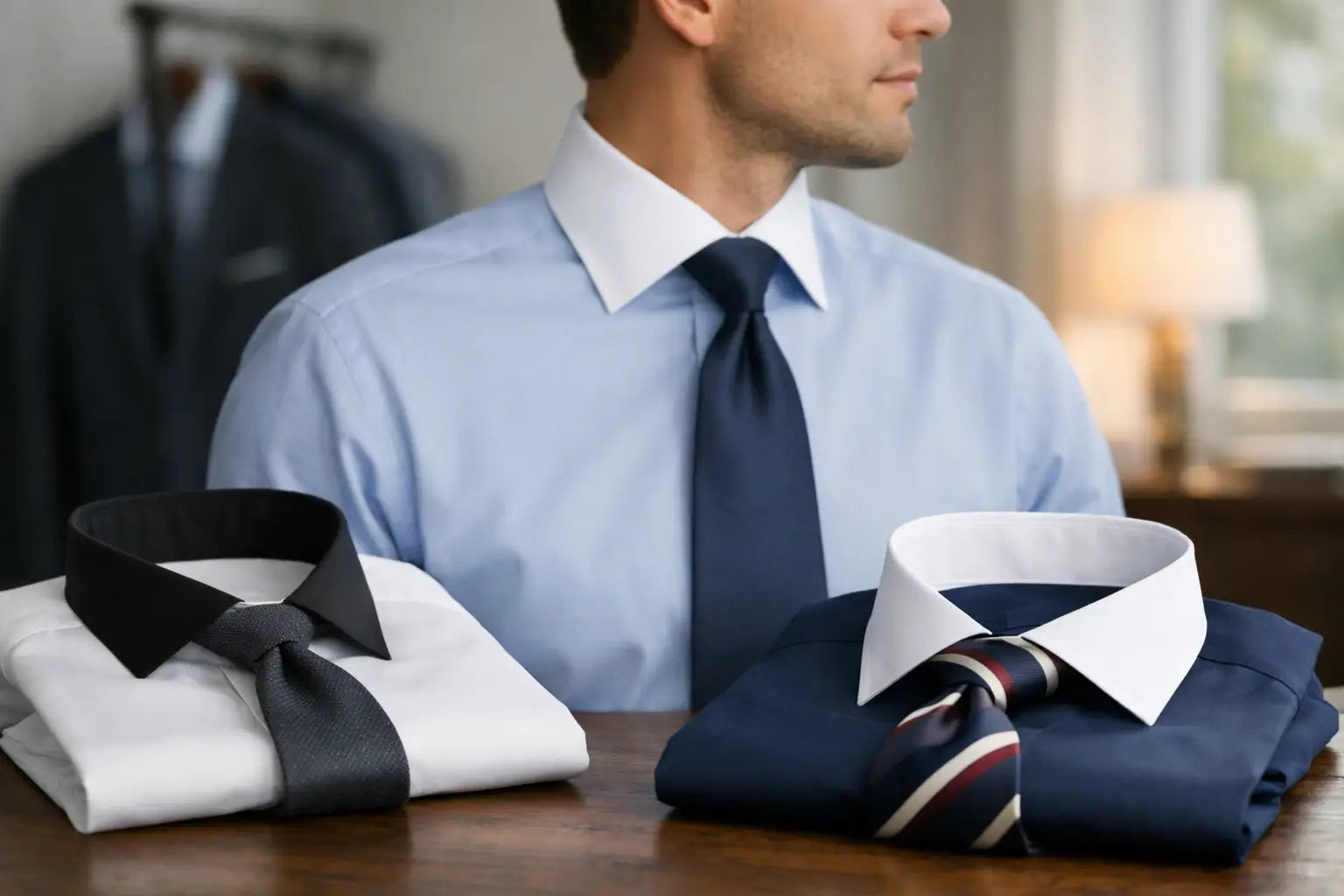
A Guide to Contrast Collar Shirts for Men
A contrast collar shirt does more than add color to a button-up. It frames the face, sharpens a familiar silhouette, and gives a business-casual outfit a more intentional finish. This guide to contrast collar shirts covers how to choose one that looks refined rather than overdesigned, then wear it with the pieces already working in your wardrobe.
The detail is simple: the collar is made in a fabric or color that differs from the shirt body. That contrast may also appear inside the cuffs, along the placket, or at the sleeve tabs. Done well, it creates dimension without asking you to wear a loud print or a trend-driven shirt. For men who move from meetings to dinner, it is a practical way to look more put together with minimal effort.
What Makes a Contrast Collar Shirt Work
The best contrast collar shirts are controlled. The shirt body should remain the main event, while the collar provides a clean point of distinction. A white collar on a pale blue shirt is the classic example because it offers visible contrast with a professional appearance. Navy trim inside a white collar, a patterned inner cuff, or a subtle tonal collar can feel equally polished when the colors are balanced.
The difference between elevated and excessive usually comes down to scale. A crisp white collar paired with a solid blue, black, or gray shirt has staying power. A collar that introduces several competing colors, oversized patterns, or too much shine can limit where the shirt works. If you want a shirt that earns regular rotation, choose contrast details that read clearly up close but do not dominate from across the room.
Fit matters just as much as color. A collar sits close to the face, so a loose neckline or collapsing collar is immediately noticeable. Look for a contemporary fit that follows the body without pulling through the chest or waist. The shoulder seam should sit at the edge of the shoulder, and the collar should close comfortably with one finger of room at the neck.
Fabric determines whether that sharp appearance lasts beyond the first hour. Cotton-rich shirting offers a traditional polished hand, while stretch construction gives the shirt the mobility needed for long days, commuting, and social plans after work. A shirt can look tailored without feeling restrictive when the fabric has recovery and the cut allows natural movement.
Choosing the Right Contrast Collar Shirt
Start with where you plan to wear it. For office settings, client meetings, and dressier dinners, a solid shirt with a white or tonal contrast collar is the most versatile choice. Light blue, soft gray, and navy work especially well because they pair easily with tailored trousers, chinos, and blazers.
For a more relaxed business-casual setting, you can introduce small-scale checks, textured fabrics, or a contrast lining at the cuff. These details add personality when the sleeves are rolled or when you remove your jacket, but they do not overpower the outfit. Think of the inside cuff as a finishing touch, not the starting point.
Color pairing should feel deliberate. White collars work naturally with blue, lavender, charcoal, and black shirt bodies. A navy collar can ground a lighter shirt, while a tonal collar in a slightly darker shade adds depth with a quieter effect. When in doubt, keep one element neutral. If the collar is bright white, choose understated pants and shoes so the look stays clean.
Pattern calls for more restraint. A striped or checked shirt already creates visual movement, so the collar should usually be solid and pulled from a color within the pattern. This gives the shirt structure. Adding another unrelated pattern at the collar can make the outfit feel busy, particularly under a blazer.
Collar Shape and Tie Compatibility
Most contrast collar shirts are designed to stand on their own, but collar shape affects how formal they feel. A spread collar has enough room for a medium or wider tie knot and looks balanced beneath a jacket. It is a strong option for presentations, events, and offices where a tie appears occasionally.
A button-down collar leans more relaxed and is best worn open at the neck. It works well with chinos, knitwear, and clean sneakers or loafers, but it is less formal with a tie. If your week includes several dress codes, a structured spread collar offers the broadest range.
When wearing a tie, keep the tie solid or subtly textured. The collar is already the shirt's visual detail. A navy silk tie, a dark grenadine texture, or a restrained micro-pattern creates a composed result. Avoid matching the tie exactly to the contrast trim, which can look overly coordinated.
How to Style Contrast Collar Shirts for Work and Beyond
For a reliable office uniform, wear a light blue shirt with a white contrast collar, navy stretch chinos, and brown leather shoes. The combination is traditional enough for professional settings but has more character than a standard blue dress shirt. Add a navy blazer when the occasion calls for more structure.
A white shirt with a navy inner collar or cuff detail offers a cleaner alternative for days when you want a lighter look. Pair it with charcoal performance pants and black leather shoes for a modern, understated outfit. The contrast becomes visible in motion rather than demanding attention at first glance.
For a smart-casual evening, choose a darker shirt body, such as navy or black, with refined tonal contrast. Wear it untucked only if the shirt length and cut are designed for that purpose. Otherwise, a clean tuck with fitted chinos creates a sharper line. Finish with loafers, Chelsea boots, or minimal leather sneakers depending on the venue.
The jacket question depends on the contrast level. A subtle collar works easily under a solid navy, gray, or textured sport coat. Keep the jacket free of bold checks if the shirt has visible contrast trim. With a more expressive collar or patterned inner cuff, skip the jacket and let the shirt provide the finishing detail.
Keep the Rest of the Outfit Focused
Contrast collar shirts perform best when the supporting pieces are clean and well fitted. Pants should sit properly at the waist and taper naturally through the leg. Belts, watches, and shoes should complement the formality of the shirt rather than introduce another competing statement.
This does not mean every outfit needs to be conservative. It means the shirt should have room to do its job. A polished button-up with contrast details, stretch chinos, and a confident pair of shoes is enough for most business-casual environments. Add layers only when they improve the balance or meet the occasion.
Common Contrast Collar Shirt Mistakes
The most common mistake is choosing contrast for its own sake. A high-contrast collar can be effective, but it should align with the shirt's fabric, fit, and purpose. A bright collar on a thin, poorly fitting shirt will not look premium. Start with construction and proportion, then use contrast as the enhancement.
Another mistake is treating the shirt as formalwear when its details clearly read casual. A contrast-lined cuff and soft stretch fabric may be ideal for a business-casual office, but a traditional formal event may call for a simpler white or light blue dress shirt. Context matters more than any single style rule.
Finally, do not overlook care. Follow the garment instructions, remove the shirt promptly after drying, and press the collar carefully so its shape stays crisp. Contrast fabrics make collar edges more noticeable, which means clean maintenance has a direct impact on how polished the shirt looks.
A well-chosen contrast collar shirt gives everyday dressing a stronger point of view. Build around one that fits cleanly, moves comfortably, and works with the pants, layers, and shoes you already rely on. That is how a small detail becomes a dependable part of a sharper wardrobe.


Leave a comment
This site is protected by hCaptcha and the hCaptcha Privacy Policy and Terms of Service apply.