

How to Build Work Wardrobe That Lasts
A crowded closet is not the same thing as a reliable work wardrobe. Most men do not need more clothes. They need the right clothes - pieces that fit well, wear comfortably for long days, and work across office hours, client meetings, dinners, and everything in between. If you are figuring out how to build work wardrobe that actually earns its place, start with versatility, not volume.
The strongest work wardrobe is built around a few categories that carry most of the load: shirts, pants, lightweight layers, and shoes that hold a clean line. From there, fit and fabric do the heavy lifting. A shirt that looks crisp but stretches through the shoulders and sleeves will outwork a stiff option every time. Pants that keep their shape and move with you will get more wear than anything that looks good only when you are standing still.
How to Build Work Wardrobe From the Ground Up
The first move is defining the dress code you actually live in. For most men today, that means business casual with some range. Maybe your office leans polished Monday through Thursday, then relaxes on Friday. Maybe your week includes presentations, travel, or client lunches where a blazer helps. Your wardrobe should reflect your real calendar, not an idealized one.
That is why a work wardrobe should be built in layers of formality. At the core are elevated essentials you can wear multiple ways. Then come a few sharper pieces for higher-stakes settings. If every item only works in one scenario, getting dressed becomes harder than it needs to be.
Start With Shirts
For most men, shirts are the foundation of every work wardrobe. They frame the face, set the tone, and often determine whether your outfit reads polished or forgettable. If you get this category right, the rest becomes much easier.
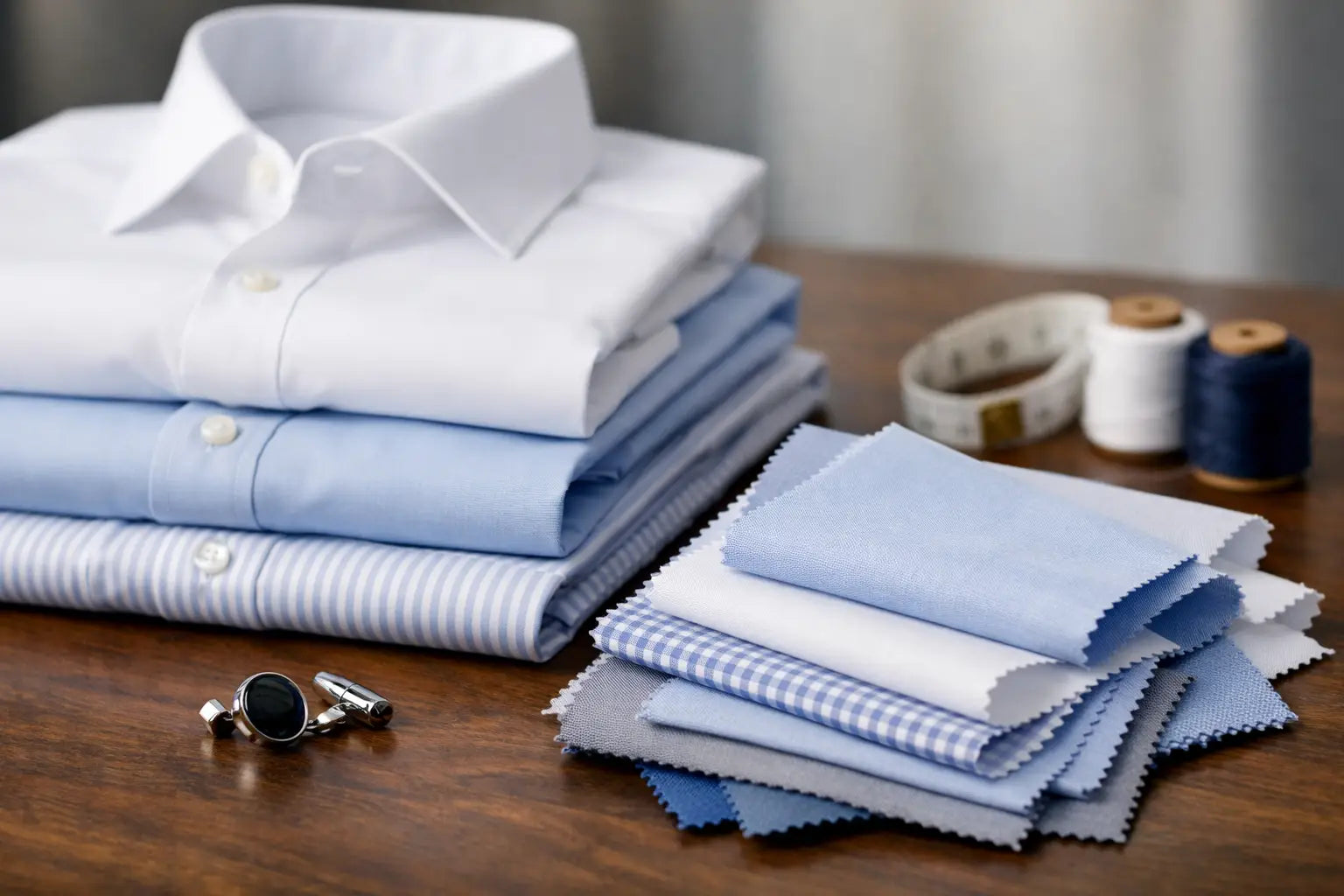
Begin with a tight range of dependable colors. White, light blue, and a subtle pattern like micro-check or fine stripe cover most office settings. These shades pair cleanly with navy, gray, khaki, and charcoal pants, which means more outfit combinations without more effort.
Fit matters as much as color. A contemporary fit gives structure without looking oversized, while a tailored fit creates a sharper silhouette if you prefer a closer line through the body. The right shirt should sit cleanly at the collar, follow the shoulders properly, and stay neat whether worn on its own or under a jacket. If the fabric includes stretch, even better. That added ease changes how a shirt performs over a full workday.
Cotton remains a standard for good reason, but modern cotton blends and knit-stretch constructions offer a real advantage for men who want comfort without sacrificing polish. A shirt should look refined at 9 a.m. and still feel comfortable by 7 p.m. That is not a luxury anymore. It is the standard smart shoppers expect.
Build Around Three to Five Go-To Pants
Once shirts are covered, pants become the category that determines range. A strong rotation usually starts with chinos and performance trousers in neutral colors. Navy, charcoal, gray, and khaki do the most work.
Chinos are one of the easiest ways to keep your wardrobe flexible. They pair naturally with dress shirts, casual button-ups, lightweight knits, and polos, which makes them useful well beyond the office. A super-stretch chino is especially valuable if your days involve commuting, travel, or hours of sitting. You want a clean tailored look, but you also want fabric that moves.
Performance pants earn their place for similar reasons. They often hold shape better, resist wrinkling more effectively, and feel lighter through long wear. If your office runs modern rather than traditional, these can become daily staples. The trade-off is that extremely technical-looking fabrics can read too casual in conservative environments, so it depends on the finish. The best options look polished first and comfortable second, even if comfort is the hidden advantage.
Prioritize Fit Before You Add More Pieces
Men often try to solve wardrobe problems with quantity. In reality, most work wardrobes improve faster when you edit fit. If a shirt pulls at the buttons, billows at the waist, or collapses at the collar, adding five more shirts will not fix the issue. The same goes for pants that break awkwardly or taper too aggressively.
A cleaner fit creates instant polish, even with simple pieces. That does not mean everything should be tight. It means every item should follow the body with intention. You want room to move, enough structure to look sharp, and proportions that feel current without chasing trends.
This is where brand consistency helps. When you know how a certain fit wears on your frame, building a wardrobe becomes much more efficient. LEVINAS, for example, centers much of its assortment around fit-driven essentials designed to balance tailored style with real comfort, which is exactly what a work rotation needs.
Add Layers That Sharpen the Look
A work wardrobe without layering options can feel repetitive fast. You do not need a large outerwear collection, but you do need a few pieces that change the finish of an outfit.
A soft blazer in navy or charcoal is the obvious first choice. It dresses up chinos, sharpens a stretch shirt, and gives you coverage for presentations or dinners without requiring a full suit. If your office is more relaxed, a lightweight quarter-zip or fine-gauge sweater can do similar work over a button-up. The key is clean structure. You want layers that refine the outfit, not bulk it up.
Season matters here. In warmer months, lighter fabrics and unlined construction keep things breathable. In colder months, texture becomes useful. A brushed layer, merino knit, or heavier overshirt can make basic shirts and trousers feel more complete. The goal is not to own every option. It is to have the right option ready when the setting shifts.
Keep Your Color Palette Tight
One of the smartest answers to how to build work wardrobe efficiently is to reduce unnecessary color variety. A controlled palette makes every piece more useful.
For most men, that means anchoring the wardrobe in white, blue, gray, navy, black, and khaki. You can add muted olive, burgundy, or soft brown if they fit your style, but the foundation should stay disciplined. This gives you cleaner combinations and fewer mistakes on rushed mornings.
Pattern should work the same way. Small checks, subtle stripes, and understated texture add interest without limiting wear. Loud prints have their place, but rarely as daily work staples. If a piece only pairs with one pair of pants, it is not doing enough.
Do Not Ignore Comfort
A work wardrobe fails if you avoid wearing half of it. That is why comfort should be part of the buying decision from the start, not an afterthought.
Stretch fabrics, breathable cotton, soft hand-feel, and movement through the shoulders and seat all matter. They matter even more for men whose workdays extend beyond the desk. A shirt that binds when reaching, or pants that feel restrictive after lunch, will not stay in regular rotation no matter how polished they look.
That said, comfort alone is not the goal. Some overly soft or overly relaxed pieces lose the visual discipline that workwear needs. The sweet spot is performance hidden inside a clean silhouette. When fabric technology supports the fit instead of advertising itself, you get the best result.
Finish With Shoes and Small Details
Shoes can either elevate a simple shirt-and-pants combination or weaken it. For most business-casual wardrobes, a leather loafer, clean lace-up, and minimalist dress sneaker cover the range. The exact mix depends on your office. More formal settings lean toward loafers and oxfords. Creative or modern workplaces leave more room for refined sneakers.
Belts should match the overall tone of the outfit. If your shoes are polished, your belt should not look casual and worn out. The same principle applies to socks, watches, and even the condition of your bag. You do not need a large accessory collection. You need consistency.
Buy for Rotation, Not for One Outfit
The easiest way to waste money is buying pieces that only make sense in the store. The smarter approach is asking one question before every purchase: what can I wear this with next week?
If a shirt works with three pairs of pants and two layering options, it is a strong addition. If a pair of chinos can move from office to weekend dinner, even better. This is how a wardrobe starts compounding in value. Every new piece should increase the usefulness of what you already own.
That also means resisting the urge to overbuy at the beginning. You do not need twenty shirts to feel prepared. You need a tight rotation of strong performers, then a clear understanding of what is missing. Sometimes the gap is a sharper white shirt. Sometimes it is navy pants with better drape. Sometimes it is simply replacing average pieces with better-fitting ones.
A well-built work wardrobe should make getting dressed faster, not more complicated. When the fit is right, the fabric performs, and every piece can pull its weight across the week, your closet starts working like it should - polished, comfortable, and ready for real life. Build it with discipline now, and every workday gets easier from there.


Leave a comment
This site is protected by hCaptcha and the hCaptcha Privacy Policy and Terms of Service apply.