
Article: How to Dress for Client Meetings With Confidence

How to Dress for Client Meetings With Confidence
A client can form an opinion before the first handshake, but dressing well is not about looking overdressed or imitating a boardroom uniform. Knowing how to dress for client meetings means presenting yourself as prepared, credible, and comfortable enough to stay focused on the conversation. The right outfit supports your expertise. It should never distract from it.
For most modern workplaces, the goal is polished business casual: a refined shirt, tailored pants, clean shoes, and details that show intention. The exact formula changes with the client, industry, location, and purpose of the meeting. A creative presentation downtown calls for a different look than a financial review in a conservative office. What does not change is the standard: your clothing should fit well, feel considered, and match the level of professionalism the client expects.
Start With the Meeting, Not the Closet
Before choosing a shirt or pair of pants, consider the setting. Are you visiting the client's office, meeting over lunch, walking a job site, or hosting a presentation? Is this a first introduction, a routine check-in, or a high-stakes proposal? These details determine how formal your outfit should be.
When you are unsure, dress one level sharper than the client’s everyday dress code. This is not a rule to wear a suit when everyone else is in jeans. It means choosing tailored chinos instead of casual denim, or wearing a crisp button-up rather than a polo. You want to communicate respect for the meeting without appearing disconnected from the room.
Industry matters as well. Legal, financial, real estate, and executive environments often reward a more traditional look. Technology, design, and entrepreneurial teams may lean more relaxed, but relaxed should still look deliberate. A polished stretch shirt and refined performance pants offer the right balance when the dress code is not clearly stated.
Build the Outfit Around a Strong Shirt
The shirt is the foundation of every man's client-meeting wardrobe. It frames your face, appears in every seated conversation, and makes the largest visual impression when a jacket comes off. A well-fitted button-up signals more than style. It shows attention to detail.
Choose a contemporary or tailored fit that follows your shape without pulling across the chest or billowing at the waist. A shirt that is too tight looks restrictive, especially when you sit, reach for a notebook, or present at a screen. A shirt that is too loose can make even premium pants look less precise. Stretch construction is especially useful here because it gives you room to move while keeping a clean, structured line.
For first meetings, white, light blue, soft gray, and subtle micro-patterns are dependable choices. These colors look sharp under office lighting, pair easily with navy, charcoal, tan, and black pants, and keep the focus on your message. A fine check or tonal pattern can add personality, but avoid anything so bold that it becomes the first thing a client remembers.
Details matter. A contrast trim inside the collar or cuff adds a distinctive finish when used with restraint. It gives a classic shirt more character without taking it out of the business-casual category. Keep the shirt freshly pressed or neatly steamed, with a collar that holds its shape and sleeves that hit cleanly at the wrist.
When to Wear a Tie or Jacket
A tie is not required for every client meeting, but it remains a useful option when the occasion calls for added authority. Wear one for formal presentations, executive meetings, traditional industries, or situations where the client has indicated a more formal expectation. A solid or subtle patterned tie in navy, burgundy, or muted gray is usually more versatile than a loud print.
A sport coat can be even more adaptable. It instantly sharpens a button-up and tailored pants while still feeling appropriate in many business-casual settings. Navy is the most versatile starting point. If you are traveling, choose a jacket with enough stretch and structure to hold its shape after a long drive or flight.
If a jacket feels too formal for the meeting, skip it with confidence. A premium shirt with crisp construction, paired with well-fitted pants and proper shoes, can carry the same level of polish in a more relaxed environment.
Choose Pants That Look Tailored and Move Easily
Client meetings are rarely static. You may be driving between offices, standing for a presentation, walking through a facility, or sitting through a long lunch. Pants need to look sharp through all of it.
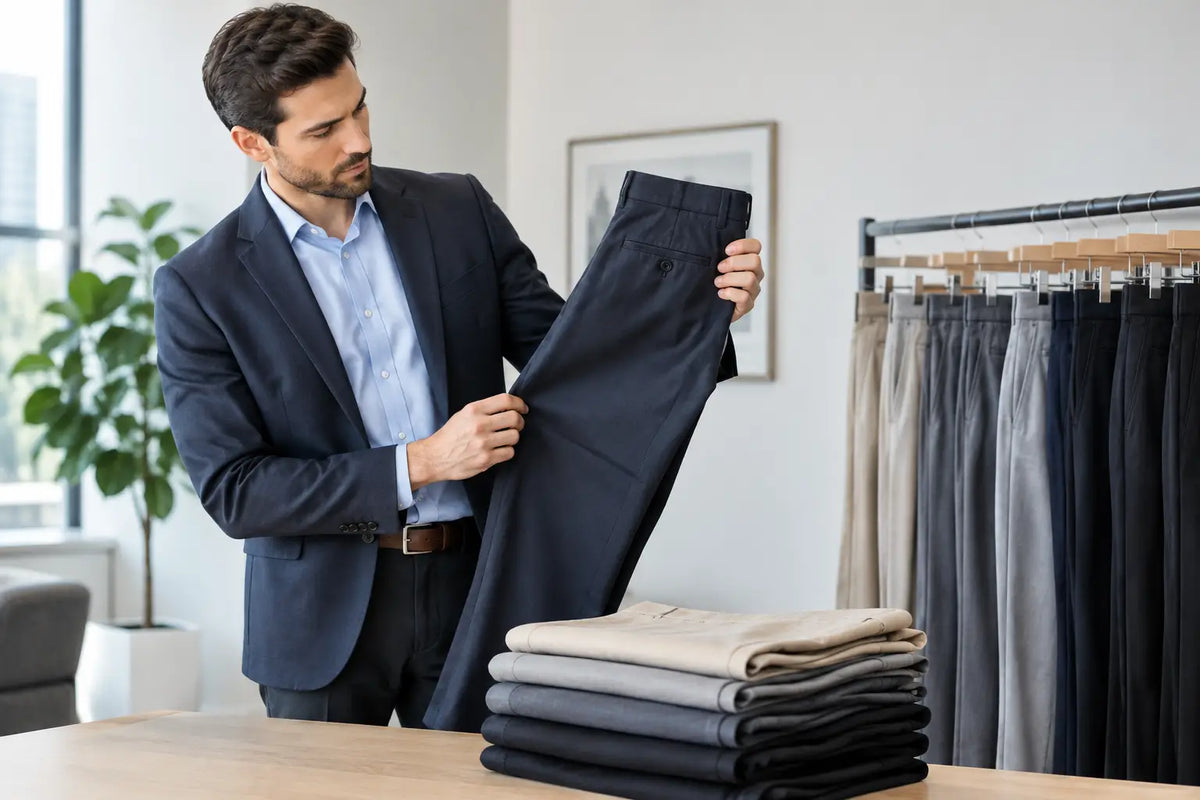
Tailored chinos and performance pants are the most reliable choices for modern business casual. They offer a cleaner finish than jeans while providing more versatility than formal wool trousers. Stretch fabric is a practical advantage, not a shortcut. It helps the pants stay comfortable through a full day without sacrificing a streamlined silhouette.
Navy, charcoal, stone, and khaki are core colors that work with nearly every shirt. Navy pants paired with a light blue or white shirt create a confident, classic combination. Charcoal offers a more formal edge. Stone and khaki work particularly well for daytime meetings, warmer weather, and client lunches.
Pay attention to the break at the shoe. Excess fabric pooling at the ankle makes an otherwise polished outfit look unfinished. A clean, slight break is ideal for most men. The waistband should sit comfortably without needing a belt to do all the work of holding the pants in place.
Jeans can work in certain industries, but they require judgment. Dark, clean denim with no distressing may be appropriate for a casual client meeting when paired with a polished shirt and elevated shoes. For a first meeting or a setting you do not know well, tailored pants are the safer choice.
Finish With Shoes and Details That Hold Up
Shoes are often where business-casual outfits either come together or fall short. Clean leather loafers, lace-up derbies, and minimalist leather sneakers can all work, depending on the environment. The key word is clean. Scuffed footwear, worn heels, or overly athletic sneakers can undermine the rest of the outfit immediately.
Brown leather is especially versatile with navy, gray, olive, and khaki pants. Black shoes are a stronger match for charcoal or black trousers and more formal meetings. If you choose sneakers, keep them low-profile, free of logos, and in a neutral color such as white, black, or dark brown.
A belt should coordinate with your shoes in color and finish. Keep accessories restrained: a quality watch, a simple belt, and a clean bag or portfolio are enough. Strong fragrance, oversized jewelry, and visibly worn accessories compete with the professional image you are trying to establish.
Fit Is the Difference Between Dressed and Put Together
You do not need a large wardrobe to look prepared for clients. You need the right proportions. A fitted shirt, tailored stretch pants, and clean footwear will outperform a closet full of pieces that are too large, too tight, or too casual.
Check your outfit from every angle before you leave. Can you raise your arms without the shirt pulling out? Can you sit comfortably without the waistband digging in? Does the collar sit flat? Are your shoes clean? These small checks take minutes, but they prevent distractions during the meeting.
This is where performance-focused business-casual clothing earns its place. LEVINAS shirts, stretch chinos, and performance pants are designed for men who need a polished appearance that can keep pace with a full workday. When fabric moves with you and the fit stays sharp, you spend less time adjusting your clothes and more time making your case.
Dress for the Version of the Meeting You Want to Have
The best client-meeting outfit helps create the tone you want from the start. A crisp shirt and tailored pants say you are organized. A refined jacket says you came prepared for a serious conversation. Comfortable stretch fabrics say you are ready for the realities of a demanding day, not just the first five minutes of it.
Aim for clothing that feels like your strongest professional self, not a costume. When your shirt fits, your pants move, and your details are handled, you can walk into the room with one less thing to think about - and give the client your full attention.

Leave a comment
This site is protected by hCaptcha and the hCaptcha Privacy Policy and Terms of Service apply.