

How to Style Business Casual Shirts Right
Monday at 8:15 a.m. is not the time to second-guess your shirt. If you are figuring out how to style business casual shirts, the goal is simple: look polished, feel comfortable, and make every piece in your wardrobe work harder. A strong business-casual shirt should carry you from the office to dinner, from client meetings to everyday wear, without looking stiff or overdressed.
That starts with understanding what the shirt is supposed to do. In a business-casual wardrobe, your shirt is not just a basic layer. It is the foundation of your look. The right one sharpens your frame, works with tailored pants or chinos, and gives you enough flexibility to dress up or down depending on the setting.
How to style business casual shirts starts with fit
Fit makes the biggest difference because business casual sits in the middle ground. Too loose, and your outfit looks dated and careless. Too tight, and it reads more nightlife than office-ready. You want a clean line through the shoulders, enough room through the chest and waist to move naturally, and sleeves that look tailored rather than oversized.
A contemporary fit works well for most men because it gives structure without feeling restrictive. If you prefer a closer silhouette, a tailored fit can create a sharper profile, especially under a blazer or lightweight jacket. Stretch fabrics matter here. A shirt with knit construction or built-in stretch keeps the shape polished while making long workdays much easier to wear.
Length matters too. Some business casual shirts look best tucked, especially if the hem is longer and more curved. Others can be worn untucked if the length is clean and proportional. If the shirt falls too far below the seat, leave it tucked. If it is cut to hit around mid-zipper to pocket depth, untucked can look intentional.
Choose the right shirt for the setting
Not every business-casual environment asks for the same level of formality. That is where styling gets more precise.
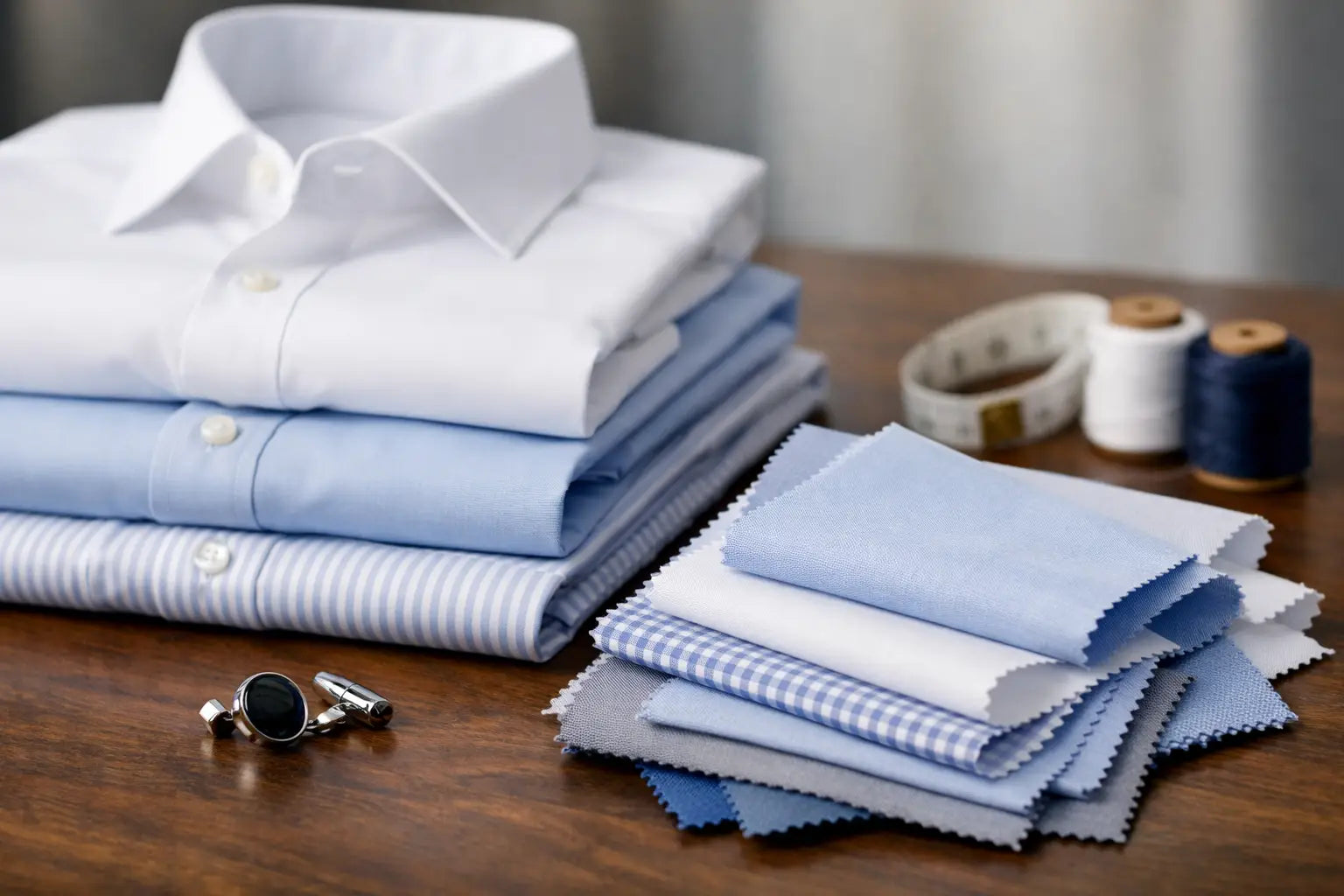
For a traditional office, start with solid colors or subtle patterns. White, light blue, navy, and soft gray remain the most versatile options because they pair easily with nearly every trouser color. A crisp button-up in one of these shades gives you room to add personality through texture, contrast trim, or a refined cuff rather than loud pattern.
For a relaxed workplace or hybrid schedule, you can lean into texture and softness. Cotton knit-stretch shirts are especially strong here because they bridge the gap between dress shirt structure and casual comfort. They keep the collar and button-front profile that reads professional, but they wear with much more ease.
For after-hours plans, darker tones tend to transition better. A black, deep navy, or charcoal shirt with clean tailoring can move from office to dinner without needing a full change. The trade-off is that very dark shirts can feel more fashion-forward and slightly less traditional, so they work best in offices where the dress code has some flexibility.
Pair your shirt with pants that balance the look
A business-casual shirt is only as strong as the pants under it. If your shirt is crisp and refined, your pants should support that same level of finish.
Chinos are the easiest match because they sit right in the sweet spot between dressy and relaxed. Khaki, stone, navy, olive, and charcoal all work well, but the cleanest combinations usually come from contrast. A light blue shirt with navy chinos feels sharp and reliable. A white shirt with olive or gray chinos feels modern without trying too hard.
Performance pants are another strong option if comfort is a priority. They give you a more elevated finish than casual cotton bottoms and usually hold shape better throughout the day. For men who move between commuting, meetings, and travel, this matters. Wrinkled pants can pull down even the best shirt.
If your shirt has noticeable detail, such as contrast trim, texture, or a bolder check, keep the pants more understated. If the shirt is very clean and minimal, you can let the trouser fabric or color add depth. The balance should feel deliberate. You do not want both pieces competing.
Tucked or untucked depends on proportion
One of the most common questions around how to style business casual shirts is whether to tuck them in. The short answer is that it depends on the shirt, the pants, and where you are wearing the outfit.
A tuck almost always looks stronger in more professional settings. It defines your shape, creates a cleaner line, and works better with structured pants. If you are wearing a belt, dressier shoes, or a blazer, tucking the shirt is usually the right move.
Untucked works when the shirt is designed for it and the rest of the outfit stays polished. That means no excessive length, no bunching at the waist, and no overly casual pants. Untucked with fitted chinos and loafers can look confident and modern. Untucked with baggy pants and athletic shoes usually slips out of business casual fast.
If you are between the two, use the half-step test. Ask whether the outfit could walk into a casual Friday meeting, a lunch with a client, and an evening drink without feeling off. If the answer is yes, the styling is working.
Layer with purpose, not bulk
Business casual style improves when you add one smart layer. The key is keeping it streamlined.
A blazer is the most obvious option, especially over a fitted shirt in a solid color or subtle pattern. It adds authority without pushing the outfit into full formalwear. Navy and charcoal blazers are the most useful because they work across seasons and pair easily with a wide range of shirt colors.
A lightweight quarter-zip, fine-gauge sweater, or structured jacket can also work, depending on your office. These layers are ideal when you want polish without the formality of tailoring. The shirt collar should still sit neatly, and the layer should not be so thick that it distorts the shirt underneath.
This is where fabric matters again. A shirt with stretch and recovery performs better under layers because it resists bunching and stays cleaner through the torso and sleeves. That is one reason brands like LEVINAS put so much emphasis on shirts that combine refined appearance with all-day comfort.
Shoes can elevate or undercut the whole outfit
You can style the shirt correctly and still miss the mark if the shoes feel disconnected. In business casual dressing, shoes should finish the outfit with the same level of intention.
Loafers are one of the best options because they are versatile and clean. They work with tucked or untucked shirts, with chinos or performance trousers, and they keep the outfit looking mature. Leather lace-ups are slightly more formal and ideal for offices that lean traditional.
Minimal leather sneakers can work in more relaxed environments, but only if the rest of the outfit stays sharp. The shirt should fit well, the pants should be tapered, and the sneakers should be clean and simple. Once the shoes start looking too sporty, the outfit stops reading as business casual.
Color coordination matters here too. Brown shoes warm up navy, olive, and lighter neutral pants. Black shoes make more sense with charcoal, black, or cooler-toned outfits. Matching your belt to your shoes is still a reliable move when the look is tucked and more structured.
How to style business casual shirts by color
Color is where many outfits either become effortless or overly complicated. The most useful approach is building around versatile shirt colors first.
White shirts are the easiest to dress up. They look crisp with navy chinos, gray performance pants, and nearly any blazer. Light blue shirts offer a little more softness and are just as flexible. They are especially strong for daytime office wear because they feel professional without looking too formal.
Navy shirts create a more modern business-casual look and pair well with gray, khaki, and stone pants. Patterned shirts, such as subtle checks or fine stripes, work best when the rest of the outfit stays quiet. Let the shirt provide the visual interest, then support it with solid pants and classic shoes.
If you want contrast detailing or statement trim, keep it refined. Small design elements can elevate a shirt and make it feel more premium. Too much contrast, though, can limit where you wear it. The best business-casual pieces give you style without reducing versatility.
Avoid the styling mistakes that make shirts look less refined
The most common mistake is wearing a good shirt with pants that are too casual. Cargo pockets, faded denim, or sloppy jogger-style silhouettes make it harder for the shirt to do its job. Another issue is ignoring fabric quality. Thin, wrinkled, or stiff shirts tend to look cheaper and feel worse by midday.
Over-accessorizing is another problem. Business casual style should feel controlled. A quality watch, a good belt, and clean shoes are enough. You do not need extra distractions when the shirt already gives the outfit its structure.
Finally, do not force one shirt into every situation. Some shirts are better for office days, others for travel, dinners, or weekends. A smart wardrobe includes options that cover each setting while keeping the same standard of fit and finish.
When your shirt fits properly, works with the right pants, and matches the setting, getting dressed becomes far easier. That is the real advantage of business casual done well - fewer decisions, better consistency, and a wardrobe that looks sharp every time you put it on.


Leave a comment
This site is protected by hCaptcha and the hCaptcha Privacy Policy and Terms of Service apply.