

How to Style Tailored Fit Shirts Right
A tailored fit shirt can make an average outfit look intentional in seconds. That is the real advantage when you're learning how to style tailored fit shirts - they sharpen the body line, clean up proportions, and give you more range than a standard boxy shirt ever will.
The key is not treating every tailored shirt the same. Fabric, collar shape, cuff detail, and stretch all change how the shirt should be worn. A crisp woven tailored shirt handles business settings differently than a knit-stretch version built for movement, and getting that distinction right is what separates a polished outfit from one that feels slightly off.
How to style tailored fit shirts for your day
The smartest way to style a tailored fit shirt is to build around where you are actually going. These shirts are versatile by design, but the best results come from matching the level of structure in the shirt to the rest of the outfit.
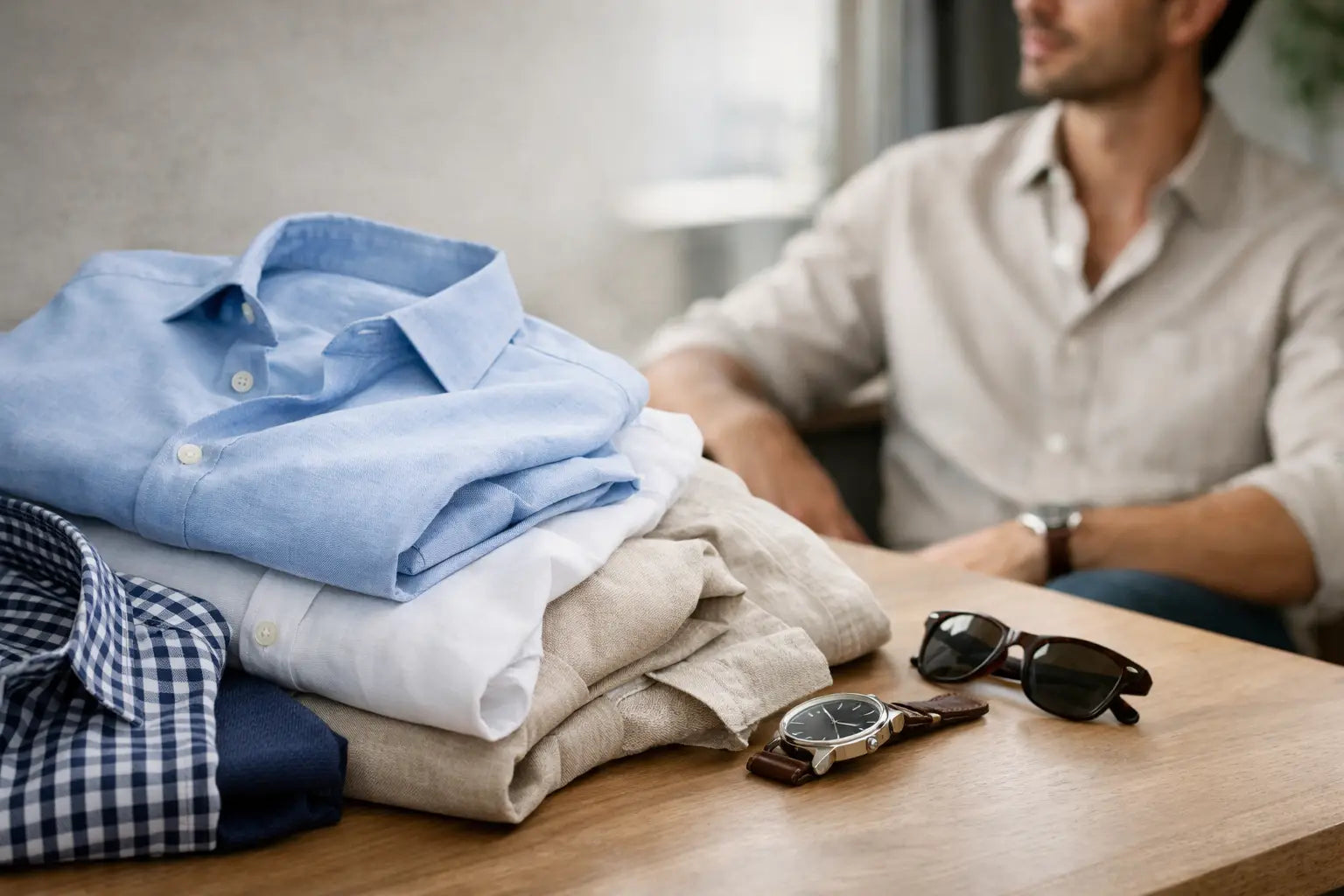
For office days, start with a tailored fit shirt in white, light blue, or a subtle pattern. Pair it with trim chinos or performance trousers and a leather belt that matches your shoes. The shirt should be tucked, the cuffs should sit cleanly at the wrist, and the collar should hold its shape under a blazer if you add one. This creates the kind of business-casual look that feels professional without looking overdressed.
For a more relaxed work setting, a tailored fit shirt in a stretch cotton or knit fabric gives you a cleaner look than a polo while keeping the comfort level high. Worn with five-pocket pants, chinos, or refined dark denim, it bridges the gap between office-ready and off-duty. This is where fit matters most - the shirt should contour lightly through the chest and waist, not pull at the buttons.
For dinner, events, or date nights, darker shades and richer textures usually work better. Navy, black, charcoal, and deep jewel tones make a tailored fit shirt feel more elevated right away. Pair one with slim trousers and minimal shoes or loafers. If the shirt has contrast details or distinctive cuff styling, keep the rest of the outfit controlled so those elements can do the work.
Start with fit before you style anything else
Tailored fit is supposed to look defined, not restrictive. If the shirt is too tight across the stomach, chest, or upper arms, no amount of styling will make it look refined. If it is too loose through the waist, you lose the whole point of choosing tailored fit in the first place.
The shoulder seam should sit close to your natural shoulder edge. Sleeves should narrow without clinging. Through the torso, you want shape, not strain. A shirt that follows the body cleanly will always look more expensive than one that is either oversized or overly aggressive in its taper.
This is especially important with stretch fabrics. Stretch can improve comfort and mobility, but it can also tempt men to size down too far. The better approach is to choose your proper size and let the fabric performance improve movement, not compensate for an overly tight fit.
Build the outfit from the shirt fabric
Fabric tells you how formal or relaxed the outfit should be. This is one of the easiest ways to make tailored fit shirts look natural instead of overstyled.
A smooth poplin or pinpoint shirt has a cleaner, sharper finish. These fabrics are ideal with dress trousers, refined chinos, and blazers because they hold a crisp line. If you are dressing for meetings, client lunches, or events where presentation matters, this is the lane to stay in.
A cotton stretch shirt softens things slightly while still looking polished. It works well with business-casual staples and gives you more flexibility during long days. This is often the best option for men who move between office hours, commuting, and evening plans without changing.
Knit-stretch tailored shirts sit in a particularly useful category. They carry the structure of a button-up but wear with the comfort of a more casual top. Style them with performance pants, stretch chinos, or clean denim. They are excellent for men who want a smooth, put-together silhouette without the stiffness that traditional dress shirts can bring.
Choose the right pants to balance the silhouette
Tailored fit shirts look best when the lower half of the outfit is equally considered. A sharply tapered shirt with wide, heavy pants can work, but it takes confidence and precision. For most men, a trim, balanced pant leg is the easiest and strongest choice.
Chinos are the most versatile match. They keep the outfit polished while making the shirt feel approachable. Beige, navy, olive, gray, and stone all pair well with core shirt colors, and they move easily from work to dinner to weekend plans.
Performance trousers create a more refined finish. If your shirt has a crisp collar, clean placket, or elevated details, this pairing reinforces the overall look. It is especially strong for business-casual offices and travel days when comfort still needs to look professional.
Dark denim can work, but only if it is clean, slim, and free from heavy fading or distressing. A tailored fit shirt with sloppy jeans sends mixed signals. A tailored fit shirt with dark, structured denim looks modern and intentional.
Shorts are more conditional. A tailored fit shirt can work with shorts in warm weather, especially in breathable fabrics, but the outfit should stay sharp. Think tailored shorts, clean sneakers or loafers, and either a casual tuck or a neat untucked finish if the shirt length allows it.
Tucked, untucked, or layered
One of the biggest decisions when considering how to style tailored fit shirts is whether to tuck them in. The answer depends on the shirt hem, the setting, and the rest of your outfit.
For work, formal dinners, and any outfit with a blazer, tuck it in. A tucked tailored shirt highlights the shape of the torso and keeps the look disciplined. Add a belt when the waistband is visible, and make sure the shirt stays smooth rather than ballooning out.
Untucked works best when the shirt is cut for it and lands around mid-fly. If it hangs too long, it reads unfinished. A shorter tailored shirt in a softer fabric can look excellent untucked with chinos or dark denim, especially in casual business environments or weekends.
Layering gives tailored fit shirts even more range. Under a blazer, they bring structure and polish. Under a lightweight quarter-zip or fine-gauge sweater, they keep the neckline sharp while reducing bulk. Under a jacket, they can add a more refined edge to an otherwise casual outfit. Because the fit is closer to the body, tailored shirts layer more cleanly than fuller cuts.
Color and pattern should support versatility
If you want maximum use from tailored fit shirts, stay grounded in colors that work across multiple settings. White, light blue, navy, gray, and black cover most wardrobes with very little effort. These shades pair easily with chinos, performance pants, and denim, and they transition from daytime to evening without much adjustment.
Patterns are useful, but restraint matters. Fine stripes, subtle checks, and understated prints add variation without limiting what you can wear them with. Louder patterns can be effective for social settings, but they usually reduce versatility. If the goal is a wardrobe that works hard, buy bold sparingly and lean on clean essentials more heavily.
Contrast details deserve similar consideration. They can elevate a shirt and add character at the collar or cuffs, but they should not overpower the outfit. If your shirt includes standout trim or cuff styling, keep your pants, shoes, and layering pieces more streamlined.
Shoes finish the message
Shoes determine whether a tailored fit shirt feels boardroom-ready, smart casual, or relaxed. Leather dress shoes and loafers immediately raise the level of the look. They are the obvious choice for office settings, events, and any outfit built around trousers.
Minimal leather sneakers make tailored shirts feel more contemporary and approachable. This pairing works best with knit-stretch shirts, untucked casual styles, and cleaner chinos or five-pocket pants. The sneaker should stay simple and polished. Running shoes generally break the line too much unless the rest of the outfit is intentionally sporty.
Boots can also work, particularly in fall and winter. Chelsea boots or refined lace-up boots pair well with darker shirts and structured pants. They add weight to the outfit, which can be useful when the shirt is sleek and close-fitting.
Small details make tailored fit shirts look better
A well-styled shirt is never just about the shirt. Sleeve length, collar condition, and grooming all affect the result. If the collar collapses, the outfit loses authority. If the cuffs are too loose or the sleeves bunch heavily, the shirt looks less precise than it should.
Ironing or steaming matters more with tailored fit because the silhouette is closer to the body. Wrinkles show faster. So do pulling buttons, stretched plackets, and poor undershirt choices. A lightweight, low-visibility undershirt can help, but only if it stays hidden at the collar and sleeves.
This is also where fabric quality shows its value. A well-made tailored shirt keeps its shape longer, drapes better through the torso, and handles repeat wear more cleanly. That matters when you want a shirt to perform across work, travel, and social settings without looking tired halfway through the day.
The best tailored fit shirts earn their place because they make getting dressed easier. Keep the fit clean, let the fabric guide the occasion, and build the outfit with the same level of intention from collar to shoes. When that balance is right, the shirt stops feeling like just another basic and starts acting like the foundation of your wardrobe.


Leave a comment
This site is protected by hCaptcha and the hCaptcha Privacy Policy and Terms of Service apply.