
Article: Stretch Cotton Versus Performance Fabric
Stretch Cotton Versus Performance Fabric
A shirt can look sharp at 8 a.m. and feel restrictive by lunch. A pair of pants can offer room to move yet lose its tailored appearance after a few hours of sitting. That is why the choice between stretch cotton versus performance fabric matters. Both are built for a more comfortable business-casual wardrobe, but they deliver that comfort in distinctly different ways.
For men dressing across meetings, commutes, dinners, and weekends, fabric is not a minor detail. It affects how a garment fits, how it handles heat and movement, and whether it still looks polished at the end of the day. The right choice depends on where you wear it, how you prefer clothing to feel, and how much maintenance you are willing to give it.
What Is Stretch Cotton?
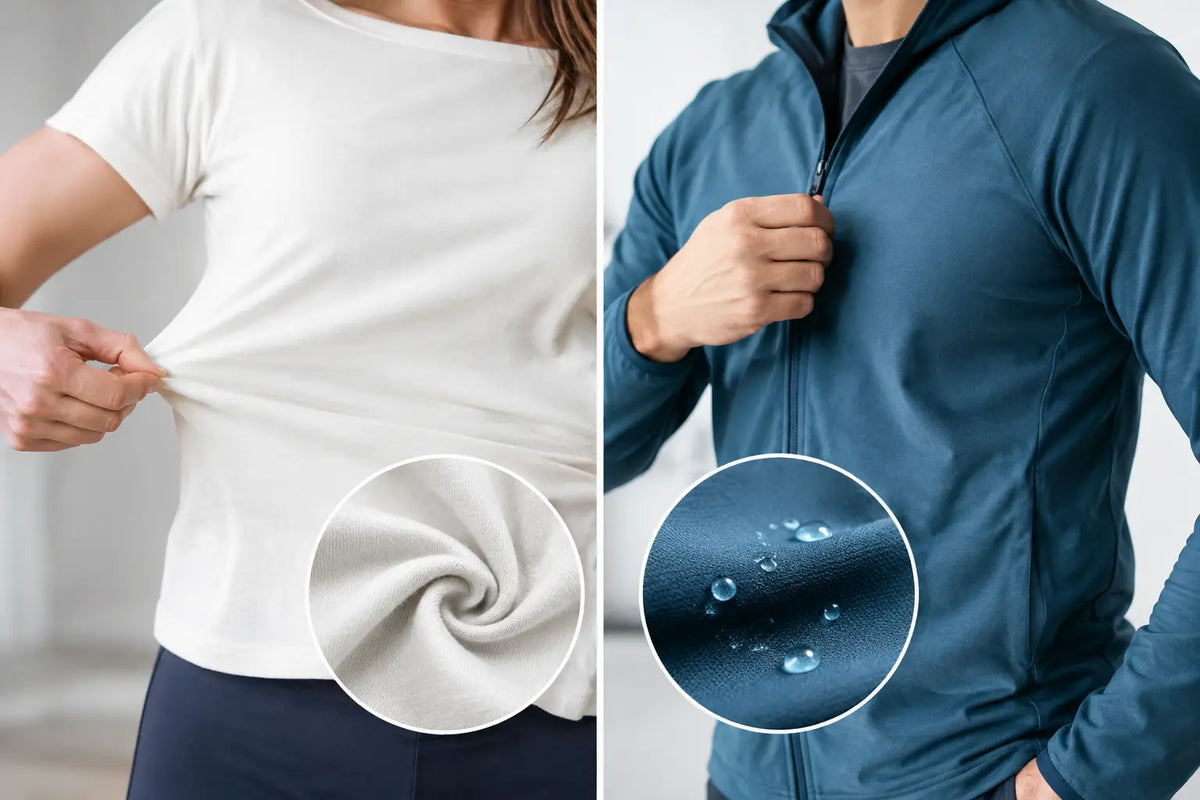
Stretch cotton starts with a natural cotton base, then adds a small percentage of elastic fiber, often elastane or spandex. The result preserves much of the familiar character men expect from cotton: a soft hand, breathable feel, and refined matte appearance. The added stretch gives the fabric more flexibility through the shoulders, chest, seat, and thighs.
In a button-up shirt, stretch cotton is especially effective for men who want a classic shirt look without the stiff, restrictive feeling associated with traditional dress shirting. It moves with the body when reaching for a laptop bag, driving, or sitting through a long presentation. In chinos and knit-stretch styles, it adds comfort while maintaining an elevated, everyday finish.
The strongest case for stretch cotton is its balance. It feels natural against the skin and tends to look more traditional than highly technical fabric. For workplaces where polished cotton shirts and tailored pants remain the standard, it is an easy fit.
The Feel and Appearance of Cotton
Cotton has texture and visual depth that many synthetic fabrics cannot fully replicate. A well-made stretch cotton shirt reads as a real shirt first, not athletic apparel adapted for the office. That distinction matters when you wear it with a blazer, dress trousers, or leather shoes.
It also tends to become more personal with wear. Cotton softens over time, creating the broken-in comfort many men prefer in their favorite shirts and chinos. The trade-off is that cotton can wrinkle more readily, absorb moisture, and take longer to dry than performance-focused materials.
What Is Performance Fabric?
Performance fabric is designed around function. It commonly uses synthetic fibers such as polyester, nylon, or blended technical yarns, often with elastane for added stretch. Depending on the construction, it may offer moisture management, quick drying, wrinkle resistance, lightweight comfort, and four-way stretch.
For business-casual dressing, the best performance fabric is not meant to look like gym wear. It is designed to provide a clean, tailored silhouette while making the day easier to manage. A performance shirt can stay presentable through a flight, a humid commute, and an afternoon of back-to-back meetings. Performance pants can offer a flexible feel without looking loose or overly casual.
This makes technical fabric a strong choice for men whose schedule changes quickly. If you travel for work, walk between offices, spend time outdoors, or simply dislike ironing, performance styles bring practical advantages that are hard to ignore.
The Function-First Advantage
The appeal of performance fabric is consistency. It usually holds its shape well, resists visible wrinkling, and dries faster after sweat or unexpected rain. Many options also have a smoother surface, which can create a crisp, modern look with minimal effort.
That said, not every performance fabric feels equally premium. Lower-quality technical blends can feel plasticky, trap heat, or develop unwanted shine. Construction is everything. A refined performance garment should feel substantial enough for the office, stretch without becoming baggy, and maintain a clean appearance rather than looking overly sporty.
Stretch Cotton Versus Performance Fabric: The Key Differences
The practical difference comes down to priority. Stretch cotton gives you a more natural hand feel and classic menswear appearance. Performance fabric gives you more technical support throughout a demanding day.
If softness and traditional style lead your decision, stretch cotton is usually the better starting point. It works naturally with business-casual staples and has enough flexibility to improve comfort without changing the look of your wardrobe. It is particularly strong for office shirts, dinner-ready button-ups, and chinos you want to wear repeatedly.
If wrinkle resistance, rapid drying, and easy care matter most, performance fabric earns its place. It is a smart choice for travel days, warm climates, active commutes, and men who need their clothes to perform as hard as their schedule demands.
Breathability and Heat
Cotton is naturally breathable, which makes it comfortable in moderate temperatures and for daily wear close to the skin. However, once it absorbs sweat, it can stay damp longer. A stretch cotton shirt may feel excellent in a climate-controlled office but less ideal during a humid walk across town.
Performance fabrics often move moisture away from the body and dry quickly. That can be valuable in heat, though breathability varies by fabric weight and weave. A dense synthetic fabric may manage moisture well but still feel warmer than a lightweight cotton blend. Men who run warm should look beyond the label and consider the garment's overall weight and construction.
Wrinkles and Maintenance
This is where performance fabric usually wins. Technical shirts and pants are often made to recover quickly after folding, sitting, or packing. They are ideal when you need to arrive looking composed without searching for an iron.
Stretch cotton requires more care, especially in shirts. It may need prompt removal from the dryer, light steaming, or ironing for the sharpest finish. For many men, that maintenance is worth it because the fabric offers a richer, more familiar appearance. For others, easy-care performance fabric is the more realistic everyday choice.
Stretch and Mobility
Both fabrics can provide excellent movement, but the sensation is different. Stretch cotton often has a controlled give. It feels supportive and structured, which suits a contemporary or tailored fit. Performance fabric can offer more dramatic flexibility, including four-way stretch that responds in every direction.
More stretch is not automatically better. A dress shirt should move with you, but it should also retain its shape at the collar, cuffs, and placket. Pants should flex through the seat and thighs without sagging at the knees. The best fabric is one that supports the fit rather than compensating for the wrong size.
Choose Fabric by the Way You Dress
A wardrobe does not need to choose one side permanently. The most useful approach is to build around your actual routine.
Stretch cotton is a natural choice for office days, client lunches, date nights, and occasions where texture and traditional polish matter. Pair a contemporary-fit stretch cotton shirt with tailored chinos for a dependable uniform that looks intentional without feeling formal.
Performance fabric is the better option for flights, long commutes, trade shows, warm-weather events, and days that start early and end late. A refined performance pant can keep pace with movement while holding a cleaner line than standard casual pants. A technical button-up can also be a reliable travel essential when packing space and wrinkle control matter.
For a versatile rotation, keep both. Use stretch cotton as the foundation for classic business-casual style, then add performance pieces where convenience and mobility will make a real difference. LEVINAS designs its wardrobe staples around that same goal: elevated fit, purposeful stretch, and clothing that works beyond a single setting.
Fit Still Comes First
Fabric can improve comfort, but it cannot fix poor fit. A shirt that pulls across the chest or strains at the buttons will look tight regardless of its stretch content. A pant with too much room through the leg can look relaxed even when made from the most advanced performance blend.
Start with the silhouette that suits your build. A contemporary fit offers balanced room with a clean profile, while a more tailored knit-stretch option can create a closer, sharper line. Then use fabric to fine-tune the experience. Choose stretch cotton when you want classic comfort with a polished hand. Choose performance fabric when your day demands easy care and extended mobility.
The strongest business-casual wardrobe is not built around one fabric claim. It is built around pieces that look right in the moment, feel right for the schedule, and give you one less thing to think about before you walk out the door.

Leave a comment
This site is protected by hCaptcha and the hCaptcha Privacy Policy and Terms of Service apply.