
Article: Super Stretch Pants for Commuting That Work
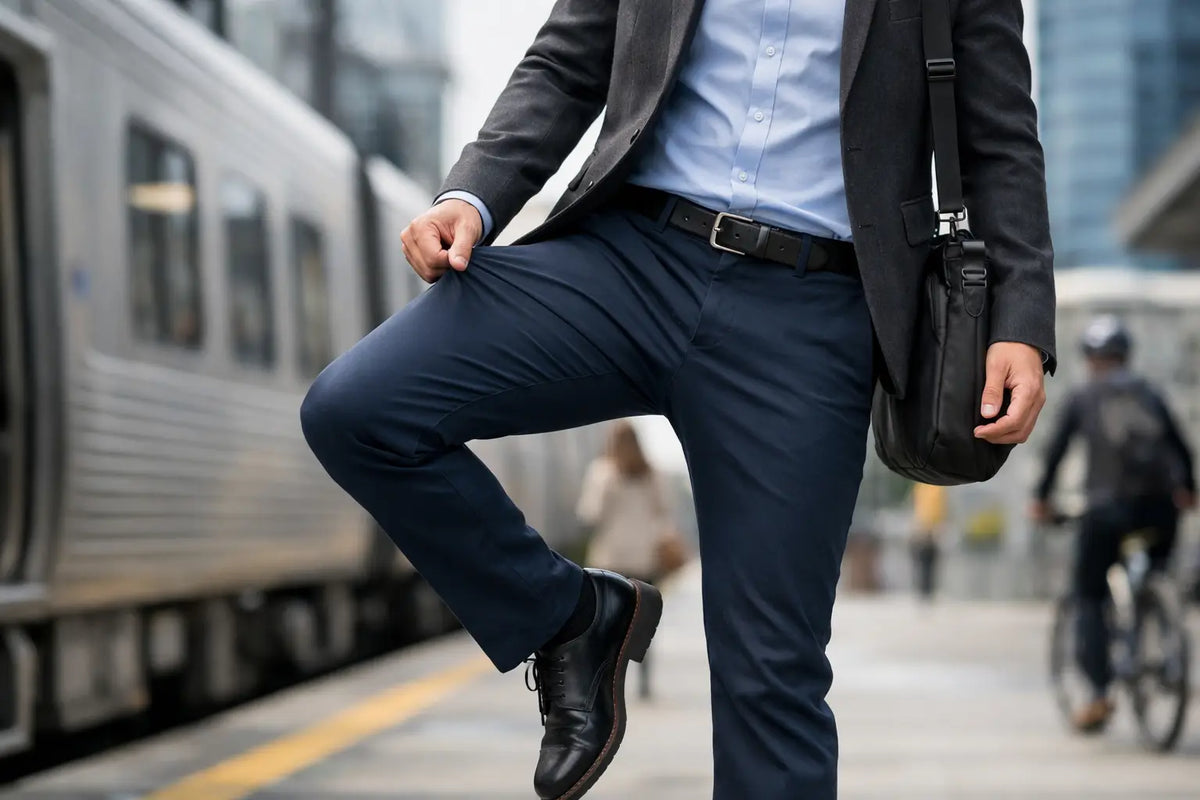
Super Stretch Pants for Commuting That Work
The commute tests a pair of pants long before the first meeting begins. A morning can mean driving in traffic, walking several blocks, climbing subway stairs, sitting at a desk, and heading straight to dinner after work. Super stretch pants for commuting are built for that reality: they bring the clean, tailored appearance of business-casual chinos together with the give needed to move comfortably through a full day.
For the modern professional, comfort should not come at the expense of presentation. The right pair holds its shape, sits clean through the leg, and works with the shirts, knitwear, and footwear already in your rotation. The result is one less wardrobe change and one more reliable foundation for getting dressed well.
Why the Commute Changes What You Need From Pants
Traditional dress pants can look sharp standing still, but a structured fabric with limited give quickly reveals its limits during a long commute. Restriction at the seat and thighs, a waistband that digs in while driving, or knees that lose their shape after a few hours can make even an otherwise polished outfit feel like the wrong choice.
Commuting pants have to perform in motion and maintain their appearance at rest. That means stretch where the body naturally bends, enough recovery to avoid a baggy look by late afternoon, and a refined surface that still reads appropriately in an office, client lunch, or casual event.
Super-stretch chino styles answer this need particularly well because they occupy the most useful space in a business-casual wardrobe. They are more elevated than jeans, less formal than traditional wool trousers, and easier to style than pants designed for only one setting. Pair them with a crisp button-up and leather shoes for the office, then switch to clean sneakers for an off-duty plan without changing the rest of the outfit.
What Makes Super Stretch Pants for Commuting Different
Stretch alone is not the standard. Nearly every man has owned pants that felt flexible but looked too casual, too thin, or overly relaxed after a few wears. A better commuter pant balances fabric performance with a tailored silhouette.
Stretch that moves with you
The most noticeable benefit is freedom through the waist, seat, and thighs. Whether you are stepping onto a train, cycling to work, or sitting through a long drive, the fabric should move with your stride instead of pulling against it. This is also valuable during the workday, when bending to reach a bag, walking between meetings, or sitting at a desk should not require a second thought.
A quality stretch construction does more than feel soft at first wear. It should rebound after movement, helping the pants retain a clean line instead of becoming loose at the knees and seat. That recovery is what keeps comfort looking intentional.
A fit that stays polished
For business-casual dressing, fit is the difference between relaxed confidence and an outfit that looks unfinished. Super stretch pants should follow the body without clinging to it. The waist should sit securely without feeling restrictive, the seat should remain smooth, and the leg should taper with enough room to move naturally.
A contemporary fit is often the strongest choice for commuting because it creates a refined profile without the narrow restriction of an aggressively slim cut. Men with more athletic thighs may prefer a little additional room through the upper leg, while men with a leaner build can choose a closer silhouette. The goal is not to chase a label. It is to find a proportion that looks clean from every angle and still feels comfortable after eight or ten hours.
Fabric with everyday authority
The best commuting pants should not look like gymwear adapted for the office. A smooth chino finish, substantial hand feel, and rich color give stretch pants the authority to work with dress shirts and tailored layers. Details matter here: a clean waistband, well-finished pockets, and a structured silhouette make the difference when the dress code is flexible but expectations are not.
Fabric weight depends on your commute and climate. Lighter options make sense for warm weather, walking-heavy routes, and packed public transportation. A more substantial fabric can offer a cleaner drape in cooler months and may feel more reassuring for frequent office wear. Neither is automatically better. The right choice depends on how much time you spend outdoors, how formal your workplace is, and whether you tend to run warm.
How to Choose the Right Pair for Your Routine
Start with the moments when your current pants let you down. If driving leaves the waistband uncomfortable, prioritize flexible construction through the waist and seat. If walking or stairs feel restrictive, focus on stretch through the thighs and knees. If your pants look tired by midafternoon, pay close attention to fit and shape retention rather than simply choosing a looser size.
Color should work just as hard as the fabric. Navy, charcoal, black, and versatile shades of khaki are dependable choices because they coordinate easily with blue, white, gray, and patterned shirts. Darker colors generally feel more polished and can transition easily into an evening plan. Lighter neutrals bring a more relaxed finish and are especially useful in spring and summer.
Consider the shoes you wear most often. A tapered commuter chino looks sharp with leather loafers, lace-up dress shoes, Chelsea boots, and minimal sneakers. If the hem stacks heavily over your footwear, the pants may be too long or too wide for the silhouette you want. A clean break or slight break keeps the look tailored without appearing overly formal.
Build a Commuter Outfit That Does More Than One Job
The strongest commuter outfits avoid extremes. They are not so formal that you feel overdressed on a train platform, and they are not so casual that you need to change before a client meeting. Start with stretch pants in a versatile neutral, then build upward with pieces that can adjust to the day.
For a dependable office uniform, pair navy or charcoal stretch pants with a contemporary-fit button-up shirt. A white, light blue, or subtle patterned shirt brings polish without requiring a tie. Add a lightweight overshirt, fine-gauge sweater, or unstructured blazer when the setting calls for another layer.
For a creative office or a business-casual Friday, khaki or olive-toned pants work especially well with a cotton knit-stretch shirt. The combination feels relaxed enough for the commute but still sharp in person. Clean leather sneakers keep the outfit modern, while loafers move it closer to a traditional business-casual standard.
The key is to choose pieces with a similar level of refinement. Stretch pants look their best with shirts that fit cleanly through the shoulders and torso. An oversized tee or overly technical jacket can make the outfit feel disconnected. By contrast, a well-cut shirt with subtle contrast details gives the look purpose without adding unnecessary formality.
Avoid the Common Commuter-Pant Mistakes
Comfort can tempt men to size up, but extra room at the waist and seat usually creates a less polished result. If the waistband slips, the fabric pools at the ankles, or the seat appears loose before noon, the pants are likely too large. Stretch fabric should provide movement, not replace a proper fit.
It is also worth avoiding pants that are too tight. A sharply tapered leg may look appealing in a fitting room, yet feel restrictive after a commute and hours of sitting. The fabric should skim the leg with room to bend. If pocket outlines pull open or horizontal stress lines appear across the thighs, move up in room or choose a different cut.
Finally, do not reserve your best business-casual pants for the office alone. Their value comes from versatility. A pair that works for your commute, desk, dinner reservation, and weekend plans earns its place in the wardrobe far more often than a garment designed for one narrow occasion.
Care That Preserves the Fit and Finish
A little care helps stretch pants continue to look sharp. Follow the garment label, wash with similar colors, and avoid excessive heat when possible. High heat can be hard on stretch fibers over time, while thoughtful laundering helps preserve the fabric's recovery and clean appearance.
Rotate between two or three reliable pairs if you commute frequently. This gives each pair time to recover between wears and makes weekday dressing faster. LEVINAS super-stretch chinos are designed around this kind of wardrobe utility: polished enough for the office, comfortable enough for the movement around it.
Your commute may be the least glamorous part of the day, but it should not dictate a lesser standard of dress. Choose pants that move easily, fit with intention, and stay sharp when you arrive. That is the kind of comfort that supports confidence from the first mile to the final plan of the evening.


Leave a comment
This site is protected by hCaptcha and the hCaptcha Privacy Policy and Terms of Service apply.