
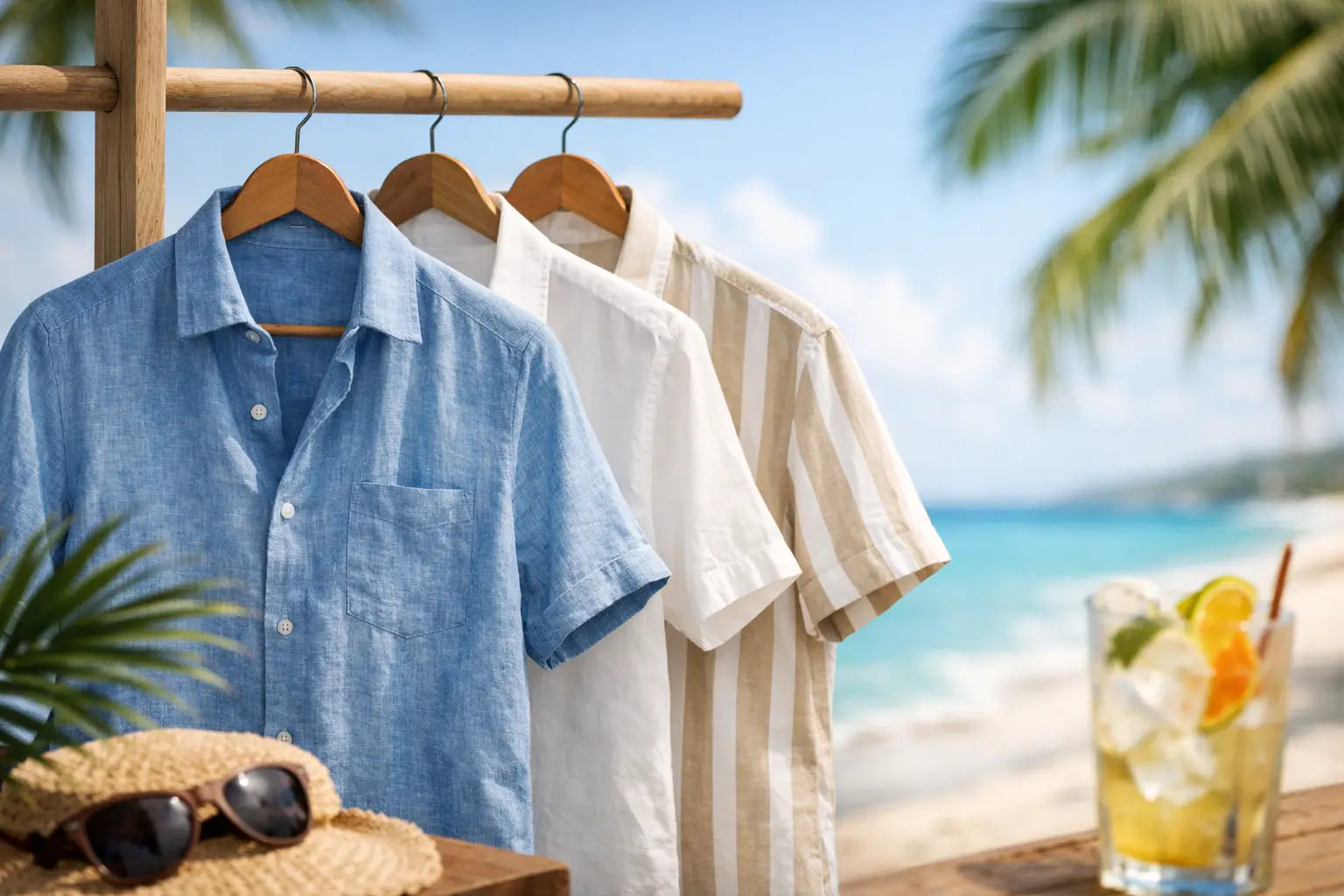
Best Men's Shirts for Hot Weather
A shirt can look sharp at 8 a.m. and feel like a mistake by noon if the fabric is wrong. That is why finding the best men's shirts for hot weather comes down to more than color or sleeve length. The right shirt has to manage heat, move with you, and still hold a polished shape when the day includes work, errands, dinner, or travel.
For most men, the challenge is not simply dressing lighter. It is dressing lighter without looking underdressed. A hot-weather shirt should still feel intentional, especially if your week moves between office hours, client meetings, casual dinners, and weekend plans. The best options balance breathability, structure, and versatility so you stay comfortable without giving up a refined look.
What makes the best men's shirts for hot weather
The first thing to get right is fabric. In warm conditions, breathability matters more than weight alone. Some shirts feel thin on the hanger but trap heat once you put them on. Others have enough structure to look elevated while still allowing airflow. That difference usually comes down to fiber content and weave.
Cotton remains one of the strongest choices because it is familiar, breathable, and easy to wear across settings. But not all cotton shirts perform the same way in the heat. A dense, stiff cotton poplin may look crisp, yet it can feel less forgiving during long humid days. A softer cotton with stretch or a more open weave often wears better when comfort matters just as much as presentation.
Linen has a strong reputation for summer for a reason. It breathes exceptionally well and gives off a relaxed, confident look. The trade-off is wrinkle visibility. If your style leans more casual or your office dress code is flexible, linen earns its place. If you need a cleaner business-casual finish, a cotton-linen blend or a refined lightweight cotton shirt may give you better range.
Performance fabrics also deserve attention, especially for men who spend long hours in motion. A well-made stretch shirt can help with airflow, ease of movement, and day-long comfort. The key is choosing one that still looks like a real shirt, not activewear dressed up as office clothing. The best hot-weather performance shirts keep a tailored appearance while adding flexibility where traditional woven shirts can feel restrictive.
Fabric choices that work in real life
If you want one shirt category that covers the most ground, start with lightweight cotton stretch. It wears cleanly, feels familiar, and transitions well from weekday to weekend. This is often the smartest option for men who want a polished shirt that can handle heat without becoming too casual.
Cotton knit-stretch shirts are another strong choice, especially if comfort is your top priority. The knit construction can feel softer and more forgiving than a traditional woven shirt, which makes a difference during long commutes, outdoor events, or full days at the office. A tailored fit keeps this style from looking too relaxed.
Linen and linen blends are ideal when breathability is the main objective. They are especially strong for resort wear, summer dinners, vacations, and casual Fridays. The wrinkle factor is real, so these are best when a slightly lived-in finish still fits the setting.
Lightweight performance blends work best for men who value convenience. If you run hot, travel often, or want a shirt that is less likely to cling and crease, these fabrics can be a practical upgrade. The trade-off is that some synthetic-heavy blends can lose the natural hand feel of cotton, so quality matters.
Fit matters more in summer
A common mistake in hot weather is sizing up too much in search of airflow. Extra room can help, but a shirt that is too loose often looks sloppy and can actually sit heavier on the body. On the other side, a shirt cut too close traps heat and highlights sweat more easily.
The sweet spot is a contemporary or tailored fit that leaves space to move without excess fabric through the waist and chest. This is where better shirt design shows. A clean fit through the shoulders and sleeves keeps the shirt sharp, while a little flexibility in the body makes it easier to wear from morning through evening.
Stretch also changes the equation. A shirt with controlled stretch can fit closer and still feel comfortable, which is valuable when you want a modern silhouette in warm conditions. For business-casual dressing, that combination of shape and comfort is hard to beat.
Best shirt styles for different hot-weather settings
Not every warm-weather shirt needs to do the same job. For office days, a lightweight button-up in white, light blue, or a subtle pattern is usually the strongest foundation. It looks professional, reflects heat better than dark colors, and pairs easily with chinos or performance pants.
For daily wear, casual button-ups in breathable cotton or knit-stretch fabrics offer more versatility than a basic tee while keeping the outfit easy. They are especially useful when your day is mixed and you want one shirt that can handle lunch meetings, errands, and evening plans.
For social events and weekends, linen shirts and short-sleeve button-ups come into play. A refined short-sleeve shirt can look clean and intentional if the fit is right and the collar holds its shape. Boxy cuts tend to feel less elevated, so it is worth choosing one with a more tailored profile.
For travel, performance-driven shirts stand out. A shirt that resists wrinkles, moves easily, and stays comfortable in changing temperatures gives you more mileage with less effort. That kind of versatility is exactly what makes a shirt worth keeping in regular rotation.
Color and pattern choices that help in the heat
Lighter shades are the obvious move, but the reason goes beyond appearance. White, sky blue, pale gray, soft pink, and muted neutrals tend to feel cooler in direct sun and look seasonally appropriate. They also make it easier to build a refined warm-weather wardrobe because they pair cleanly with navy, stone, khaki, olive, and lighter summer trousers.
Patterns should stay controlled. Thin stripes, understated checks, and subtle contrast details add interest without making the shirt feel visually heavy. In hot weather, cleaner styling usually looks stronger. The more effortless the shirt appears, the more premium it tends to read.
Dark colors are not off-limits, but they work best at night or in strongly air-conditioned settings. If you prefer deeper tones, choose lighter-weight fabrics so the look stays balanced.
Details that separate a good shirt from the right shirt
In warm weather, small details have outsized value. A softer collar can feel easier and less rigid, but it still needs enough structure to frame the face. Clean plackets, refined buttons, and contrast trim can elevate a shirt without overcomplicating it. These touches matter because summer dressing often uses fewer layers, so the shirt itself carries more of the look.
Cuff design matters too. If you regularly roll your sleeves, the fabric needs to hold shape and feel comfortable against the skin. Shirts with thoughtful construction tend to perform better here. They keep their appearance even when worn more casually.
This is also where a brand like LEVINAS fits naturally into the conversation. Men looking for warm-weather shirts often want more than breathability alone. They want contemporary fit, stretch comfort, and polished detailing in one piece, because the shirt has to work across more than one setting.
How to build a smarter hot-weather rotation
If you want a wardrobe that works without overthinking it, focus on range rather than volume. A few well-chosen shirts will outperform a closet full of average ones. Start with a lightweight white or light blue button-up for office and event use. Add a breathable patterned shirt for variety, a knit-stretch option for long days, and a linen or linen-blend shirt for weekends and vacations.
That mix covers most summer situations without forcing you to choose between comfort and presentation. It also keeps your wardrobe flexible, which is essential when dress codes are less formal but expectations still exist.
The best men's shirts for hot weather do not just help you stay cool. They make getting dressed easier because they remove the usual compromise. When fabric, fit, and function are all working together, a shirt stops being something you tolerate in the heat and becomes one of the most useful pieces in your closet.
Choose shirts that look composed, feel light, and earn their place beyond a single season. That is how a summer wardrobe starts pulling its weight.



Leave a comment
This site is protected by hCaptcha and the hCaptcha Privacy Policy and Terms of Service apply.