
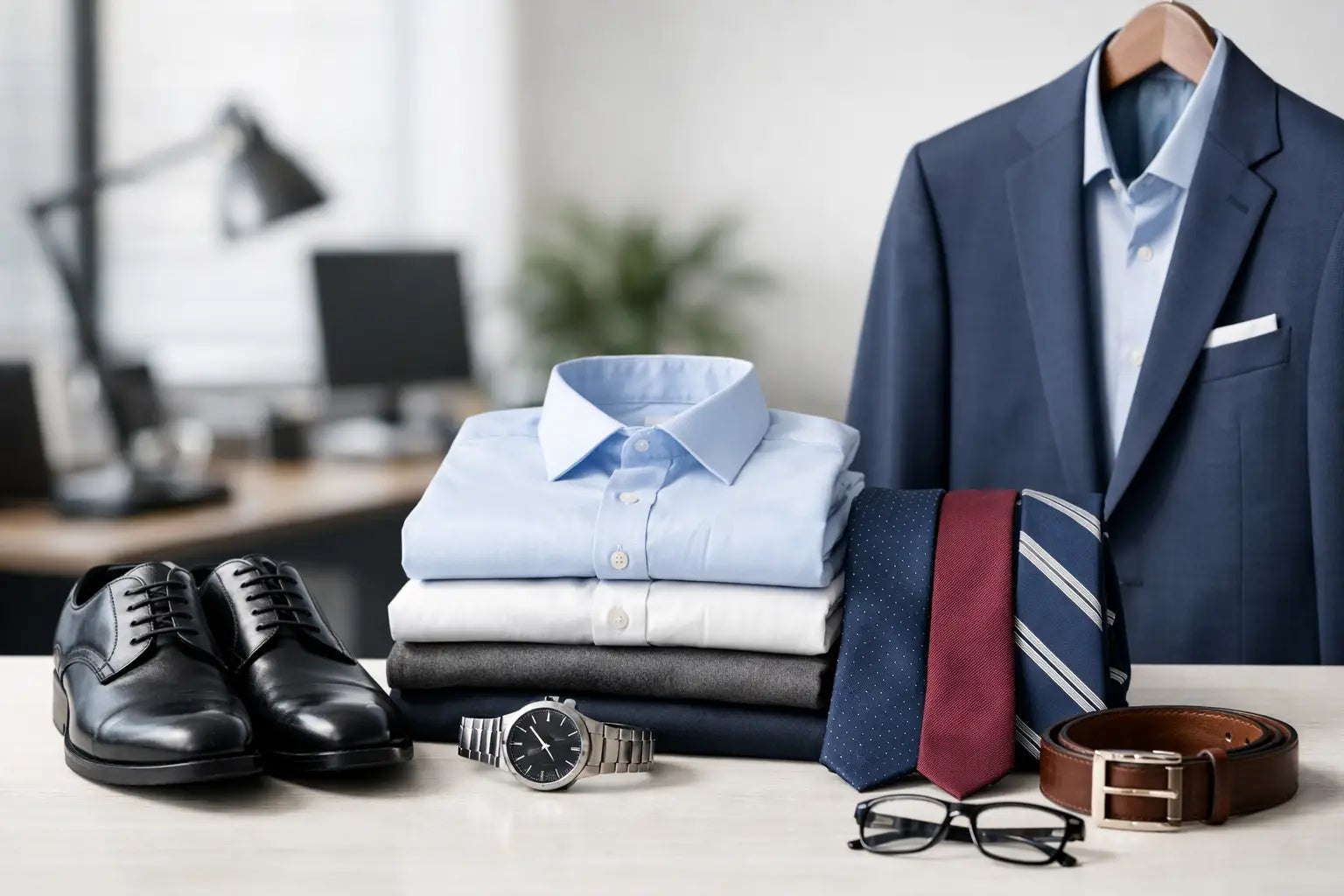
10 Office Wardrobe Essentials Men Need
A crowded closet does not automatically give you a strong work wardrobe. Most men only need a focused rotation of office wardrobe essentials men can wear on repeat - pieces that look polished at 8 a.m., stay comfortable through long meetings, and still feel right at dinner after work.
That is the difference between getting dressed and dressing with intent. When each piece earns its place through fit, fabric, and versatility, your wardrobe works harder, and your mornings get easier.
Why office wardrobe essentials for men matter
Office style has shifted. Many workplaces no longer require a full suit every day, but they still expect structure, consistency, and good judgment. That leaves a lot of men in the middle - too formal in one outfit, underdressed in the next.
A well-built business-casual wardrobe solves that problem. It gives you range without making you guess. The goal is not to own more clothes. It is to own the right clothes in the right fits, with enough performance and polish to handle commutes, presentations, travel, and long days at a desk.
The best office wardrobe is also built around repeat wear. If a shirt wrinkles too easily, if pants lose shape by midday, or if a layer only works with one outfit, it is not really essential. Utility matters just as much as appearance.
The shirt is the foundation
For most offices, the shirt does the heavy lifting. It frames your face, sets the tone of the outfit, and determines whether the look reads sharp, relaxed, or unfinished. That is why a quality button-up is still the foundation of every man's wardrobe.
Start with three core shirt categories. First is the white dress shirt. It remains the cleanest option for presentations, client meetings, interviews, and any day when you want maximum sharpness with minimum effort. Second is the light blue shirt, which is slightly softer and often easier to wear across different skin tones and office settings. Third is a subtle pattern, such as a fine check or restrained stripe, which adds variety without losing professionalism.
Fit is what separates a shirt that looks expensive from one that looks off. A contemporary or tailored fit should follow the body without pulling at the chest or billowing at the waist. Stretch matters here. A shirt with controlled give moves better, wears longer through the day, and keeps a cleaner line when you sit, reach, and commute.
Fabric matters just as much. Crisp cotton still has its place, but many men now need more from their shirts. Soft hand feel, wrinkle resistance, breathability, and knit-stretch comfort can make a major difference if you wear your office clothes for ten or twelve hours at a time. This is where modern business-casual shirting has improved the category - refined appearance on the outside, comfort built into the construction.
The pants that keep the wardrobe moving
If shirts set the tone, pants determine whether the outfit feels current. Flat-front chinos and performance trousers are the clear winners for most work wardrobes because they bridge the gap between formal and casual with very little effort.
A navy chino is one of the smartest starting points. It works with white, blue, gray, and patterned shirts, and it pairs just as easily with loafers as it does with dress sneakers in a more relaxed office. Charcoal or medium gray trousers are equally valuable when you want a slightly more elevated look. Khaki can work well too, but it depends on the office. In more traditional environments, khaki may read too casual unless the fit and fabric are especially clean.
The ideal office pant should have structure, but not stiffness. That is why stretch blends and performance fabrics have become such strong wardrobe players. They hold shape, improve comfort, and make slim or tailored fits easier to wear all day. A trim silhouette usually looks best, but not every man needs the same cut. If your pants pull through the thigh, they are too tight. If they collapse around the ankle, they are too loose. Clean lines matter more than trend-driven narrowness.
Smart layers separate average from polished
A lot of office wardrobes stall because they stop at shirt and pants. That works on some days, but layering is what gives your wardrobe range. It lets you adapt to conference rooms, changing weather, and dress codes that shift from internal meetings to client-facing moments.
The blazer is still the most useful layer you can own. In navy, it sharpens almost any office outfit without feeling overly formal. Worn over a dress shirt and chinos, it gives immediate structure. Worn over a knit-stretch button-up and performance pants, it keeps the look modern and comfortable.
A fine-gauge sweater or quarter-zip also earns a place, especially in cooler months or offices with aggressive air conditioning. The key is choosing clean, lightweight knits rather than bulky layers. Merino and cotton blends usually work best because they sit smoothly over a shirt and under a jacket.
Not every office needs a blazer every day. That is the trade-off. In a relaxed tech or creative setting, a refined knit layer may be the smarter investment. In finance, law, consulting, or sales, the blazer gives you broader coverage. If your office environment changes from day to day, owning both is the practical move.
Shoes should ground the outfit, not compete with it
You can wear a strong shirt and tailored pants, then lose the effect with the wrong shoes. Office footwear should be clean, understated, and versatile enough to support multiple outfit combinations.
Leather loafers are one of the best options because they move easily between business-casual and more polished office looks. A dark brown pair is especially flexible. It works with navy, gray, olive, and most shades of chinos or trousers. Cap-toe derbies or oxfords are stronger choices if your office leans more formal.
Minimal dress sneakers can work too, but only if the design is truly clean. No oversized sole, no loud branding, no athletic detailing. They make sense in modern offices where blazers and chinos are standard but ties are rare. If your workplace still values classic dress, traditional leather shoes are the safer investment.
Condition matters as much as style. Even great shoes look careless if they are creased, dusty, or worn at the heel. Essentials are only effective when they are maintained.
The accessories that finish the job
A strong office wardrobe does not need many accessories, but the few you choose should be deliberate. A quality belt in brown or black leather should match the tone of your shoes closely enough to feel intentional. A slim watch adds polish without trying too hard. A structured work bag or brief backpack keeps the whole look more refined than an old gym duffel ever will.
This is also where restraint matters. Office accessories should support the outfit, not dominate it. Loud hardware, oversized logos, and novelty details usually shorten the life of a work wardrobe because they do not pair easily across multiple looks.
Building a rotation that actually works
The most effective wardrobe is not built around one perfect outfit. It is built around repeatable combinations. That means each essential should work with at least three or four others in your closet.
A white shirt should pair with navy chinos, gray trousers, and a blazer. A light blue shirt should work with brown loafers, navy pants, and a fine-gauge sweater. A patterned shirt should layer under a solid jacket without visual clutter. When you shop this way, you stop buying isolated pieces and start building a real system.
This is where many men benefit from choosing brands that focus on fit consistency and fabric performance. If you know your size, know your preferred silhouette, and trust the construction, replacing or adding key pieces becomes far easier. LEVINAS speaks directly to that need, especially for men who want contemporary business-casual shirts and stretch-driven pants that look elevated without feeling restrictive.
What to prioritize first
If you are rebuilding from scratch, start with the items you will wear most often. A white shirt, a light blue shirt, navy chinos, gray trousers, dark brown loafers, and a navy blazer can cover a surprising amount of ground. After that, add variation through a subtle patterned shirt, a refined knit layer, and a second pair of office-ready pants.
It is tempting to chase statement pieces, but essentials deliver more value. They reduce decision fatigue, sharpen your daily appearance, and make every additional purchase more useful. For a working man, that is what style should do.
The best office wardrobe is not the loudest or the largest. It is the one that makes you look prepared every time you walk into the room, while still feeling comfortable enough to stay focused on everything else that matters.

Leave a comment
This site is protected by hCaptcha and the hCaptcha Privacy Policy and Terms of Service apply.