

Best Office Clothes for Hot Weather
By 10 a.m., the problem is usually clear. The commute was warm, the office runs unevenly, and the shirt that looked sharp at home already feels heavy. Choosing the right office clothes for hot weather is less about dressing down and more about dressing smarter - with lighter fabrics, cleaner fits, and pieces that keep a polished business-casual look intact.
For most men, summer workwear fails in one of two ways. It is either too formal for the temperature, or too casual for the setting. The answer sits in the middle: refined pieces engineered for airflow, stretch, and all-day comfort. When your wardrobe is built correctly, you can still look professional without relying on stiff layers or dense fabrics that work against the season.
What office clothes for hot weather should do
Hot-weather office dressing starts with performance, but it should never look technical in the wrong way. The best pieces still read polished from across the room. That means shirts that hold their shape, pants that maintain a tailored line, and fabrics that breathe instead of trapping heat.
Fit matters just as much as fabrication. Oversized clothing can seem like the obvious fix in summer, but too much excess fabric often looks sloppy and can feel heavier as it hangs on the body. On the other hand, anything too slim reduces airflow and tends to show sweat faster. A contemporary or tailored fit usually lands in the right place - clean through the chest and shoulders, comfortable through the body, and easy to wear through a full workday.
Color also plays a practical role. Lighter tones reflect heat better and visually feel more seasonal, but they still need enough structure to look office-ready. Crisp white, soft blue, light gray, stone, and muted neutrals tend to outperform louder shades because they pair easily and keep the overall look sharp.
Start with shirts - the foundation of warm-weather office style
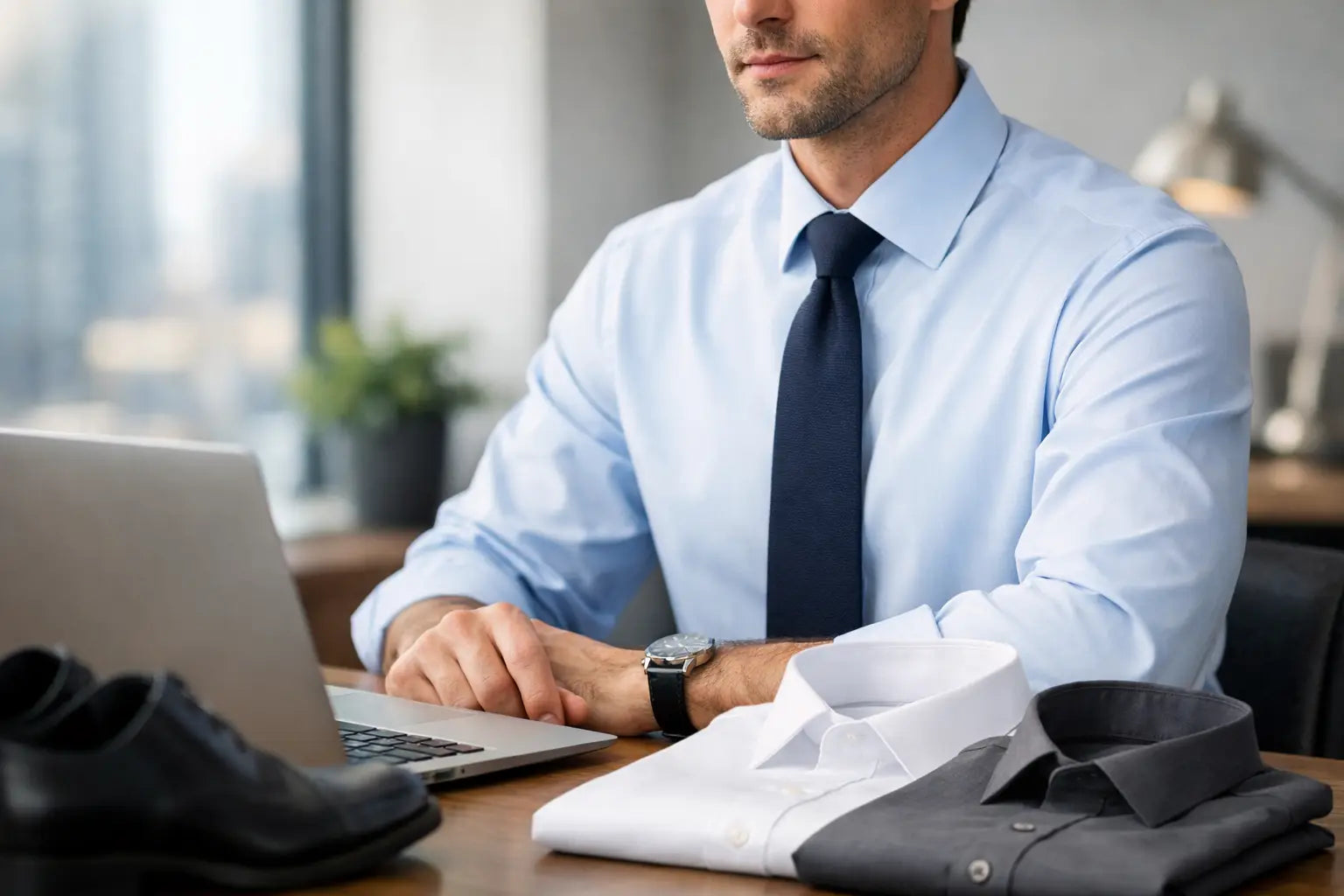
If one category does the heavy lifting in summer, it is the shirt. A good warm-weather button-up should feel lighter on the body without losing the crisp appearance expected in a professional setting. This is where fabric choice separates an average shirt from one you will actually want to wear more than once a week.
Cotton remains a strong choice because it breathes well and keeps a natural, elevated look. But pure cotton alone is not always the most forgiving on long, hot days. A cotton stretch blend often performs better in motion, especially if your day includes commuting, sitting, walking between meetings, and transitioning from office to dinner. Knit-stretch shirts are particularly strong here because they offer softness and flexibility while still presenting like a dress shirt when cut correctly.
The best office shirts for summer also avoid unnecessary bulk. A lighter-weight construction, a smooth placket, and a structured but not overly heavy collar all help. Contrast detailing and refined finishing can add a premium feel without making the piece look fussy. In a business-casual wardrobe, that balance matters.
Short sleeves can work, but they depend on your office. In a more relaxed environment, a clean short-sleeve button-up in a tailored fit is practical and modern. In a traditional office, a lightweight long-sleeve shirt with breathable fabric is usually the stronger move. Sleeves can always be rolled after hours. It is much harder to make a casual shirt look more formal than intended.
The right pants keep the whole outfit professional
When temperatures rise, many men focus on the shirt and overlook the pants. That is usually where comfort breaks down first in the afternoon. Heavy chinos, rigid dress trousers, and anything with a thick waistband can make an otherwise solid outfit feel overbuilt for the season.
Lightweight chinos and performance pants are the better answer. They keep the business-casual standard intact while reducing heat retention and improving mobility. Stretch matters here. A pant that moves with you stays more comfortable through a long desk day and tends to keep a cleaner shape instead of pulling at the thigh or knee.
The ideal summer office pant should taper enough to look tailored, but not so aggressively that it clings. Breathability, recovery, and softness all matter, especially if you rotate the same few pairs during the week. Neutral colors like khaki, stone, light gray, navy, and muted olive give you range without adding complexity to the rest of the wardrobe.
If your office fully allows shorts, keep them polished. That means a tailored short with clean lines, minimal pocket bulk, and a hem that hits above the knee without going too casual. But in most professional settings, lightweight pants remain the safer and more versatile choice.
Layering in summer is still possible
Most offices are not consistently hot. The commute may be humid, the conference room may be cold, and your desk may sit somewhere in between. That makes layering useful, but only if the layer is strategic.
Skip anything bulky or heavily structured. Instead, think in terms of a lightweight overshirt, an unlined blazer if your office leans dressier, or a fine-gauge layer that can be taken off easily. The goal is not insulation. It is adaptability.
This is where versatile wardrobe building pays off. A breathable button-up paired with a stretch chino gives you enough polish on its own, so the layer becomes optional rather than essential. That creates a better-looking outfit and a more comfortable day.
Shoes and finishing details matter more than you think
The wrong shoes can make even the best hot-weather outfit feel too heavy. Thick-soled footwear, dense leather styles, or anything too formal for your office can throw off the balance. Loafers, minimalist dress-casual shoes, and clean leather sneakers in the right office setting all work well because they keep the outfit refined without adding visual weight.
Socks are part of the equation too. Lightweight, breathable socks or no-show options can make a real difference in comfort. The same goes for belts. A heavy belt with a large buckle can feel excessive in summer, while a cleaner, lower-profile option keeps the outfit sharper.
Small details matter when everything is stripped back. In hot weather, fewer layers mean fit, fabric, and finishing are doing more of the work.
How to build a warm-weather office rotation
A strong summer work wardrobe does not need to be large. It needs to be intentional. Start with several breathable button-up shirts in reliable colors, then add two to three lightweight pants that can rotate easily across the week. From there, choose shoes that work across both office and after-hours settings.
This is where a brand like LEVINAS fits naturally into the modern business-casual wardrobe. Shirts with tailored structure, stretch comfort, and elevated detailing solve a real problem for men who want to look polished without wearing rigid traditional dresswear. The same goes for chinos and performance pants that hold a clean silhouette while feeling easier to wear in heat.
The key is versatility. Every piece should be able to move between meetings, casual client settings, dinners, and travel days without feeling underdressed or overbuilt. That is what makes a wardrobe useful instead of just seasonal.
Common mistakes with office clothes for hot weather
The first mistake is choosing fabric based only on appearance. A shirt can look sharp on a hanger and still feel wrong after one hour outside. Always think about breathability, stretch, and weight, not just color or pattern.
The second is assuming less fabric automatically means better comfort. Tank-like undershirts, overly relaxed fits, and casual pieces that belong at the beach usually do not improve office dressing. They just weaken the look. Better summer style comes from smarter fabric and cleaner construction, not from abandoning standards.
The third is wearing the same dark, heavy palette year-round. There is nothing wrong with navy or black in moderation, but warm-weather office style improves when the wardrobe lightens up. A pale blue shirt with stone chinos simply looks more seasonally appropriate than a dark outfit trying to force its way through July.
Dressing sharp in heat comes down to better choices
The best office clothes for hot weather are the ones that handle temperature without compromising presentation. That usually means breathable shirts with stretch, lightweight tailored pants, and a color palette that looks clean and current. It is a more refined approach than simply dressing casually, and it works better for the way most men actually move through the day.
If your work wardrobe has felt heavy, stiff, or harder to wear every summer, the fix is not complicated. Choose pieces built for comfort, insist on fit, and let fabric do more of the work. When the clothes are right, looking polished in the heat stops feeling like effort.


Leave a comment
This site is protected by hCaptcha and the hCaptcha Privacy Policy and Terms of Service apply.