
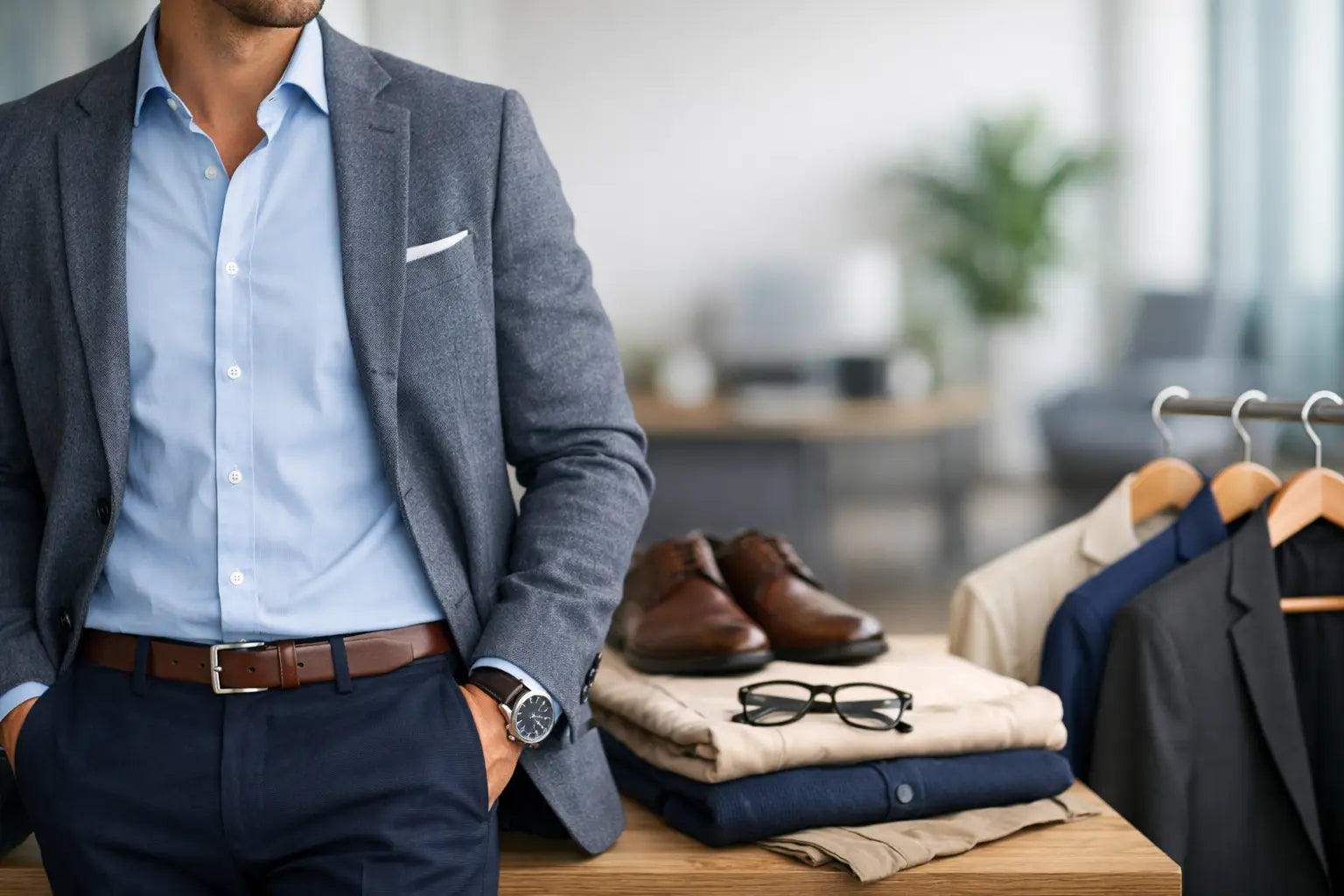
Business Casual Dress Code Guide for Men
If you have ever stood in front of your closet wondering whether a blazer is too much or jeans are not enough, this business casual dress code guide is for you. Business casual sounds simple, but in practice it sits in the gray area between office-ready and overdressed. The right approach is not to chase vague rules. It is to build a wardrobe around polished essentials that look sharp, fit cleanly, and stay comfortable through long days.
What business casual actually means
Business casual for men usually means tailored, refined clothing without the full formality of a suit and tie. Think collared shirts, clean trousers, polished shoes, and optional layering pieces like sport coats or lightweight sweaters. You should look intentional, not rigid.
The challenge is that business casual changes by workplace. A law office may expect dress shirts and chinos every day, while a tech office may accept dark denim with a button-up. That is why the best business casual wardrobe is built on versatile pieces that can move up or down depending on the setting.
A good test is this: if your outfit would still look appropriate in a client meeting, a team lunch, and an after-work dinner, you are probably in the right range.
The foundation of a business casual dress code guide
The foundation of every man’s wardrobe starts with shirts. In most business casual environments, the shirt sets the tone first. A crisp button-up instantly communicates more polish than a basic tee, and the right fabric makes a major difference in how the outfit feels by midday.
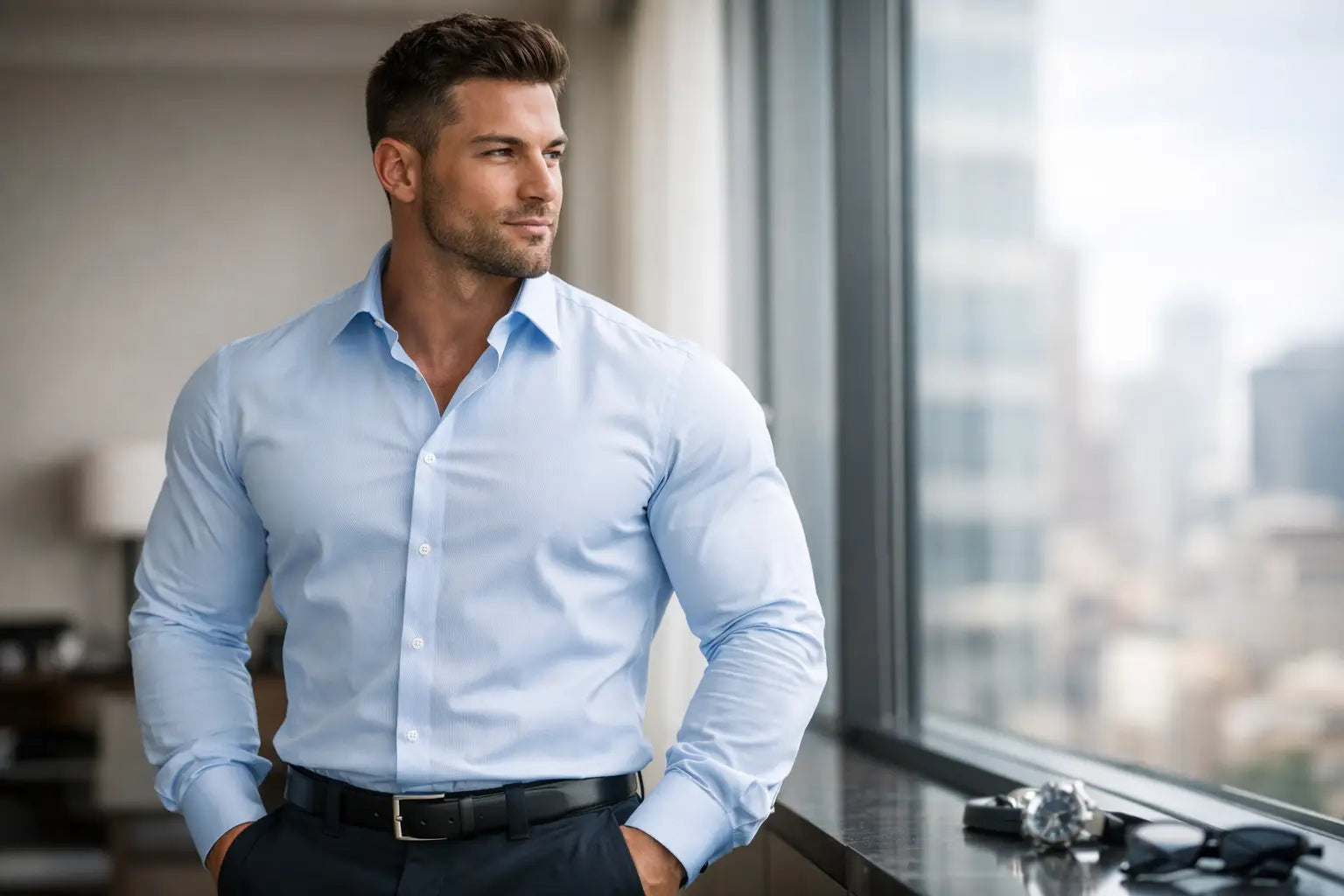
Contemporary-fit dress shirts are the safe core. They give structure, keep the silhouette clean, and work with chinos, performance pants, or a sport coat. Cotton knit-stretch shirts offer another strong option, especially for men who want more flexibility through the chest, shoulders, and arms without losing a tailored look. That balance matters. If a shirt looks refined but feels restrictive, it rarely earns repeat wear.
Color also matters, but not in a complicated way. White, light blue, gray, and subtle patterns cover most work situations. These shades layer easily, photograph well, and keep your closet streamlined. Once those are handled, you can add richer tones or contrast detailing for personality.
Pants come next. Chinos are a business casual staple because they bridge the gap between formal wool trousers and casual five-pocket pants. A clean, tapered fit in navy, khaki, gray, or olive gives you range. Performance pants serve the same role with even more comfort, especially for long commutes, travel days, or offices where you move often. Stretch helps here, but only when the fabric still holds shape. Too much softness can make an outfit read casual fast.
Shoes finish the message. Loafers, lace-up dress shoes, clean leather sneakers, and dress boots all have a place depending on your office. The rule is not that every shoe must look formal. It is that every shoe should look clean, intentional, and in good condition.
How to dress business casual without looking generic
The easiest mistake in business casual is dressing too safely and ending up forgettable. The second easiest mistake is trying too hard. The right middle ground comes from fit, texture, and detail.
Fit is where most outfits either succeed or fail. A shirt that pulls at the buttons or billows at the waist undermines the entire look. Pants that stack too heavily at the ankle or fit too slim through the thigh can do the same. Business casual should feel comfortable, but it should still look tailored. Clean lines create polish even in simple outfits.
Texture adds depth without making the outfit loud. A cotton knit-stretch shirt has more visual interest than a flat poplin shirt. A brushed chino feels more substantial than a thin, stiff pair of pants. Contrast trim, dual cuffs, and refined finishing details can elevate essentials without pushing them into fashion-for-fashion’s-sake territory.
This is where premium fabric matters. Better fabric drapes better, recovers better, and usually looks sharper over a full day. For men who need one wardrobe to cover work, dinners, travel, and events, versatility is not a bonus. It is the point.
What to wear in common business casual situations
A business casual dress code guide only works if it helps with real-life decisions. Most men are not dressing for an abstract category. They are dressing for a Monday meeting, a networking event, a date after work, or a Friday at the office.
For a standard office day, start with a button-up shirt and chinos. Add loafers or lace-up shoes. This combination is reliable, polished, and easy to repeat in different colors. If your office runs more conservative, tuck in the shirt and add a belt. If it leans more relaxed, a knit-stretch shirt with performance pants keeps the look sharp while feeling easier.
For client meetings or presentations, step up the structure. A dress shirt, tailored trousers or elevated chinos, and a blazer usually land well. You do not need a tie unless the environment calls for it. The blazer should sharpen the outfit, not make it feel like a leftover suit jacket.
For business travel, comfort moves higher on the priority list. This is where stretch shirts and performance pants earn their place. You want pieces that resist wrinkling, move well, and still look composed when you arrive. Stiff fabrics may look crisp at 8 a.m. and tired by 2 p.m.
For casual Fridays, the line gets thinner. Dark denim may be acceptable in some offices, but only if the wash is clean and the fit is refined. Pair it with a collared shirt and polished shoes, not sneakers that look gym-ready. If there is any doubt, choose chinos instead. They solve the problem without sacrificing ease.
Pieces that usually work and pieces that usually miss
Most business casual wardrobes do not need more clothes. They need better choices. Shirts with clean collars, tailored stretch chinos, polished knitwear, lightweight layering pieces, and versatile shoes do most of the heavy lifting.
What tends to miss the mark are graphic tees, distressed denim, athletic joggers, bulky hoodies, loud prints, and anything too tight or too oversized. Even when an office is relaxed, those pieces usually shift the outfit away from professional.
There are gray areas, of course. Clean minimalist sneakers can work in many modern offices. Dark jeans can work in some industries. An untucked shirt can work if the hem is designed for it and the length is right. Business casual is not about rigid formulas. It is about reading the room while keeping your standards consistent.
How to build a business casual wardrobe that works harder
A strong wardrobe does not rely on dozens of one-off pieces. It relies on a compact set of essentials that combine easily. Start with several button-up shirts in core colors, then add a few chinos or performance pants in neutral tones. From there, a blazer, a lightweight sweater, and two to three dependable shoe options can cover most situations.
This kind of closet saves time because every piece has a job. It also creates better value. When a shirt works for the office, dinner plans, and weekend events, you wear it more often and justify a higher standard of quality.
That is why fit-driven, fabric-focused essentials matter so much. A shirt with stretch, softness, and polished detailing gives you the versatility men actually need now. At LEVINAS, that mix of comfort and presentation is the point. A business casual wardrobe should not force you to choose between looking sharp and feeling comfortable.
The most common business casual mistakes
Overdressing can be just as awkward as underdressing. A full suit in a relaxed office can make you look out of step, just like wearing a polo and faded jeans in a client-facing role can make you look underprepared.
Another common mistake is ignoring fabric performance. Men often focus on color and fit, then end up with shirts that wrinkle quickly or pants that lose shape after a few hours. If you wear business casual often, durability and stretch are not minor features. They directly affect how the outfit performs.
The last mistake is treating business casual like a loophole for casual dressing. The standard is still polished. Comfort matters, but presentation still leads.
The easiest way to get business casual right is to choose pieces that do more than one thing well. Look for shirts that hold their shape, pants that move with you, and details that elevate the outfit without making it complicated. When your wardrobe is built on fit, comfort, and clean styling, getting dressed takes less thought and delivers better results every time.


Leave a comment
This site is protected by hCaptcha and the hCaptcha Privacy Policy and Terms of Service apply.