
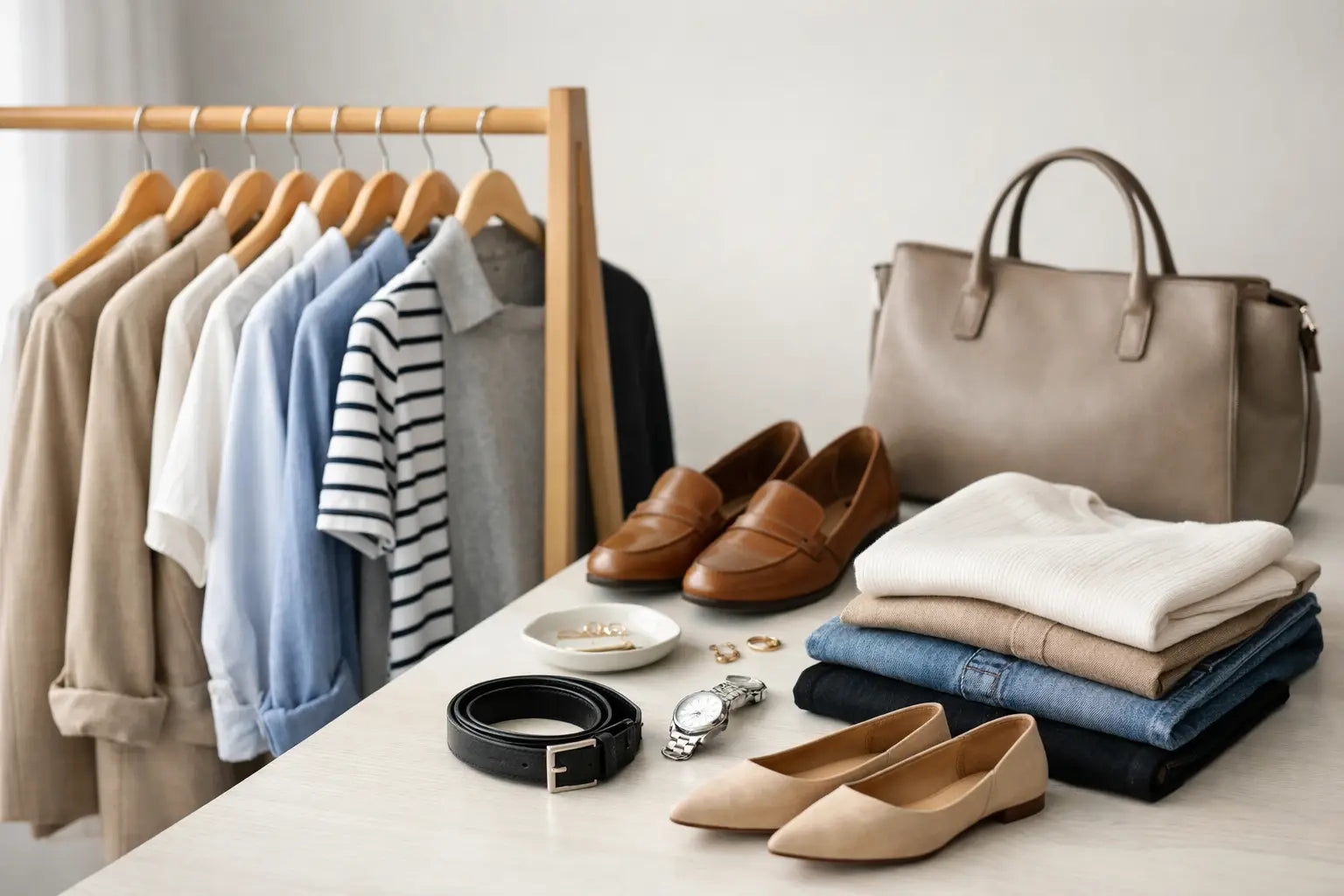
Business Casual Capsule Wardrobe Example
Monday starts with a client meeting, Tuesday leans more relaxed, and by Thursday you're expected to look polished again without feeling overdressed. That is exactly where a business casual capsule wardrobe example earns its place. For men who want to look sharp without overthinking every outfit, a tight, well-built rotation does more than save time. It gives you consistency, range, and the kind of confidence that comes from knowing everything in your closet works together.
The goal is not to own less just for the sake of minimalism. The goal is to own better. In a business-casual wardrobe, that means versatile shirts, clean trousers, smart layers, and shoes that can carry the whole lineup. Every piece should work across office days, dinners, travel, and the in-between moments where dress codes are not fully clear but appearance still matters.
A business casual capsule wardrobe example for men
A strong capsule starts with around 12 to 16 core pieces, not counting underwear, socks, or workout gear. That number is enough to create variety, but tight enough to keep every item accountable. If a piece only works in one narrow setting, it usually does not belong.
For most men, the foundation looks like this: four to five button-up shirts, two to three pants, one refined knit or polo, two layers, and two pairs of shoes. You can add a blazer if your office runs dressier, or keep it out if your week is more creative, remote, or client-flexible. The point is not to copy a fixed formula. It is to build around your actual calendar.
Start with shirts because they do the heavy lifting. A white button-up, a light blue button-up, and a subtle stripe or check cover most office needs. From there, add one darker solid, like navy or charcoal, and one more relaxed option in a soft pattern or textured fabric. Contemporary fit matters here. Too slim and it feels restrictive by noon. Too full and the whole outfit loses shape. Stretch cotton or knit-stretch fabric is the sweet spot if you want a cleaner silhouette with all-day comfort.
Pants should be just as intentional. A medium-gray performance trouser, a navy chino, and a khaki or stone option give you enough spread to rotate through most workweeks. Gray reads polished. Navy anchors the wardrobe. Khaki relaxes it without looking casual in the wrong way. If you work in a more conservative office, swap the khaki for charcoal. If your office is warmer, or your commute is long, fabric performance becomes a real advantage. Stretch, shape retention, and breathability are not extras. They are what keep pants looking composed after a full day of sitting, moving, and commuting.
A fine-gauge quarter-zip or crewneck sweater adds depth without making the wardrobe feel heavy. A knit polo can also earn its place, especially if your office leans modern business casual rather than traditional. Then add a lightweight blazer or structured overshirt depending on your dress code. The blazer is sharper and more formal. The overshirt is easier and more flexible. Neither is automatically better. It depends on whether your week includes presentations and dinners or mostly internal meetings and casual office days.
Shoes should keep the wardrobe grounded. A brown leather loafer or derby handles the polished side. A clean leather sneaker or dress-casual hybrid covers the more relaxed end. If sneakers are acceptable in your workplace, make sure they are simple, low-profile, and free of loud branding. The capsule only looks elevated when the shoes stay disciplined.
The exact pieces that make the capsule work
Here is a practical lineup that covers a typical professional schedule without waste.
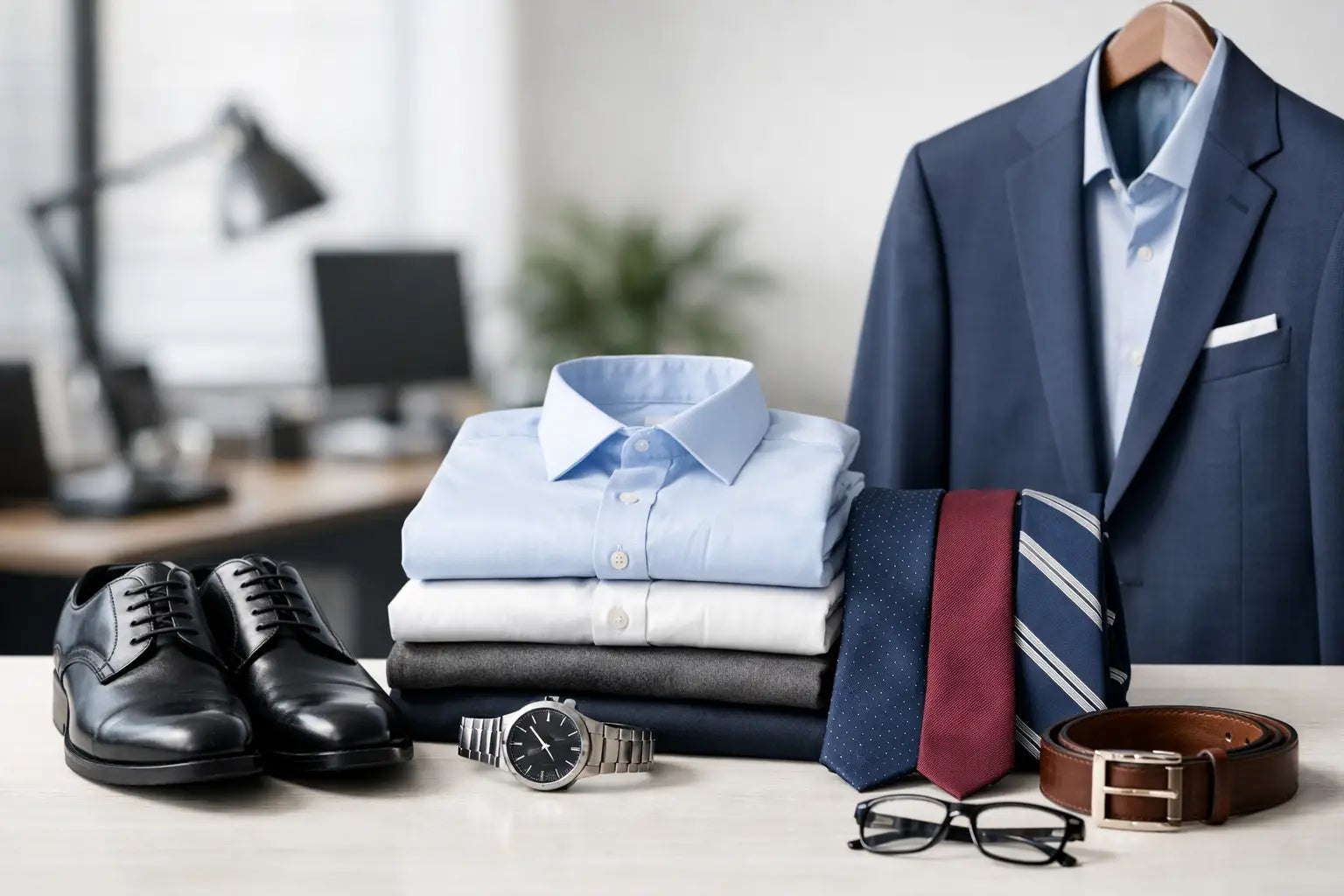
You need five shirts: one white dress shirt, one light blue dress shirt, one subtle striped shirt, one textured solid in navy or slate, and one sportier button-up with stretch for less formal days. This gives you enough variety for back-to-back wear without repeating the same look.
You need three pants: navy chinos, gray performance pants, and stone chinos. That mix handles almost every shirt color and gives you visual range across the week.
For layers, keep one lightweight blazer in navy and one fine-gauge sweater in charcoal or heather gray. If your office is more casual, an overshirt can replace the blazer, but for many men the blazer is still the most efficient way to elevate a simple shirt-and-chino combination.
Add one knit polo for warm days or relaxed Fridays. Then finish with two shoes: brown loafers and minimal white or brown leather sneakers. A brown belt and a simple watch complete the picture without overcomplicating it.
That is your business casual capsule wardrobe example in its most useful form. It is compact, but it does not feel limiting because each category is built for crossover.
How to build outfits from this business casual capsule wardrobe example
The power of a capsule is not the item count. It is the number of combinations you can create without second-guessing fit, formality, or color balance.
A white shirt with gray performance pants and brown loafers works for presentations, interviews, or office days when you need to look especially put together. A light blue shirt with navy chinos and a blazer is a reliable standard when you want to look confident without appearing too formal. A striped shirt with stone chinos softens the look while staying fully work-appropriate.
For more relaxed days, wear the textured navy shirt with gray pants and clean sneakers. If you want an outfit that transitions easily after work, the knit polo with navy chinos and loafers is one of the most efficient combinations in the wardrobe. It looks intentional, feels easy, and avoids the drop-off that can happen when a business-casual look turns too casual.
The real advantage here is speed. You are not solving for a new outfit every morning. You are working from a system where the fit, colors, and formality are already aligned.
What men often get wrong with a capsule wardrobe
The most common mistake is buying pieces that are versatile in theory but weak in practice. A shirt that wrinkles too easily, pants that lose shape by the afternoon, or a blazer that only works over one type of shirt will not carry their weight. In business casual, utility has to include appearance. If the piece looks tired too quickly, it is not a staple.
Another mistake is going too minimal on color and texture. A wardrobe made entirely of white, black, and flat navy can start to feel repetitive fast. That does not mean you need loud pattern. It means subtle variation matters. A stripe, a soft heathered knit, contrast trim, or a richer shade of blue gives the capsule dimension without making it harder to style.
Fit is the biggest factor of all. If the shoulder line is off, the sleeve is too blousy, or the pant leg breaks awkwardly, no amount of premium fabric can fix the look. A business-casual capsule succeeds when every item feels tailored to your frame, even if it is built with stretch and ease. That balance between structure and comfort is where modern menswear has improved most.
For that reason, brands that focus on shirts as the foundation of the wardrobe often get the capsule right. A well-cut button-up with stretch, refined detailing, and a shape that holds through the day does more for your lineup than a closet full of average basics. LEVINAS fits naturally into that approach because the shirt remains the centerpiece, and the rest of the wardrobe can build around it with less friction.
How to adjust the capsule for your office
Not every workplace defines business casual the same way. If you work in finance, law, or a client-facing corporate setting, lean more heavily on dress shirts, darker trousers, and the blazer. In that case, the knit polo becomes occasional rather than weekly.
If you work in tech, design, real estate, or run your own business, the wardrobe can relax a notch. You may wear stretch chinos more often than performance trousers, and sneakers may be fully acceptable. That does not mean anything goes. The pieces still need polish, especially in fit and fabric.
Climate also changes the mix. In warmer states, lighter-weight shirts and breathable pants matter more than layered pieces. In colder regions, you may want one additional sweater and a darker overshirt. A capsule is not rigid. It should respond to how you actually live.
The best version is the one you wear consistently. If a blazer stays untouched for months, replace it with a second sweater or another elevated casual layer. If white shirts are your default three times a week, invest there first rather than spreading budget evenly across categories.
A good wardrobe should reduce decision-making, not create another style project. When every shirt earns repeat wear, every pair of pants can move across settings, and every layer sharpens the outfit without sacrificing comfort, getting dressed becomes simpler in the best possible way. Build from pieces that look premium, feel easy, and work harder than they take up space. That is where business casual stops being vague and starts becoming useful.


Leave a comment
This site is protected by hCaptcha and the hCaptcha Privacy Policy and Terms of Service apply.