
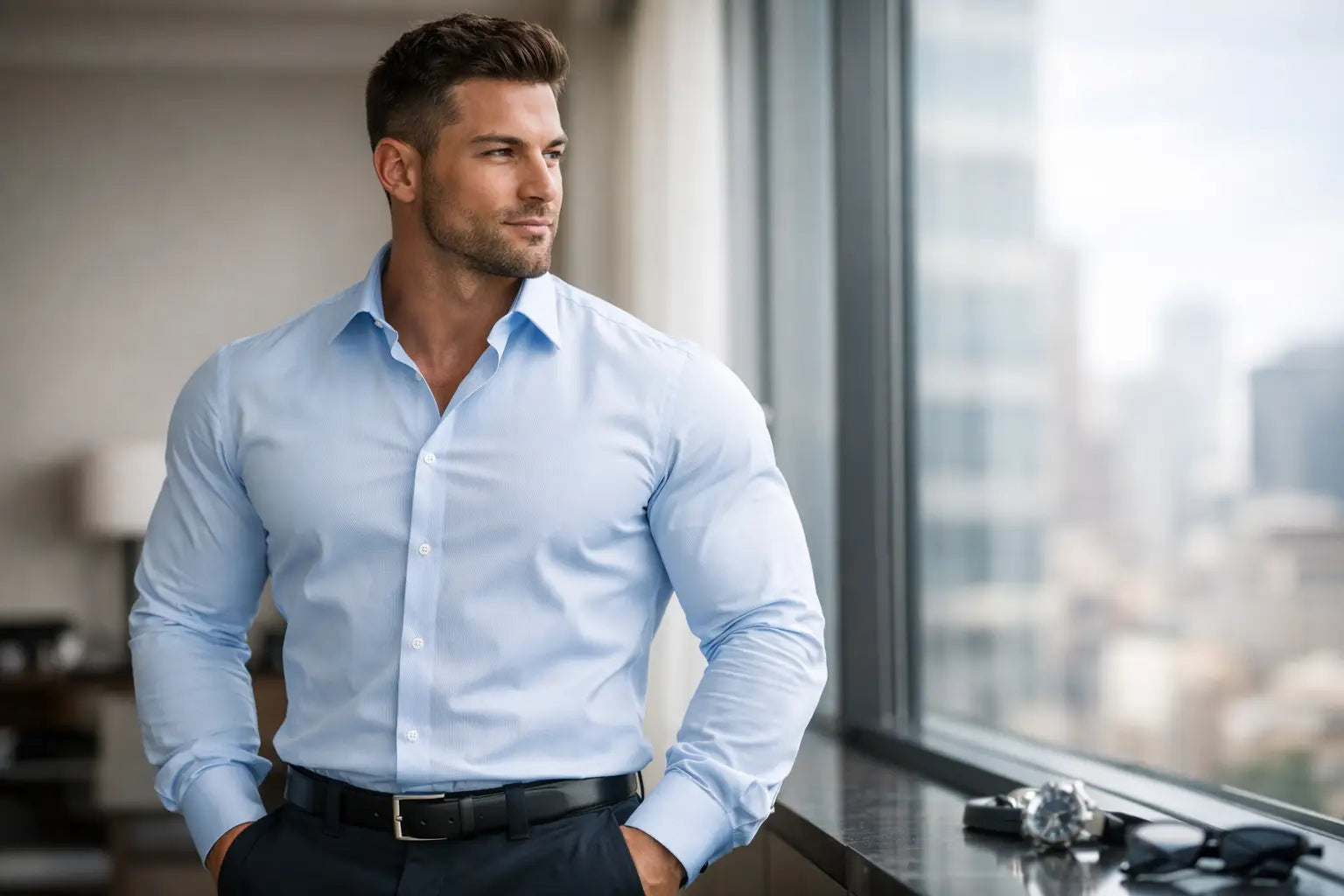
Dress Shirts for Muscular Men That Fit
A shirt that fits your neck but strains across your chest is not a fit issue you should have to accept. Neither is sizing up just to make room for your shoulders, only to end up with extra fabric pooling at the waist. For men with athletic builds, finding dress shirts for muscular men comes down to one thing: balance. The right shirt needs structure where you need room and restraint where you do not.
That sounds simple, but most dress shirts are still built around a straighter body shape. If you train regularly, carry width through the chest, or have developed shoulders, arms, and upper back, standard sizing often forces a compromise. You either get mobility with a sloppy midsection or a cleaner silhouette with tension at every button. A polished shirt should not ask you to choose between comfort and presentation.
Why dress shirts for muscular men are hard to get right
The issue is not just size. It is proportion. Muscular men tend to need more space through the chest, delts, biceps, and lats, while still wanting a trim waist and a clean line under a blazer or on its own. Traditional dress shirts can handle one of those demands, but not always all of them at once.
A classic fit often solves the shoulder problem, but it usually creates excess fabric through the torso. That extra room can make an otherwise sharp outfit look unfinished. On the other hand, a slim fit may look right on the hanger but pull at the placket, restrict movement, and create tension lines that show up the moment you sit, reach, or drive.
This is why fit-driven shirting matters. A better shirt for an athletic build is not simply bigger or smaller. It is cut with intention, using shape and fabric together.
What to look for in dress shirts for muscular men
Start with the shoulder line. If the shoulder seam sits too far inward, the rest of the shirt will fight your build all day. If it drops too far off the shoulder, the shirt loses structure and looks borrowed. The shoulder is the anchor point, especially for men with broader upper bodies.
Next, pay attention to the chest. You want enough room to button the shirt comfortably without stress lines pulling outward. The fabric should lie flat when you stand naturally. If the chest is too tight, every movement becomes noticeable. If it is too loose, the shirt loses its sharpness under a jacket and looks oversized without actually fitting better.
The waist is where many shirts fail athletic builds. A strong chest and shoulder measurement often pushes men into a larger size, but if the waist is not shaped properly, the shirt balloons through the middle. A contemporary fit or tailored fit usually works better here because it keeps the body clean without feeling aggressive or restrictive.
Sleeves matter more than many men realize. Muscular arms can make narrow sleeves feel tight quickly, especially around the bicep and forearm. But too much volume in the sleeve can read casual rather than refined. The ideal sleeve has enough room for movement with a controlled taper that still looks polished.
Then there is the collar. For men with thicker necks, an overly tight collar can ruin an otherwise strong shirt. You want a collar that closes cleanly without pressure and still frames the face well, whether you wear it open or with a tie.
Fabric can make or break the fit
Cut is critical, but fabric is what determines how the shirt behaves once it is on your body. This is where many men with athletic builds get immediate relief. A shirt with stretch does not just feel more comfortable. It often looks better because it moves with the body instead of resisting it.
Cotton with stretch is one of the strongest options for business-casual dressing. It keeps the polished appearance of a dress shirt but adds flexibility across the shoulders, arms, and chest. That matters during real life, not just in front of a mirror. You reach for a laptop bag, sit through a long meeting, head to dinner after work, and the shirt still holds its shape.
Knit-stretch dress shirts are especially useful if you want a more forgiving feel without sacrificing a refined look. They can offer a cleaner drape on a muscular frame because the fabric adapts instead of pulling. That said, too much softness can make a shirt feel less formal. If your office leans traditional or you wear shirts under tailored jackets often, choose stretch fabrics that still have enough body to maintain structure.
Performance fabrics also deserve a close look. Men who run warm or move between commutes, offices, and evening plans benefit from shirts that resist wrinkling and stay comfortable for long wear. The trade-off is that some performance-heavy shirts can lose the crisp hand feel associated with classic shirting. It depends on where you wear the shirt most and how formal you need it to read.
The best fit profile for an athletic build
For most muscular men, the sweet spot is not extreme slim and not boxy classic. It is a tailored or contemporary fit with stretch. That combination gives you room where your body needs it while preserving a clean silhouette.
A good athletic-friendly shirt should open comfortably across the upper body, taper with control through the waist, and maintain enough structure to look sharp untucked only if the hem is designed for it. If you are wearing your shirt tucked in for work, the body should stay smooth without bunching at the sides. If the shirt constantly comes untucked or folds heavily at the waist, the proportions are off.
Length is part of this conversation too. Broad-chested men sometimes size up for comfort and unknowingly add too much shirt length, which creates bulk around the waistband. That can affect the look of both dress pants and chinos. A better cut solves the upper-body fit without forcing extra fabric below the belt.
How to shop smarter instead of just sizing up
The instinct to go one size up is understandable, but it often solves the wrong problem. If your current shirt is tight in the chest but already loose at the waist, a larger size may only exaggerate the imbalance.
A better approach is to identify where the shirt is failing. If the shoulders are too narrow, start there. If the chest is the issue but the shoulders are right, focus on stretch and cut before you change sizes. If the waist is too full once the upper body fits, you likely need a more tailored profile, not a smaller shirt.
It also helps to compare shirts by construction, not just by tag size. Two medium shirts can fit entirely differently depending on how the armhole is cut, how the torso tapers, and how much give the fabric has. This is where a fit-focused brand has an advantage. LEVINAS, for example, builds its shirt offering around wearable polish, stretch comfort, and silhouettes that work across office, social, and everyday settings. That matters when you need your wardrobe to do more than pass a fitting-room test.
Styling matters once the fit is right
A strong shirt fit does more than feel better. It sharpens everything around it. When the shirt sits correctly on a muscular frame, the collar looks cleaner, the placket stays flatter, and the overall silhouette appears more intentional.
For work, pair a tailored stretch dress shirt with performance pants or clean chinos for a modern business-casual uniform that does not look overworked. For evening wear, a darker shirt with subtle contrast detailing can add dimension without leaning flashy. If you wear a blazer, make sure the shirt sleeve and shoulder remain smooth underneath. Extra fabric at the upper arm or waist will show quickly once you layer.
Color and pattern can also help refine the look. Solid shirts emphasize shape and fit, which is ideal when the cut is working in your favor. Small-scale patterns can soften the visual width of a broad chest, while strong contrast patterns may exaggerate pull lines if the shirt is too tight. In other words, fit first, style second.
A better standard for fit
Men with athletic builds should not have to treat dress shirts like a compromise category. The foundation of every man’s wardrobe should fit with the same precision and practicality he expects from the rest of his clothing. That means room through the chest and shoulders, shape through the waist, sleeves that move, and fabric that performs through a full day.
The right shirt does not announce itself with strain, excess fabric, or constant adjustment. It simply looks sharp, feels easy, and works across the hours that matter most. Once you know what to look for, shopping gets simpler - and getting dressed gets much better.


Leave a comment
This site is protected by hCaptcha and the hCaptcha Privacy Policy and Terms of Service apply.