
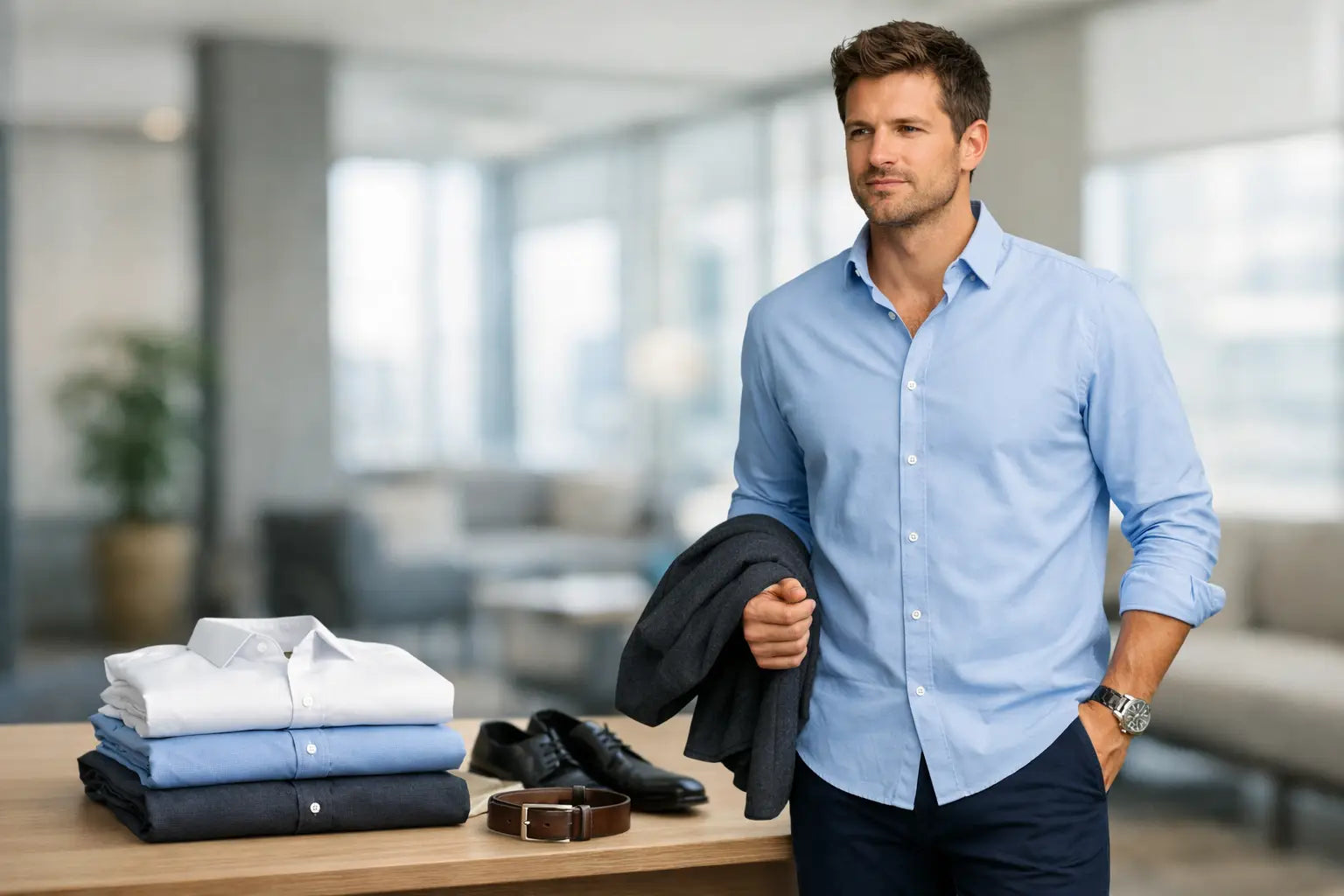
Business Casual Men Shirt Untucked Guide
A shirt that looks sharp tucked in can fall apart the second it’s worn loose. That is the real issue behind business casual men shirt untucked style - not whether untucked is allowed, but whether the shirt is actually built to carry that look with confidence.
In most modern offices, an untucked shirt can absolutely work. The catch is that business casual still asks for intention. If the hem is too long, the fabric too stiff, or the fit too full through the waist, the outfit reads unfinished instead of relaxed and polished. When the proportions are right, though, an untucked button-up becomes one of the most versatile pieces in a man’s wardrobe.
When a business casual men shirt untucked works
An untucked shirt works best in workplaces where the dress code leans modern rather than traditional. Think creative offices, hybrid work settings, casual client meetings, dinners after work, and everyday professional environments where a blazer is optional rather than expected. It signals ease, but it still needs to look deliberate.
That distinction matters. Business casual is not the same as casual Friday from twenty years ago. Today’s standard is cleaner and more tailored. A shirt worn untucked should still frame the body well, sit neatly at the shoulders, and keep its shape through a full day. If it looks like a dress shirt you forgot to tuck in, it misses the mark.
There are also moments when untucked is the wrong move. Formal presentations, conservative offices, job interviews in traditional industries, and events where everyone else is dressed more sharply usually call for a tucked shirt. Style has range, but reading the room is still part of dressing well.
The right shirt length makes the difference
Length is the first thing to get right. A shirt meant to be worn untucked should usually hit around the middle of the fly, give or take a little depending on your height and torso. If it drops much lower, it starts to resemble shirttail overflow. If it is too short, it can look cropped or unbalanced when you move.
The hem shape matters too. A gently curved hem is usually the safest option for business casual because it looks clean either on its own or layered under a lightweight jacket. A dramatically rounded dress-shirt hem tends to look incomplete when left out, while a perfectly straight hem can work well if the overall styling is slightly more casual.
This is where many men run into trouble. They buy a shirt designed primarily for tucked wear, then try to use it as an untucked option because the fabric or collar feels versatile. Sometimes that works, but often the extra length gives the outfit away. A business-casual shirt should be cut with enough polish for work and enough restraint in length to stand on its own.
Fit should look tailored, not tight
A clean untucked look depends even more on fit than a tucked one. When a shirt is tucked, extra fabric can be hidden or adjusted. Untucked, everything is visible. That means the body, sleeve, and hem all need to sit with control.
The best fit is usually contemporary or tailored rather than roomy. You want enough shape through the chest and waist to avoid blousing, but not so much tension that the buttons pull or the shirt clings. Stretch helps here because it allows a more refined silhouette without sacrificing comfort.
Sleeves are another detail men overlook. If the sleeve is too wide or too long, the shirt can immediately feel sloppy, even when the torso fits well. A neater sleeve opening and a cuff that holds its structure keep the whole shirt looking more elevated. That is especially useful if you plan to wear it from desk to dinner without changing.
Fabric decides whether it feels refined or too relaxed
Fabric is where business casual separates itself from weekend wear. The shirt should feel comfortable, but it also needs enough structure to hold a polished shape. Crisp cotton, cotton stretch blends, and knit-stretch shirting are strong options because they offer comfort while maintaining a sharper surface.
Very soft, drapey fabrics can be comfortable, but they may read too casual for professional settings unless the cut is especially clean. On the other side, stiff formal shirting can feel overly rigid when worn untucked, especially if the hem is not designed for it. The sweet spot is fabric with movement, recovery, and a smooth finish.
This is why performance details matter. Stretch construction, breathable fabric, and wrinkle resistance are not just comfort features. They directly affect how well an untucked shirt holds up over a long day. If the shirt collapses by noon, the look loses its edge.
Collar and details still matter
An untucked shirt should not look stripped down. It should still carry enough design presence to feel complete. A well-shaped collar helps frame the face and keeps the shirt looking intentional, even without a tie or jacket. Spread and semi-spread collars are especially versatile because they work in both work and social settings.
Details like contrast trim, clean plackets, refined buttons, and structured cuffs add visual polish without making the shirt feel formal. These are small elements, but they matter more in a simplified outfit. When you are wearing a shirt untucked with chinos or performance pants, the shirt itself becomes the centerpiece.
That is also why loud prints or overly distressed textures can be harder to style in a business-casual setting. Understated patterns, solid colors, and elevated finishes offer more flexibility. They look sharp on their own and pair easily with the rest of a practical wardrobe.
What to wear with an untucked shirt
For most men, the cleanest pairing is an untucked button-up with tailored chinos or refined performance pants. That combination keeps the outfit grounded in business casual while giving you room to move throughout the day. If the pants fit well and taper cleanly, the untucked shirt looks purposeful rather than overly relaxed.
Dark denim can work in some offices, but it depends on the environment and the shirt. If the denim is clean, slim, and free from distressing, it can support an elevated untucked look. Still, chinos are usually the safer and more versatile option if you want a polished finish.
Footwear should follow the same logic. Leather sneakers, loafers, dress sneakers, and clean lace-ups all work, depending on the setting. Bulky athletic shoes can undermine the outfit quickly. The goal is consistency - relaxed but controlled, comfortable but clearly styled.
Layering helps too. An untucked shirt under a lightweight jacket, overshirt, or unstructured blazer often looks even more complete because the outer layer sharpens the silhouette. It also gives you flexibility across different temperatures and occasions.
Colors that work hardest
If you want one untucked shirt to do the most work, start with white, light blue, navy, or subtle patterns like micro-checks. These shades move easily across office hours, dinners, travel days, and weekend plans that still call for polish.
Lighter colors tend to feel a bit crisper and more classic, especially in spring and summer. Darker tones can look sleek and modern, particularly in knit-stretch fabrics or evening settings. The right choice depends on how you wear the rest of your wardrobe, but versatility should lead the decision.
A shirt that fits well in a proven color will earn more use than a trend-driven style that only works in one context. For most men, that is the smarter investment.
Common mistakes with untucked business-casual shirts
The most common mistake is wearing the wrong shirt untucked and expecting styling to fix it. If the length is off or the fit is too loose, no pair of chinos will fully rescue the look. Construction matters from the start.
Another mistake is confusing casual with effortless. A wrinkled shirt, collapsed collar, or oversized body does not look relaxed in a premium way. It looks like the outfit stopped halfway. Business casual still benefits from sharp lines, quality fabric, and visible fit.
The last mistake is ignoring context. Some offices welcome an untucked shirt daily. Others only tolerate it when the rest of the outfit is especially clean. If you are unsure, start with a more tailored shirt in a classic color and pair it with elevated pants and polished shoes. That usually gives you the widest margin for error.
Choosing the right untucked shirt for your wardrobe
The best untucked shirt is not simply shorter. It should combine precise length, a tailored but comfortable fit, premium fabric, and enough design detail to stand on its own. That balance is what gives the shirt real wardrobe value.
For men building a practical business-casual rotation, versatility matters most. A shirt should move from office to after-hours without feeling overdressed or underdone. That is where contemporary fit, stretch comfort, and polished finishing details become more than product features - they become everyday advantages.
LEVINAS approaches business-casual shirting with that exact purpose in mind: shirts that look refined, wear comfortably, and hold their shape in the settings men actually move through. When those elements come together, wearing a shirt untucked stops feeling like a compromise and starts feeling like the smarter choice.
A good untucked shirt should make getting dressed easier, not more uncertain. If the fit is clean, the length is right, and the fabric keeps its composure, you won’t have to think twice about whether it works.


Leave a comment
This site is protected by hCaptcha and the hCaptcha Privacy Policy and Terms of Service apply.