
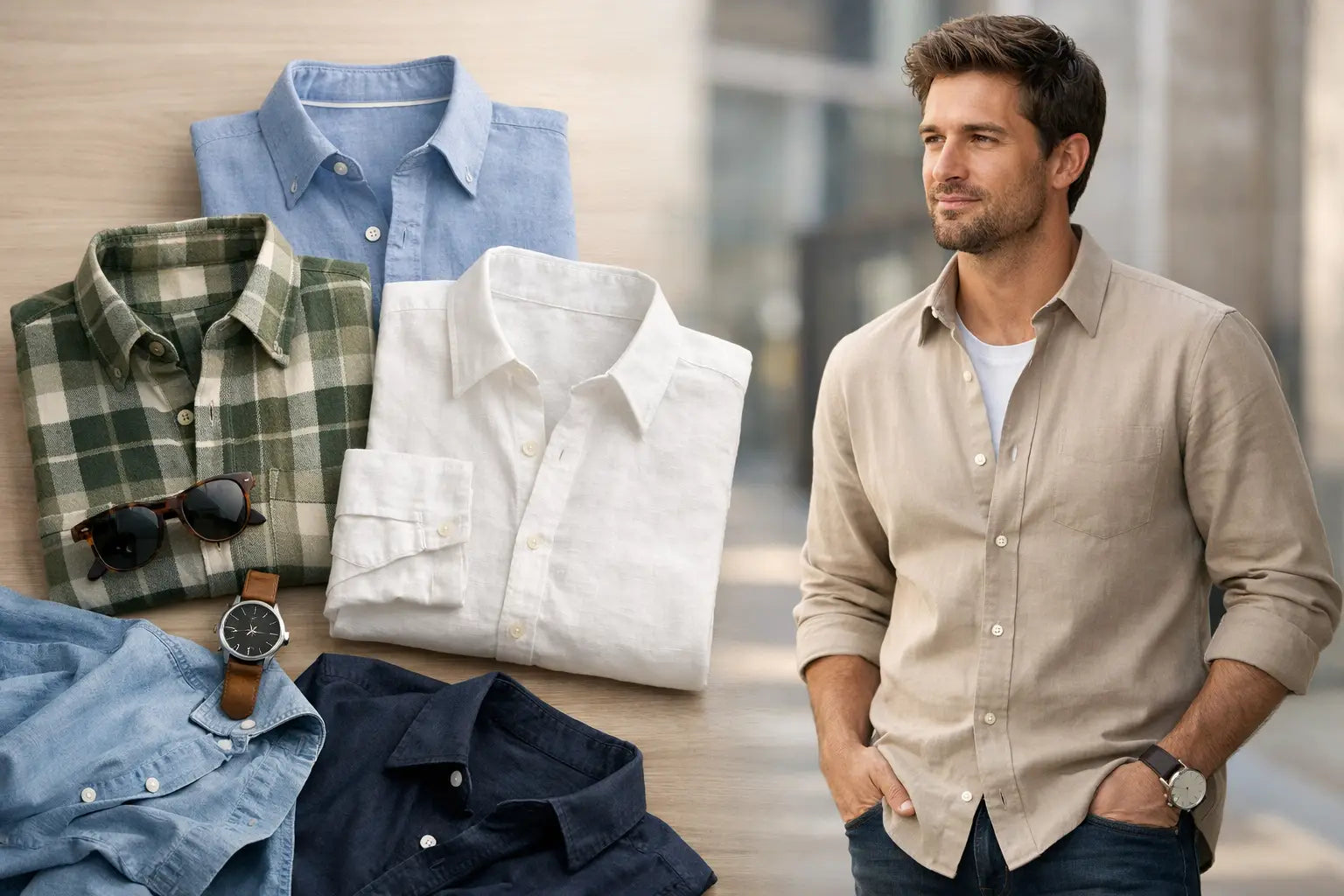
Casual Button Up Shirt Guide for Modern Men
A casual button up shirt earns its place when a T-shirt feels too relaxed and a traditional dress shirt feels too formal. It is the piece that lets you walk into a client meeting, meet friends for dinner, or handle a full Saturday of plans looking considered without looking overdone. The right shirt should bring structure to your outfit while still giving you the comfort and movement to wear it all day.
For men building a sharper everyday wardrobe, this casual button up shirt guide focuses on the details that matter most: fit, fabric, color, pattern, and the styling choices that make one shirt work harder.
Start With the Right Casual Button Up Shirt Fit
Fit is the first thing people notice, even before they register the fabric or color. A casual button-up should follow the shape of your body without pulling across the chest, ballooning at the waist, or limiting your movement through the shoulders. It should look clean when worn untucked and remain comfortable when tucked in for work.
The shoulder seam is the best place to start. It should sit at the edge of your shoulder, not hang down your upper arm. If the seam is too wide, the shirt looks borrowed. If it sits too far inward, movement can feel restricted and the chest may pull.
Across the torso, aim for a contemporary silhouette: enough room to move, with a gentle taper from chest to waist. Men with athletic builds often benefit from a tailored fit that removes excess fabric through the midsection. If you carry more weight through the waist or prefer a more relaxed feel, a contemporary fit offers polish without unnecessary tension. The goal is never to force a slim cut. A shirt that fits your frame well will always look more refined than one that is simply labeled slim.
Sleeve length matters as much on casual shirts as it does on dress shirts. Long sleeves should reach the wrist bone, leaving enough length for the cuff to stay in place when you bend your arms. The sleeves should feel easy, not loose. A clean sleeve gives the entire outfit a more intentional finish.
Choose Fabric for How You Actually Dress
A casual shirt needs more than a good first impression. It needs to hold up through commutes, meetings, travel, dinner reservations, and repeat wear. Fabric determines how the shirt feels, how it moves, and how much effort it takes to keep looking sharp.
Cotton remains the foundation for good reason. It is breathable, familiar, and versatile across seasons. A smooth cotton shirt offers a cleaner business-casual appearance, while textured cottons add visual depth and naturally read more relaxed. Oxford cloth, for example, has enough structure for the office but still works easily with denim and sneakers.
Stretch is a practical upgrade for modern wardrobes. A small amount of stretch helps the shirt move with you through long days, especially across the shoulders, chest, and elbows. This is particularly useful for men who drive often, travel for work, or prefer a closer fit. Stretch should support the fabric, not make it look thin or overly casual. The best options retain their shape and look polished from morning through evening.
Knit-stretch button-ups offer another route to comfort. They provide softness and flexibility similar to a premium polo or knit, while the collar and button-front construction keep the look elevated. They are an excellent choice for hybrid offices and business-casual events where comfort is nonnegotiable but a T-shirt is not enough.
Fabric weight should change with the season. Lightweight cotton and breathable blends make sense in warmer climates or during summer travel. Midweight oxford, brushed cotton, and richer textures are stronger choices for fall and winter. One all-purpose fabric can be useful, but a small rotation of weights gives your wardrobe more range.
Build Your Rotation Around Versatile Colors
Color makes a casual shirt easier or harder to wear. For maximum utility, begin with shades that pair naturally with the pants you already own. White, light blue, navy, soft gray, and black are dependable because they work with chinos, performance pants, dark denim, and tailored shorts.
Light blue is one of the most useful colors in a business-casual wardrobe. It looks professional with navy or charcoal pants, but it also feels relaxed with medium-wash jeans. White creates a crisp, clean look, although it requires more attention to care and opacity. A substantial fabric helps white shirts look premium rather than transparent.
Navy and black shirts create more contrast and can make a strong choice for evening plans, date nights, or offices with a more modern dress code. Wear darker shirts with lighter stone, gray, or khaki pants to avoid an outfit that feels too heavy. If you pair navy with dark denim, make sure there is enough difference in shade or texture to keep the pieces from blending together.
Once your core colors are covered, add restrained patterns. Fine checks, micro prints, subtle stripes, and tonal textures bring personality without making the shirt difficult to style. A pattern should support the outfit, not become the entire outfit. If your shirt is patterned, keep the pants solid and let the shirt carry the visual interest.
Collar and Details Set the Dress Code
A casual button-up can move between settings because its construction controls how formal it feels. A structured point collar presents a clean, versatile profile that works under a lightweight jacket or on its own. A button-down collar reads more relaxed and is especially reliable with chinos, denim, and knit layers. It keeps its shape when worn open, which makes it a practical weekend option.
Pay attention to the finishing details. Contrast trim inside the collar and cuffs can add character without changing the shirt's versatility. Well-chosen buttons, clean stitching, and a crisp collar give a simple solid shirt a more elevated appearance. Details should be visible when someone is close, not loud from across the room.
Cuff design also affects how you wear the shirt. Standard button cuffs keep things straightforward. Dual cuffs or contrast interiors offer a more distinctive finish when the sleeves are rolled. For casual settings, roll sleeves neatly to just below the elbow, keeping the fold even rather than pushing the fabric up your forearm.
How to Style a Casual Button Up Shirt
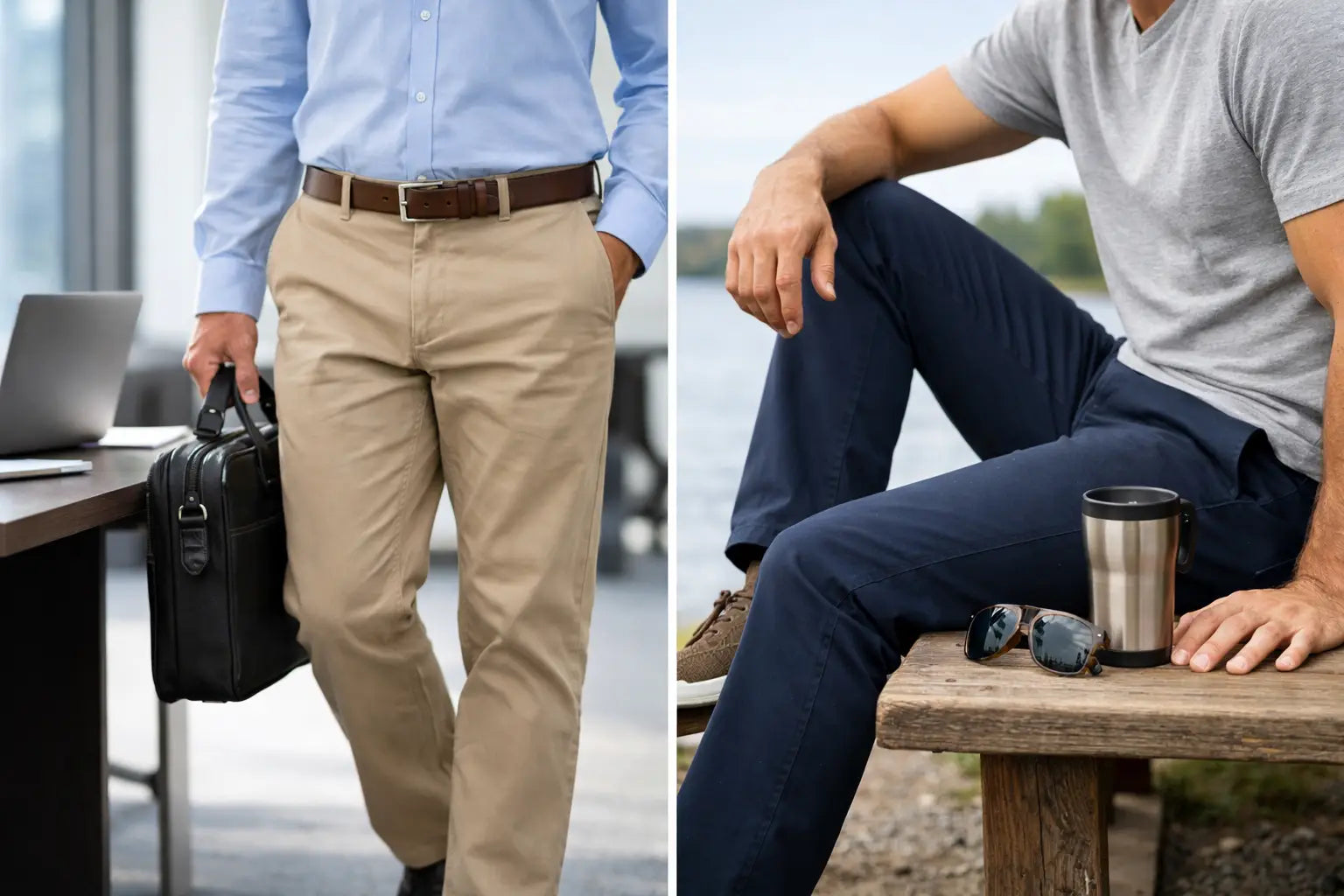
The simplest business-casual combination is a well-fitted button-up, tailored chinos, and clean leather sneakers or loafers. This works because each piece has structure, but none feels overly formal. Tuck the shirt in when the setting calls for a sharper line, particularly for presentations, dinners, or office days. Leave it untucked when the hem is designed to sit cleanly around the hip and the occasion is more relaxed.
With jeans, balance matters. A crisp light blue or white shirt gives dark denim a polished edge. Choose straight or tapered jeans with minimal distressing, then finish with sneakers, boots, or loafers depending on the setting. Avoid pairing a refined button-up with overly baggy denim. The contrast can make the outfit feel disconnected.
For warm-weather dressing, wear a lightweight casual button-up with tailored shorts and low-profile sneakers, loafers, or clean sandals where appropriate. The shirt should fit close enough to look intentional but never cling. A short-sleeve button-up works well here, while a long-sleeve shirt with neatly rolled cuffs provides a slightly more elevated option.
Layering adds range. Under a lightweight bomber, overshirt, quarter-zip, or unstructured blazer, a button-up creates a complete outfit without the stiffness of formal tailoring. Keep the collar neat and avoid bulky layers that crowd the shoulders. A shirt with stretch is particularly useful under layers because it moves more naturally.
Common Mistakes That Weaken the Look
The biggest mistake is treating a casual button-up as either a dress shirt or a beach shirt. It belongs in the middle. If the shirt is too shiny, too tight, or worn with a formal tie, it can look confused. If it is too oversized, heavily printed, or left wrinkled, it loses the polished advantage that makes it useful.
Avoid shirts that are too long to wear untucked. Excess length bunches around the seat and makes even premium fabric look careless. Also watch the collar. A limp, collapsing collar immediately lowers the quality of an outfit, especially when you are wearing the shirt without a jacket.
Finally, do not build every outfit around the same color and silhouette. A rotation of polished solids, subtle patterns, breathable textures, and stretch fabrics will serve you better than a closet full of near-identical shirts. LEVINAS designs its shirts around this kind of wardrobe utility: refined fit, modern comfort, and details that hold up across the workweek and beyond.
A great casual button-up should make getting dressed easier. Choose one that fits your shoulders, feels right for your day, and pairs with the pants you reach for most. When those pieces are working together, looking sharp stops feeling like extra effort.


Leave a comment
This site is protected by hCaptcha and the hCaptcha Privacy Policy and Terms of Service apply.