
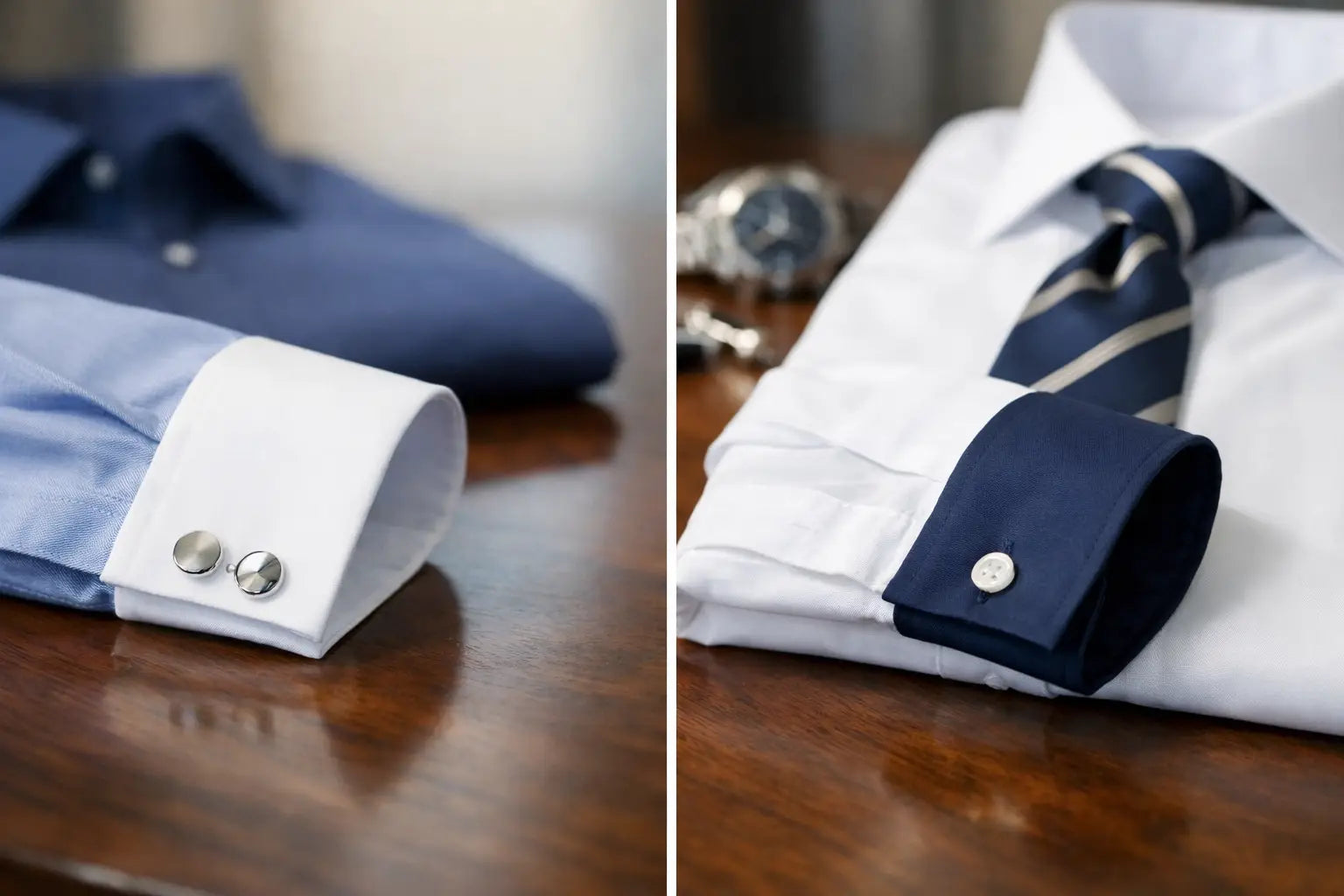
Contrast Cuff Dress Shirts Explained
A plain dress shirt can do the job. A shirt with the right detail does more - it sharpens the entire look without asking for extra effort. That is exactly why contrast cuff dress shirts have become a smart choice for men who want business-casual style to look more considered, more modern, and more versatile.
The appeal is simple. Contrast cuffs add visual definition at one of the most noticeable points of a shirt. When the inner cuff or trim features a different pattern, color, or texture from the main fabric, the shirt instantly gains depth. It still reads polished. It still works in professional settings. But it has more character than a standard solid shirt, and that difference matters when your wardrobe needs to perform across work, dinner, travel, and everything in between.
What contrast cuff dress shirts actually are
Contrast cuff dress shirts are dress shirts designed with a different fabric, pattern, or color placed inside the cuff, along the cuff edge, or sometimes inside the collar as well. In many cases, the contrast detail remains subtle when the shirt is worn traditionally. It becomes more visible when the cuff is turned slightly, when the sleeves are styled more casually, or when the matching contrast appears inside the collar band.
This design detail sits in a useful middle ground. It is more elevated than a basic office shirt, but not as formal or rigid as a traditional dress shirt built only for suiting. For men who spend most of their week in business-casual settings, that balance is valuable. You get the structure of a dress shirt with a little more personality built in.
Not every contrast cuff shirt is styled the same way. Some lean classic, using soft white or tonal patterns that create a clean finish. Others are more expressive, pairing solid body fabrics with geometric, check, or microprint contrasts. The right choice depends on how you dress most often and how visible you want that detail to be.
Why contrast cuffs work so well in business-casual wardrobes
Business-casual dressing often asks for something specific: look professional, but not overdressed; look refined, but not stiff. That is where contrast cuff dress shirts stand out. They solve a real wardrobe problem by adding interest without pushing too far.
A standard solid shirt can sometimes feel flat, especially when paired with chinos or five-pocket pants instead of full tailoring. A contrast cuff shirt adds a point of distinction, which helps the whole outfit feel intentional. It gives you a stronger look under a blazer, on its own with trousers, or worn open at the collar for a less formal office setting.
There is also a practical advantage. Men building a compact wardrobe need pieces that cover multiple situations. A shirt with contrast details can look boardroom-ready with the cuffs buttoned and the collar neat, then feel more relaxed after hours when the sleeves are rolled once or twice. That flexibility is part of what makes this category worth considering.
The difference between subtle and statement contrast details
Not every man wants the same effect from his shirt. Some want detail that is visible only up close. Others prefer something that reads immediately. Both approaches can work, but the setting matters.
Subtle contrast cuff dress shirts usually feature tonal trims, restrained microprints, or classic white-on-blue combinations. These are ideal if you work in a more traditional office, meet with clients regularly, or prefer your wardrobe to stay clean and understated. The shirt still feels upgraded, but it does not compete with the rest of the outfit.
Statement contrast shirts push the detail further. You might see bolder patterns inside the cuff, stronger color separation, or more obvious matching contrast inside the collar. These styles can be excellent for creative workplaces, social events, or men who want their shirt to do more of the visual work. The trade-off is that they can feel less universal. A stronger design often gives you more personality, but slightly less range.
For most men, the strongest buy is somewhere in the middle: enough contrast to stand out, not so much that the shirt feels limited to one mood or occasion.
Fabric and fit matter more than the contrast itself
A contrast detail can attract attention, but it does not carry the shirt on its own. If the fabric feels stiff, if the fit pulls across the chest, or if the sleeves collapse after a few hours, the style detail loses its value quickly.
That is why the best contrast cuff dress shirts start with the same priorities as any high-performing shirt: clean fit, strong recovery, breathable fabric, and comfortable movement. For modern business-casual dressing, stretch matters. Men are wearing dress shirts for longer days now - commuting, sitting, traveling, presenting, going out after work. A shirt that looks tailored but still moves naturally is not a luxury feature anymore. It is part of what makes the piece wearable enough to become a staple.
Fit plays the same role. A contemporary fit tends to work especially well in this category because it keeps the shirt sharp without looking restrictive. Too full, and the contrast detail feels less refined. Too tight, and the shirt becomes less useful across the day. The right fit should skim the body, clean up the silhouette, and still leave room for natural movement.
How to wear contrast cuff dress shirts well
The easiest way to wear this style is to let the shirt be the detail piece and keep the rest of the outfit controlled. Pair a blue or white contrast cuff shirt with tailored chinos or performance trousers and clean leather shoes, and the look is already doing what it needs to do.
Under a blazer, contrast cuffs tend to work best when the shirt body stays classic. Light blue, white, and soft neutrals offer the most flexibility. The cuff detail adds enough distinction that you do not need an aggressive tie, loud pocket square, or overly patterned jacket. The outfit looks stronger when one element carries the interest.
Without a blazer, these shirts can handle a little more visibility. An open collar and a slightly exposed inner cuff create a polished but relaxed effect, especially for dinners, networking events, or office days that do not require formal suiting. This is where contrast detailing earns its place. It helps a shirt feel finished even when the rest of the outfit is simple.
Rolling the sleeve is another place where judgment matters. A small turn that reveals the contrast can look effortless. Overdo it, and the styling starts to feel forced. The shirt should appear naturally elevated, not overly managed.
When contrast cuff dress shirts make the most sense
This category is especially strong for men whose dress code changes throughout the week. If you split time between office days, client meetings, business travel, dinners, and weekend events, a shirt with subtle contrast gives you more mileage than a plain basic in many cases.
It also makes sense for men who already own the essentials and want to upgrade the visual quality of their wardrobe without moving into trend-driven pieces. Contrast cuffs are not a novelty when they are done well. They are a functional design detail that adds style range while keeping the shirt grounded in classic menswear.
That said, they are not the answer for every need. If your office is very formal, or if you primarily wear shirts with conservative suits and ties, a cleaner traditional dress shirt may still be the better everyday option. On the other hand, if your wardrobe lives mostly in polos, tees, and very casual button-ups, a contrast cuff shirt can be a useful bridge piece that raises your look without feeling too dressy.
What to look for before you buy
The best contrast cuff dress shirts do not rely on contrast alone. Look at the body fabric first. It should feel smooth, substantial enough to hold shape, and comfortable enough for extended wear. Stretch is a real advantage, particularly if the shirt is meant for all-day office use or travel.
Next, inspect how the contrast is integrated. A well-designed shirt uses contrast as an accent, not a distraction. The colors should complement the base fabric, and the pattern should feel intentional rather than loud for the sake of being noticed.
Construction matters too. A clean collar, stable cuffs, consistent stitching, and a flattering fit will do more for the shirt than any decorative feature. In a polished wardrobe, details only work when the foundation is strong.
For men who value comfort and appearance equally, this is where brands like LEVINAS have an advantage. The right shirt does not force a trade between stretch, presentation, and useful design. It delivers all three in one piece, which is exactly what a modern business-casual wardrobe should do.
Contrast cuff dress shirts are not about dressing louder. They are about dressing sharper, with more dimension and more flexibility. When the fit is right, the fabric performs, and the contrast stays intentional, this style becomes one of the easiest ways to give your wardrobe more presence without making it harder to wear. Choose the version that fits your day-to-day life, and it will earn its place fast.



Leave a comment
This site is protected by hCaptcha and the hCaptcha Privacy Policy and Terms of Service apply.