
Dress Shirts vs Casual Shirts Explained
A shirt can look right on the hanger and still feel wrong the moment you put it on at 8 a.m. That is why dress shirts vs casual shirts is more than a style debate. For most men, it is a practical question about where the shirt will be worn, how long it needs to stay comfortable, and whether it can carry the day from office hours to dinner plans without looking out of place.
For a modern wardrobe, both matter. The key is understanding what each one is built to do. Once you know the difference in structure, fabric, styling, and versatility, buying the right shirt gets a lot easier.
Dress shirts vs casual shirts: what sets them apart
At a glance, both are button-up shirts. The real difference is in the level of formality and the details that support it.
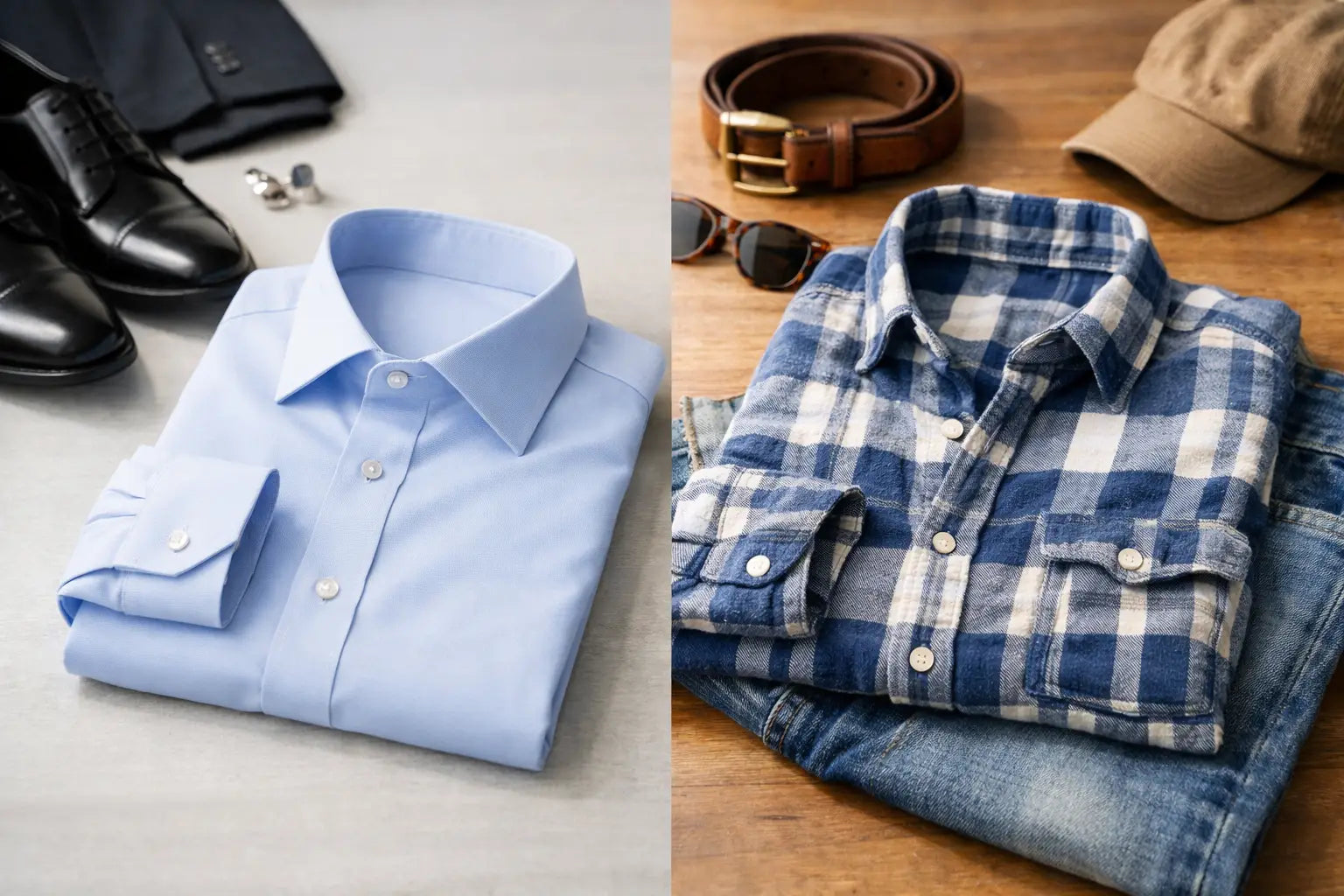
A dress shirt is designed to look polished in more refined settings. Think business meetings, formal offices, weddings, dinners, or any situation where a jacket, dress pants, or elevated styling may be part of the equation. It typically has a cleaner front, a sharper collar, a more structured cuff, and a smoother fabric that reads crisp rather than relaxed.
A casual shirt is built for flexibility and ease. It can still look polished, but it carries less structure and less formality. Casual shirts are more forgiving in how they are styled. They work untucked more naturally, pair easily with chinos, denim, or shorts, and often come in softer fabrics, more visible textures, and more relaxed patterns.
That does not mean one is better than the other. It means each shirt earns its place differently.
The fabric tells you a lot
If you want to understand dress shirts vs casual shirts quickly, start with fabric.
Dress shirts usually rely on finer, smoother weaves such as poplin, pinpoint, twill, or sateen. These fabrics are selected because they hold a sharper appearance and sit cleanly under a blazer or suit jacket. They are meant to look controlled and intentional. A quality dress shirt may also include stretch, which matters for men who want mobility without losing that tailored look.
Casual shirts tend to open the door to more texture. Oxford cloth, brushed cotton, flannel, chambray, linen blends, and knit-stretch constructions all feel more relaxed. These fabrics can soften the look of the shirt and make it easier to wear in off-duty settings. They also tend to create more visual depth, which works well when the outfit itself is simple.
Comfort can exist in both categories, but it shows up differently. In dress shirts, comfort should come from smart fabric engineering, stretch, and a fit that moves cleanly. In casual shirts, comfort often comes from softness, flexibility, and a less rigid finish. For men who spend long days moving between work and personal plans, performance fabrics and knit-stretch builds can narrow the gap between the two.
Fit is where most men make the wrong call
A shirt can be technically dressy or casual, but if the fit is off, the whole look falls apart.
Dress shirts usually demand a cleaner line through the chest, waist, shoulders, and sleeves. That does not mean tight. It means shaped. The shirt should look intentional when tucked in, and it should sit neatly under a jacket without excess fabric bunching at the sides or lower back.
Casual shirts allow more room for interpretation. Some men prefer a contemporary fit that still looks trim. Others want a little more ease, especially if they plan to wear the shirt untucked. The challenge is avoiding a shirt that drifts from relaxed into sloppy. A casual shirt should still frame the body well, especially through the shoulders and chest.
This is why fit-driven shopping matters. Men often buy a dress shirt too large because they want comfort, then end up with a shirt that looks inflated by midday. Or they buy a casual shirt too slim, then wonder why it pulls at the buttons and feels restrictive. The best shirt is the one that matches both the setting and the way you actually move through your day.
Collar, cuffs, and construction change the message
The small details are what make one shirt read boardroom and another read weekend.
Dress shirts typically feature more structured collars. A spread collar or point collar holds its shape better and frames the face with a sharper finish. Cuffs are usually more defined as well, whether standard barrel cuffs or elevated dual-cuff designs that add presence. The placket is often clean, and the stitching tends to stay understated.
Casual shirts can be more relaxed in every one of those areas. Button-down collars are a classic example. They keep the look neat, but they immediately soften the formality. Softer cuffs, utility pockets, contrast interior details, washed finishes, and textured fabrics all push a shirt into casual territory, even if the silhouette remains polished.
That is where modern business-casual dressing gets interesting. Some of the most useful shirts sit in the middle. They carry enough structure to look office-ready, but enough softness and stretch to stay comfortable throughout the day. For many men, that middle ground is the foundation of a smart wardrobe.
When to wear dress shirts vs casual shirts
The easiest way to choose is to start with the environment, then adjust for how polished you want to look.
A dress shirt makes sense when the setting expects a higher standard. Important meetings, presentations, evening events, holiday gatherings, and dressier dinners all call for a shirt with more structure. If you are adding a blazer, dress trousers, or refined leather shoes, a dress shirt usually makes the outfit feel complete.
A casual shirt works better when the dress code is open, social, or more relaxed. It fits naturally for everyday office wear in less formal workplaces, weekend outings, travel, lunches, date nights, and events where looking put together matters but full formality does not.
There is also the gray area most men live in now. Business-casual offices, hybrid work schedules, after-hours events, and travel-heavy routines do not always call for a classic dress shirt. In those cases, a polished casual button-up or a stretch shirt with clean detailing often delivers the better result. You still look sharp, but you do not feel overdressed or restricted.
Styling each shirt the right way
A dress shirt usually performs best tucked in. It is designed for that cleaner finish. Pair it with dress pants, chinos, or a blazer, and let the shirt do what it was made to do - create structure. Even when worn without a tie, a good dress shirt should look deliberate.
A casual shirt gives you more options. You can wear it tucked or untucked depending on length, hem shape, and occasion. With chinos, it creates an easy business-casual uniform. With dark denim, it sharpens up a simple off-duty outfit. With shorts, only the more relaxed fabrics and patterns make sense.
Color and pattern matter too. Solid white, light blue, and subtle stripes lean dressier. Checks, heathers, textured solids, and richer seasonal tones tend to feel more casual. That said, fabric and construction still decide the final message. A navy shirt in smooth, crisp cotton can feel dressy. A white oxford can feel easy and casual.
Which one gives you more versatility?
If your wardrobe leans formal, dress shirts will carry more weight. If your lifestyle is mostly relaxed, casual shirts will get more wear. But for most men, the most valuable shirts are the ones that bridge both categories.
That is why fabric innovation matters. A shirt with stretch, a contemporary fit, refined detailing, and a polished finish can work across far more settings than a rigid traditional shirt or an overly laid-back one. It gives you range. You can wear it to work, style it open-collar for dinner, and still feel comfortable on a long day.
This is where brands like LEVINAS have real relevance. Men are not building wardrobes for one narrow dress code anymore. They want shirts that look elevated, fit cleanly, and move with them. A shirt that combines sharp presentation with all-day comfort is not a luxury now. It is the practical standard.
How to choose between dress and casual shirts
Start with three questions. Where will you wear it most? Will you tuck it in regularly? Do you want crisp structure or softer comfort?
If the shirt needs to support formal offices, events, or jackets, go dressier. If it needs to handle daily wear, mixed settings, and easier styling, go casual. If your week includes both, choose shirts that sit between the two - polished enough for work, comfortable enough for real life.
The best wardrobes are not built by picking one side. They are built by choosing the right shirt for the right role, then making sure fit and fabric are strong enough to justify the purchase.
A well-made shirt should do more than fill space in your closet. It should make getting dressed faster, sharper, and a lot more comfortable every time you reach for it.



Leave a comment
This site is protected by hCaptcha and the hCaptcha Privacy Policy and Terms of Service apply.