
A Guide to Dress Shirt Cuffs and How to Wear Them
A shirt cuff is a small detail with a clear effect on how polished the entire outfit looks. This guide to dress shirt cuffs helps you choose a cuff style that fits your workday, your wardrobe, and the level of refinement you want from a shirt. Whether you are buttoning up for the office, a client dinner, or a wedding weekend, the right cuff keeps your shirt looking intentional from collar to sleeve.
Why Dress Shirt Cuffs Matter
Cuffs do more than finish a sleeve. They shape the shirt’s formality, determine how it sits beneath a jacket, and create one of the few visible points of detail when you are wearing a sport coat or suit. A clean, properly fitted cuff signals that the shirt fits well overall. A cuff that is too loose, too short, or poorly matched to the occasion can make even a strong outfit feel unfinished.
For business-casual dressing, cuffs matter because your sleeves are often more visible. When the jacket comes off, the shirt has to carry the look on its own. A refined cuff, quality fabric, and a contemporary fit give you a sharper presence without making the outfit feel overly formal.
The best choice depends on where you wear your shirts most. A professional who moves between meetings and evening plans needs versatility. Someone dressing for formal events may want a more traditional option. Building a rotation with the right balance lets one wardrobe cover both.
The Main Types of Dress Shirt Cuffs
Barrel Cuffs: The Everyday Standard
The barrel cuff is the foundation of most men’s dress shirts. It closes with one or two buttons and has a rounded, angled, or squared edge. It is the most practical option for business-casual wear because it is easy to fasten, comfortable through a long day, and appropriate with or without a jacket.
A one-button barrel cuff has a clean, understated profile. It works especially well with contemporary-fit shirts and relaxed professional outfits. A two-button barrel cuff offers more adjustment at the wrist and a slightly more substantial look. If your wrists are lean or you prefer a closer sleeve fit, the second button can make a noticeable difference.
For most wardrobes, the barrel cuff is the right starting point. It pairs naturally with chinos, performance pants, denim in a darker wash, and tailored trousers. Choose it when you want one shirt to perform across work, travel, dinners, and weekend occasions.
French Cuffs: The Formal Choice
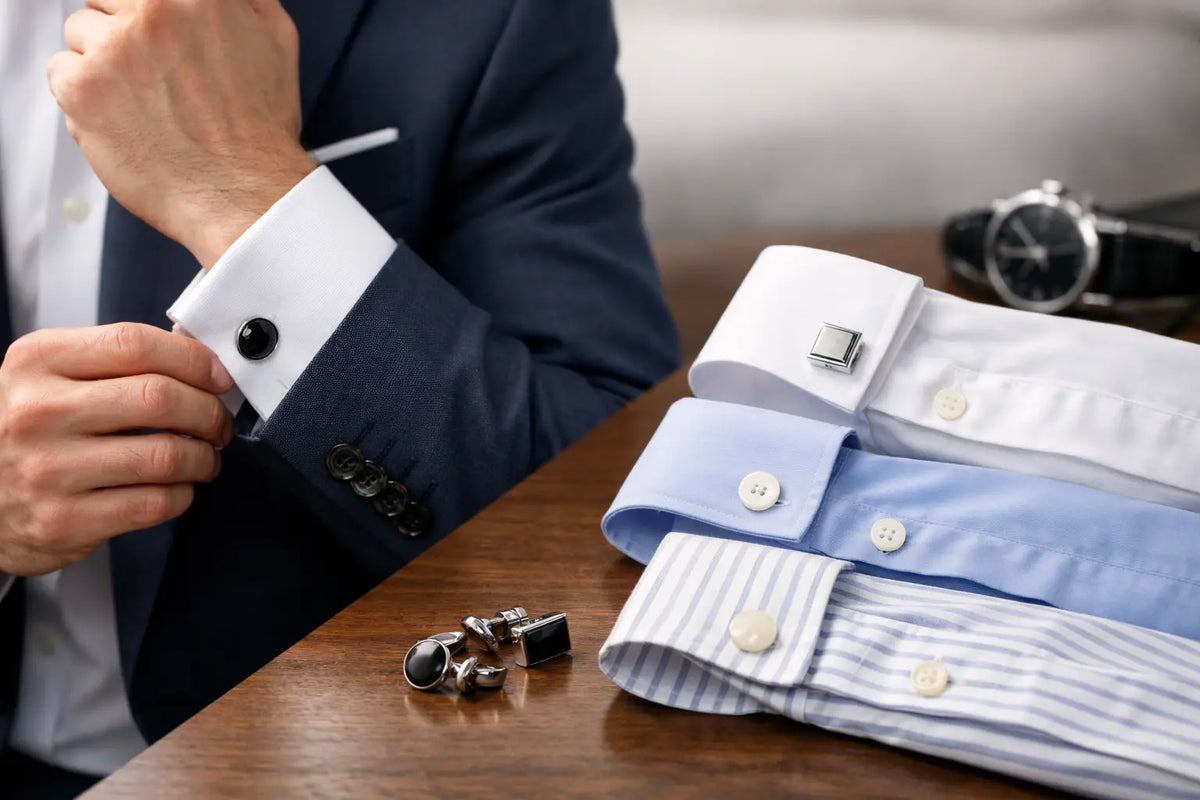
French cuffs are longer cuffs that fold back on themselves and fasten with cufflinks rather than sewn-on buttons. They are traditionally associated with formal shirts, suits, tuxedos, and dressier social occasions. The double layer creates a crisp, substantial finish that immediately raises the formality of a shirt.
They are not the most practical everyday choice for a business-casual office. You need cufflinks, the sleeve can feel more structured, and the look may be too formal with casual trousers or an open-collar outfit. Still, French cuffs are worth owning if your calendar includes black-tie events, formal weddings, galas, or high-level evening functions.
Keep cufflinks simple when the setting calls for restraint. Silver-tone, gold-tone, black enamel, or subtle knot styles complement a polished shirt without becoming the focal point. The cuff should support the outfit, not compete with it.
Convertible Cuffs: Built-In Flexibility
Convertible cuffs, sometimes called dual cuffs, offer both button closures and cufflink holes. This design gives you the flexibility to wear the shirt as a button-cuff style on a normal workday or dress it up with cufflinks for an event. For a man who values a streamlined wardrobe, that versatility is a real advantage.
A dual cuff works best when the shirt itself has a refined fabric, a clean collar, and an adaptable fit. Worn buttoned, it reads as sharp business casual. Styled with cufflinks and a tailored jacket, it can take on a more elevated role. It is a useful option for travel, when packing fewer pieces matters, or for days that move directly from the office to a formal dinner.
How a Dress Shirt Cuff Should Fit
The right cuff fit is secure but never restrictive. You should be able to slide one finger between the cuff and your wrist with relative ease. It should not rotate freely around your hand, but it also should not pinch when you bend your wrist, type, drive, or reach for a briefcase.
Cuff length matters just as much. The cuff should end at the base of your thumb, covering the wrist bone without spilling over the hand. If it stops well above the wrist bone, the shirt sleeve is likely too short. If it extends too far onto the hand, the sleeve is too long or the cuff is too deep.
When wearing a sport coat or suit jacket, allow about a quarter inch to a half inch of shirt cuff to show beyond the jacket sleeve. This proportion creates a clean frame at the wrist and helps the jacket look correctly tailored. More than that can look exaggerated, while no visible cuff can make the jacket sleeves appear too long.
Your shirt sleeve length should be assessed while standing naturally with your arms at your sides. Do not judge it only with your arm bent or raised. Movement will change where the cuff sits, but the resting position gives the most reliable read.
Choosing Cuffs for Your Wardrobe
Your most-worn cuff style should match your actual routine, not just the most formal item in your closet. If your dress code is polished but relaxed, prioritize barrel cuffs and convertible cuffs in versatile colors and patterns. White and light blue are reliable choices for presentations and formal business settings, while subtle stripes, checks, and contrast details bring more personality to everyday looks.
Fabric changes the experience of the cuff as well. Cotton with stretch has the advantage of moving comfortably at the wrist, which matters during a long office day. A crisp woven fabric delivers more structure and a traditional dress-shirt appearance. Knit-stretch shirt fabrics can offer a softer, more relaxed feel, but the cuff should still hold its shape and maintain a clean line.
Consider the watch you wear. A slim dress watch slides easily under a fitted barrel cuff. A larger sports watch may require a looser cuff setting or a shirt designed with enough room at the wrist. Avoid forcing a cuff over a watch that is too bulky. It creates stress on the button, distorts the sleeve, and looks uncomfortable.
Styling Dress Shirt Cuffs With Confidence
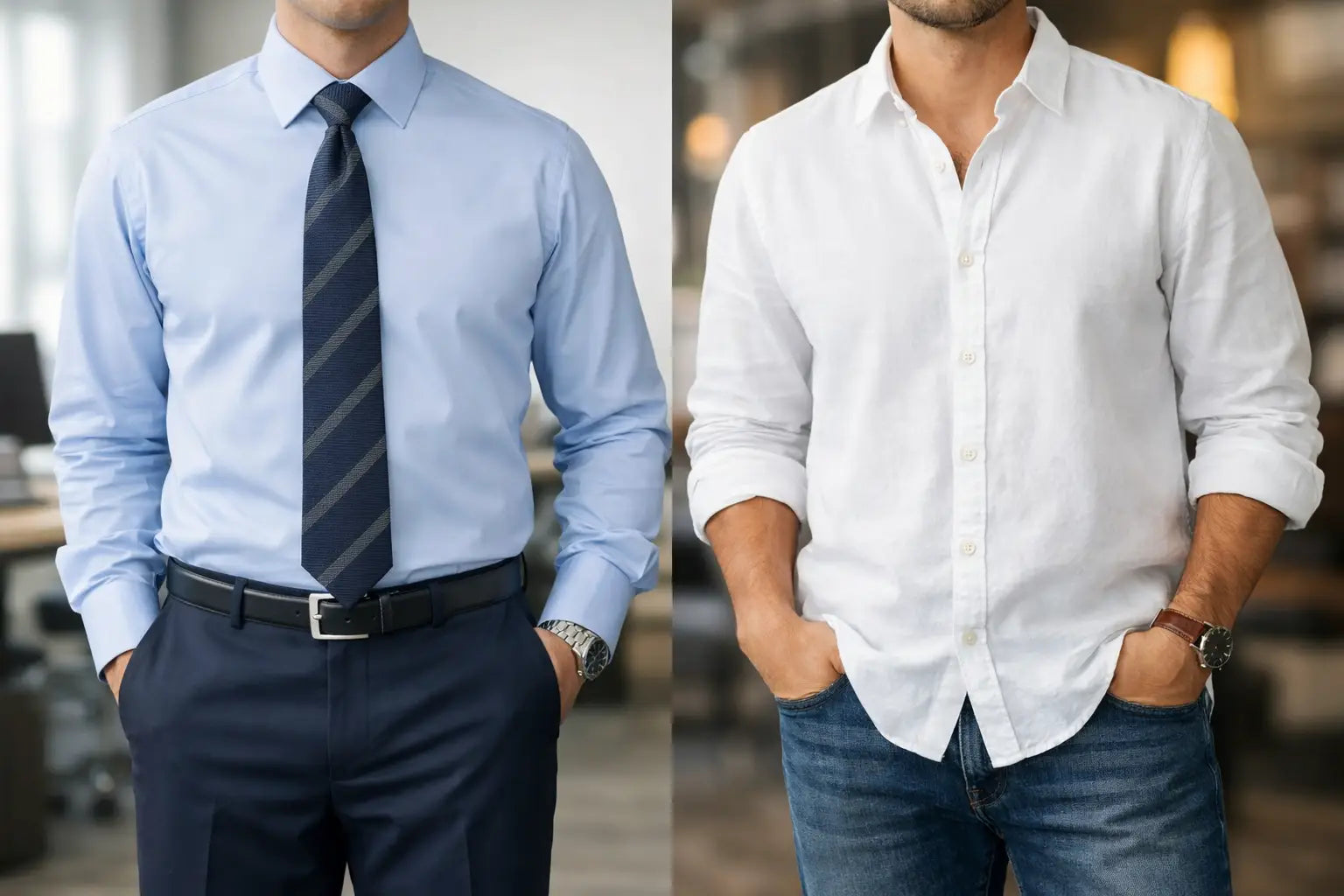
For a standard office day, wear a barrel cuff buttoned at the setting that feels secure. Pair a fitted light-blue shirt with tailored chinos or performance pants, then add a belt and leather shoes that share a similar color family. The cuff should sit neatly beneath the sleeve of a blazer and look equally considered when you remove the jacket.
For a business dinner or important presentation, a crisp white or patterned shirt with a two-button or convertible cuff adds more visual structure. Choose a sport coat with enough sleeve room to show the shirt cuff cleanly. This is where small details, including contrast trim inside the cuff, can add character without disrupting a professional look.
For formal events, French cuffs belong with tailored suiting and polished shoes. Keep the rest of the look balanced. A shirt with French cuffs already makes a statement through its structure, so the tie, pocket square, and cufflinks should complement rather than overwhelm it.
Rolling up sleeves is appropriate for casual settings, hands-on work, or a relaxed after-hours look. Roll a barrel cuff neatly above the forearm rather than pushing it into a loose bunch at the elbow. French cuffs should not be rolled. They are designed to remain fastened and formal.
Cuff Details That Make a Difference
Pay attention to button quality, stitching, and the shape of the cuff edge. These details are small, but they influence how premium a shirt feels in the hand and how well it holds up over repeated wear. A reinforced button attachment helps prevent loose buttons, while clean stitching keeps the cuff edge crisp after laundering.
Contrast fabric inside the cuff can add a modern point of interest, particularly on business-casual shirts. Use it with intention. It should be a subtle detail that appears when you unbutton or lightly turn back the cuff, not a loud distraction from the rest of the outfit.
Care also preserves the look. Unbutton cuffs before washing, smooth them flat after drying, and press along the cuff edges for a clean finish. If you wear cufflinks, remove them before storing the shirt. These simple habits protect the fabric, buttons, and shape of the sleeve.
The right cuff does not need to call attention to itself. It simply fits well, moves comfortably, and gives every handshake, presentation, and jacket-off moment a more polished finish.

Leave a comment
This site is protected by hCaptcha and the hCaptcha Privacy Policy and Terms of Service apply.