
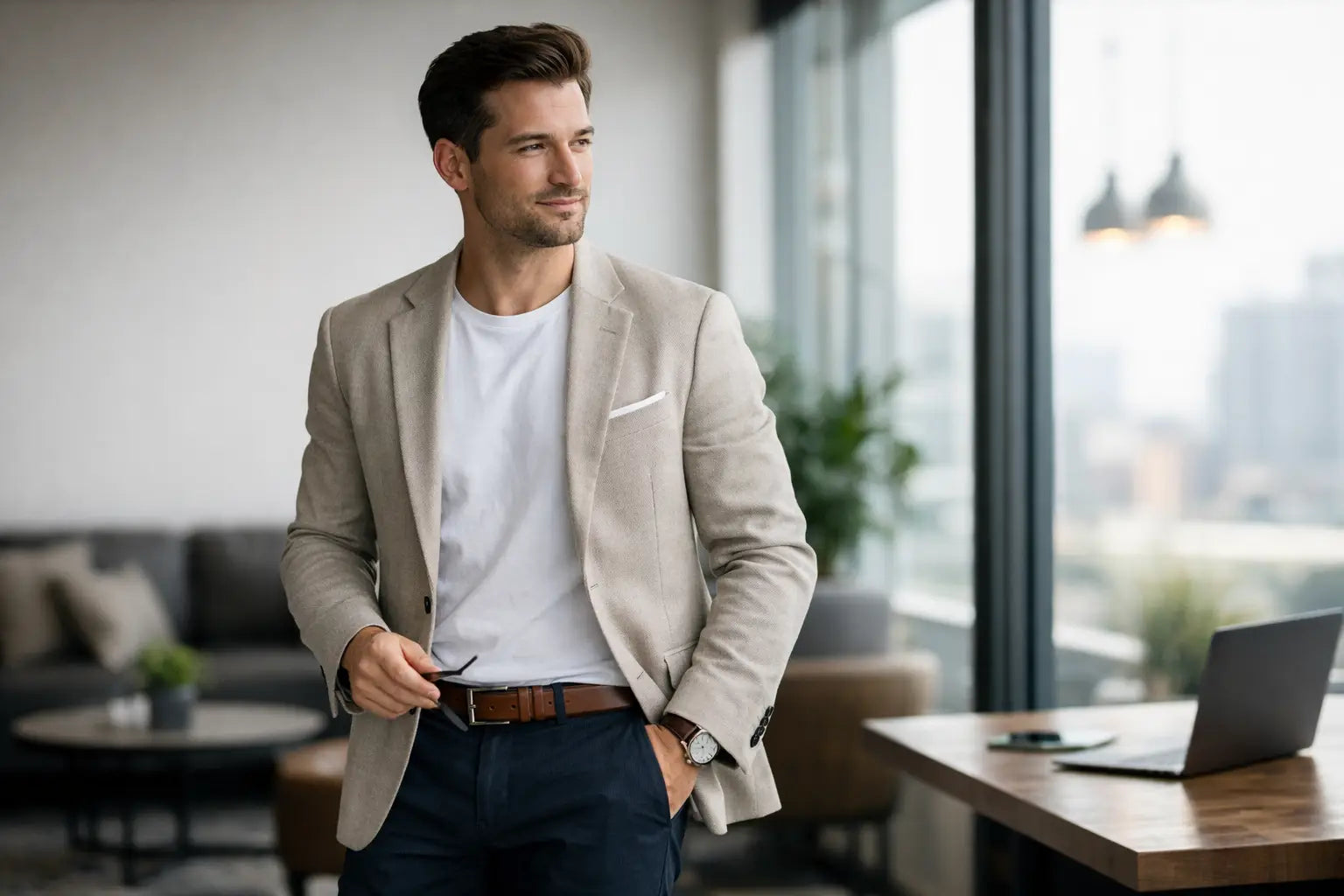
A Guide to Modern Business Casual for Men
The right business-casual outfit should carry you through a client meeting, a full day at your desk, and dinner afterward without requiring a change of clothes. This guide to modern business casual is built around that standard: refined enough to command attention, comfortable enough to wear for hours, and versatile enough to earn a place in your regular rotation.
Modern business casual is not a relaxed version of formalwear, and it is not simply casual clothing worn to the office. The difference is intention. Fit, fabric, color, and finishing details all matter. When each piece is chosen well, getting dressed becomes less about guessing the dress code and more about building a dependable uniform that works.
What Modern Business Casual Means Now
Business casual has moved beyond stiff khakis and oversized dress shirts. Today, it favors clean silhouettes, performance fabrics, and elevated essentials that look polished without feeling restrictive. A tailored stretch shirt, refined chinos, and leather shoes can read just as professional as a traditional office outfit while offering much more freedom of movement.
The dress code still depends on where you work. A finance office, law firm, or formal client presentation may call for darker colors, a tucked-in shirt, and a sport coat. A creative workplace, startup, or hybrid schedule can accommodate knit shirts, premium overshirts, clean sneakers, and more relaxed styling. The goal is not to chase the most casual version of the rule. It is to look prepared in the setting you are walking into.
A strong modern business-casual wardrobe balances three things: structure, comfort, and flexibility. Structure comes from a sharp collar, tailored trousers, and footwear with a clean finish. Comfort comes from stretch, breathable cotton, and cuts that move naturally. Flexibility comes from choosing pieces that work together in more than one setting.
Start With the Shirt
For most men, the shirt is the foundation of every business-casual outfit. It sits closest to the face, defines the formality of the look, and can make even simple pants feel considered. A shirt that fits correctly will do more for your appearance than an expensive accessory or a bold trend.
Look for a contemporary or tailored fit that follows the shape of your body without pulling across the chest or sitting too tight through the arms. The shoulder seam should end at your natural shoulder. Sleeves should allow easy movement, and the shirt length should give you the option to wear it tucked in without constantly coming untucked.
Fabric changes the experience. Crisp cotton has a traditional dress-shirt appearance, while cotton knit-stretch styles provide a softer hand and greater movement. Performance blends are particularly useful for men who commute, travel, or spend long days moving between office and social plans. They maintain a polished profile while reducing the stiff, restrictive feel associated with classic work shirts.
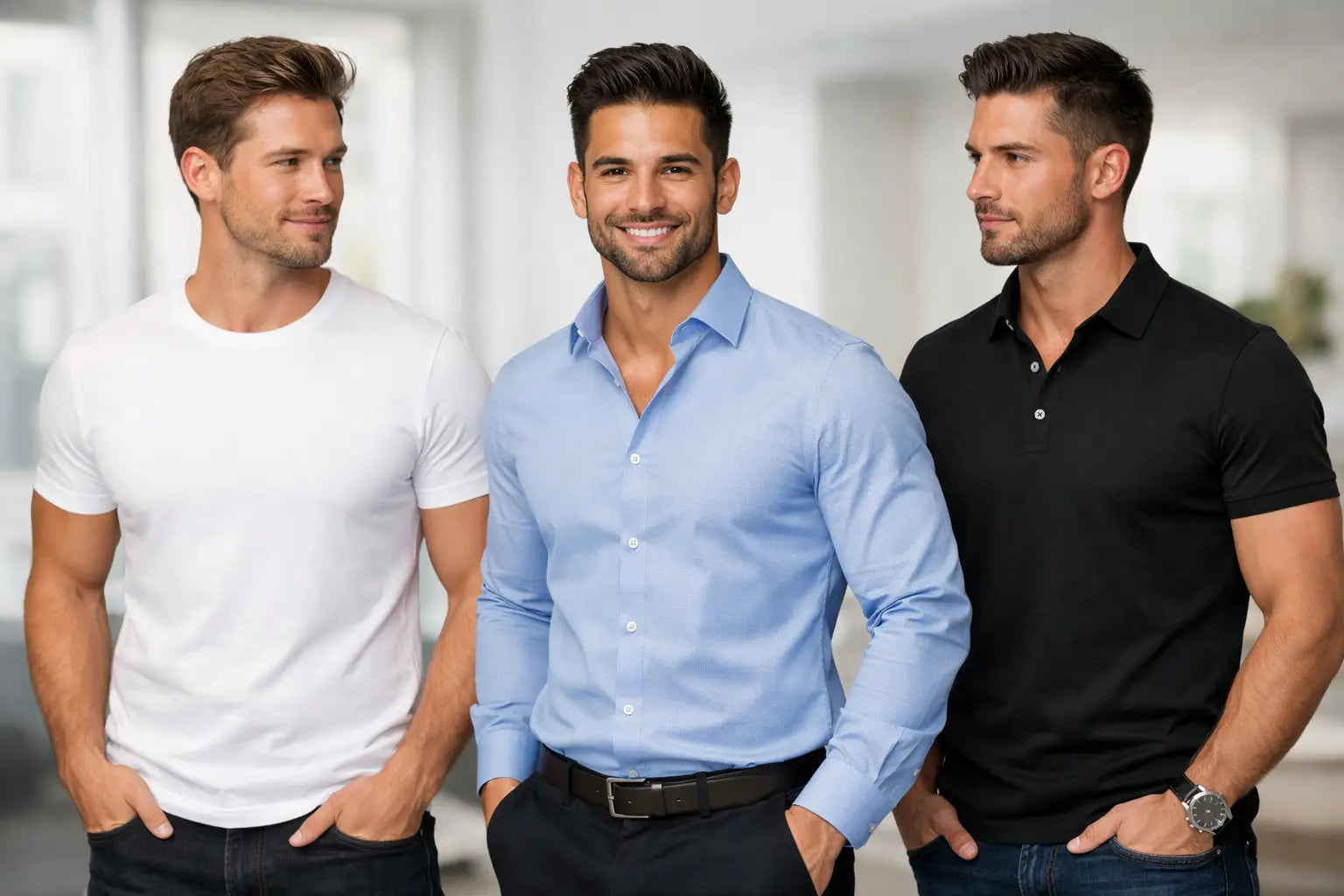
Start with versatile colors: white, light blue, navy, and soft gray. These shades pair easily with nearly every trouser color and work in conservative offices. Once those are covered, add subtle checks, small-scale prints, or contrast details that give the outfit character without competing for attention. A sharp patterned shirt is often enough to make a navy pant-and-loafer combination feel new.
Collar and cuff details matter
A collar should hold its shape throughout the day, whether you wear the shirt open at the neck or under a layer. Avoid collars that collapse, spread too widely, or look flimsy after a few hours. A well-constructed collar keeps the outfit looking intentional.
Details such as contrast trim and dual cuffs can add a premium finish, especially when the rest of the outfit is simple. Use them as an accent, not the main event. If the shirt has visual interest, keep the pants solid and the shoes understated.
Choose Pants That Look Tailored and Feel Easy
Pants are where business casual often goes wrong. Traditional khakis can look dated when they are too loose, too wrinkled, or too heavy. Jeans can feel too casual when the office expectation is polished. The better middle ground is a clean, tailored pant with enough stretch to move through the day comfortably.
Chinos remain a reliable choice, particularly in navy, stone, charcoal, olive, and medium gray. Select a contemporary fit with a clean line through the leg. It should not billow at the thigh or stack heavily at the ankle. A slight break or a neatly cropped hem gives the outfit a current, deliberate look.
Performance pants offer another strong option. They are especially practical for frequent travelers and men who want the ease of athletic stretch without sacrificing a professional appearance. The best styles have a tailored shape, a matte finish, and minimal visible technical details. If the fabric looks overly shiny or resembles gymwear, it will not carry the outfit in a professional setting.
Dark, clean denim can work in more relaxed environments, but it is not a universal substitute for trousers. Choose a dark indigo or black wash with no distressing, fading, or excessive hardware. Pair it with a structured button-up and leather footwear, then reserve it for offices where denim is clearly accepted.
Build Outfits With Purposeful Layers
Layering is how a business-casual wardrobe gains range. It also gives you control over the level of formality without making the outfit feel overdressed. A refined quarter-zip, fine-gauge sweater, unstructured blazer, or overshirt can transform the same shirt and pants into a different look.
For a more traditional office, wear a light blue button-up with charcoal trousers and a navy blazer. The palette is classic, but a stretch shirt and modern fit keep it from feeling dated. For a less formal setting, replace the blazer with a fitted knit layer or overshirt and keep the shirt collar clean underneath.
Be selective with bulky layers. Thick hoodies, large logo sweatshirts, and oversized cardigans can undermine the tailored proportions of the outfit. Business casual works best when each layer has a defined shape. You want ease, not excess fabric.
A sport coat is not required every day, but it is one of the fastest ways to elevate an outfit for an important meeting or event. Choose an unstructured option in navy, gray, or a subtle texture. It should fit cleanly through the shoulders and allow enough room for a shirt or lightweight knit underneath. If you cannot raise your arms comfortably, the jacket is too restrictive.
Finish With the Right Shoes and Accessories
Shoes determine whether an outfit reads polished or unfinished. Leather loafers, derbies, brogues, and clean Chelsea boots are dependable business-casual choices. Brown leather offers warmth and works especially well with navy, olive, stone, and medium-gray pants. Black leather delivers a sharper, more formal edge and pairs naturally with charcoal, black, and dark denim.
Minimal leather sneakers can work in casual offices, particularly in white, black, or a neutral tone. They must be genuinely clean and streamlined. Running shoes, worn-out trainers, and overly branded sneakers belong outside the business-casual rotation.
Keep accessories restrained. A quality belt that matches the general tone of your shoes, a clean watch, and a structured bag are usually enough. The point is to reinforce the outfit, not create distractions. When you wear a shirt with contrast detailing or a distinctive pattern, simpler accessories are usually the stronger choice.
A Guide to Modern Business Casual Fit
Fit is not about wearing the smallest size possible. A shirt that pulls at the buttons, pants that restrict your stride, or sleeves that are too short will look less polished than clothing with a little breathing room. The right fit follows your frame and lets you move naturally.
Check your outfit in motion, not just in the mirror. Sit down, reach for something, walk across the room, and bend slightly. If the shirt comes untucked immediately, the pants pinch at the waist, or the fabric strains across the back, the fit needs adjustment. Comfort is not separate from appearance. When clothing moves well, you look more confident wearing it.
This is where stretch construction earns its place. Well-designed stretch fabrics provide recovery, so the garment holds its shape rather than becoming loose and tired by late afternoon. For men who need their wardrobe to work as hard as they do, that difference is practical, not cosmetic.
Keep the Color Palette Easy to Combine
A disciplined color palette makes a smaller wardrobe feel much larger. Begin with navy, white, light blue, charcoal, gray, stone, and olive. These colors create reliable combinations without requiring much thought. A light blue shirt works with navy chinos, gray performance pants, olive trousers, and dark denim. That is the kind of versatility worth prioritizing.
Add color through one piece at a time. A burgundy shirt, deep green knit, or patterned button-up can bring energy to the wardrobe, but ground it with neutral pants and shoes. If you are wearing a bold shirt, avoid adding a loud belt, statement sneaker, or competing jacket.
LEVlNAS styles this approach around contemporary-fit shirts and stretch trousers that look elevated as separate pieces but perform even better as a complete wardrobe. The result is clothing that can shift from a Monday presentation to a weekend reservation with minor adjustments.
The best business-casual wardrobe does not make you feel dressed up for someone else. It gives you a sharper version of your everyday style. Invest in shirts that hold their shape, pants that move comfortably, and layers that give you options, then let consistent fit do the rest.

Leave a comment
This site is protected by hCaptcha and the hCaptcha Privacy Policy and Terms of Service apply.