
Guide to Performance Workwear Fabrics
Your shirt looks sharp at 8 a.m. By noon, the collar feels warm, the fabric starts to cling, and the polished look you wanted begins to work against you. A strong guide to performance workwear fabrics starts there - with the reality that modern business-casual dressing has to do more than look good on a hanger.
For men who move between office hours, client meetings, commuting, dinner plans, and long days on their feet, fabric is the deciding factor. Fit still matters. So does color, pattern, and styling. But if the fabric cannot handle heat, motion, pressure, or repeat wear, the garment falls short no matter how refined it looks. The right workwear fabric should deliver structure, comfort, stretch, and a clean finish in the same piece.
Why performance fabric matters in modern workwear
Traditional workwear fabrics were often built around appearance first. Crisp cotton shirting, wool trousers, and rigid twills offered a tailored look, but they did not always support the way men dress now. Most wardrobes no longer live in a strict split between formal office clothing and weekend casualwear. The standard has shifted toward pieces that can carry both roles.
That is where performance fabrics earn their place. They are designed to improve comfort without softening the visual impact of the garment. A performance shirt should still read polished. A performance pant should still hold shape. The difference is in how the fabric responds while you wear it. Better recovery, more airflow, less restriction, and easier care all add up to clothing that works harder across the day.
That does not mean every technical fabric is automatically better. Some are overly slick, too shiny, or too synthetic in hand feel. Others deliver stretch but lose structure over time. The best performance workwear fabrics balance function with a premium surface, because professional clothing still has to look intentional.
Guide to performance workwear fabrics: what to look for
The first thing to evaluate is stretch. Mechanical stretch and fiber-based stretch both improve mobility, but they do not perform the same way. Mechanical stretch comes from the way the fabric is woven or knit. It can feel more natural and often keeps a cleaner appearance. Fiber-based stretch usually comes from elastane or spandex blended into the fabric. This creates easier movement and better comfort, especially in fitted shirts and tailored pants, but too much can make a garment feel less refined.
Breathability is just as important. In workwear, breathability is not only about hot weather. It affects how fabric handles indoor heating, commuting, layered outfits, and long hours of wear. Cotton remains strong here because it allows airflow and feels familiar against the skin. Performance blends can improve on that base by helping moisture move away from the body rather than sit in the fabric.
Recovery is another key factor that many shoppers miss. A fabric can stretch well in the fitting room and still disappoint after a few wears if it bags out at the elbows, knees, or seat. Good recovery means the garment returns to its original shape and keeps a tailored appearance longer.
Then there is wrinkle resistance. This matters most for shirts, especially if you travel, sit for long periods, or want your wardrobe to stay presentable with less maintenance. Wrinkle-resistant finishes and blended constructions can help, though there is a trade-off. Some treatments make fabric feel slightly less natural than pure cotton. The best option depends on whether you prioritize a crisp hand feel or easier daily wear.
The core fabric categories every man should know
Cotton performance blends
For most men, this is the sweet spot. Cotton performance blends keep the familiar softness and polished appearance of classic shirting, while adding stretch and improved wearability. In a button-up shirt, that means easier movement across the shoulders, more comfort through the torso, and less stiffness over a full day.
This category works especially well for business-casual wardrobes because it does not look overly technical. It still reads as elevated menswear. A quality cotton blend can handle office settings, dinners, travel days, and everyday rotation without feeling like gym wear dressed up as a dress shirt.
The trade-off is that not all blends are equal. A small amount of stretch fiber can improve comfort without changing the fabric character. Too much can reduce crispness and make the shirt feel more casual than intended.
Performance poplin and stretch shirting
Poplin remains one of the cleanest-looking shirting constructions for professional settings. It is smooth, lightweight, and naturally sharp. When blended with stretch, it becomes far more wearable for modern schedules. This makes it a strong choice for men who want a trim, contemporary fit without the pull and restriction that traditional dress shirts often create.
Stretch shirting is ideal when you want a streamlined profile but still expect comfort at your desk, in transit, or through after-hours plans. The best versions keep a matte finish and enough body to hold the collar, placket, and cuffs properly.
Knit performance fabrics
Knit shirts have become increasingly relevant in refined casual and business-casual wardrobes because they offer comfort that woven shirts often cannot match. A tailored cotton knit-stretch shirt gives more ease through movement while still presenting as clean and put together.
This category is especially useful for men who dislike rigid shirting or spend long hours moving between environments. The catch is structure. Knits can feel excellent, but lower-quality versions may lose shape faster or look too relaxed for more formal office settings. Fit and fabrication matter more here than ever.
Performance twill for pants and chinos
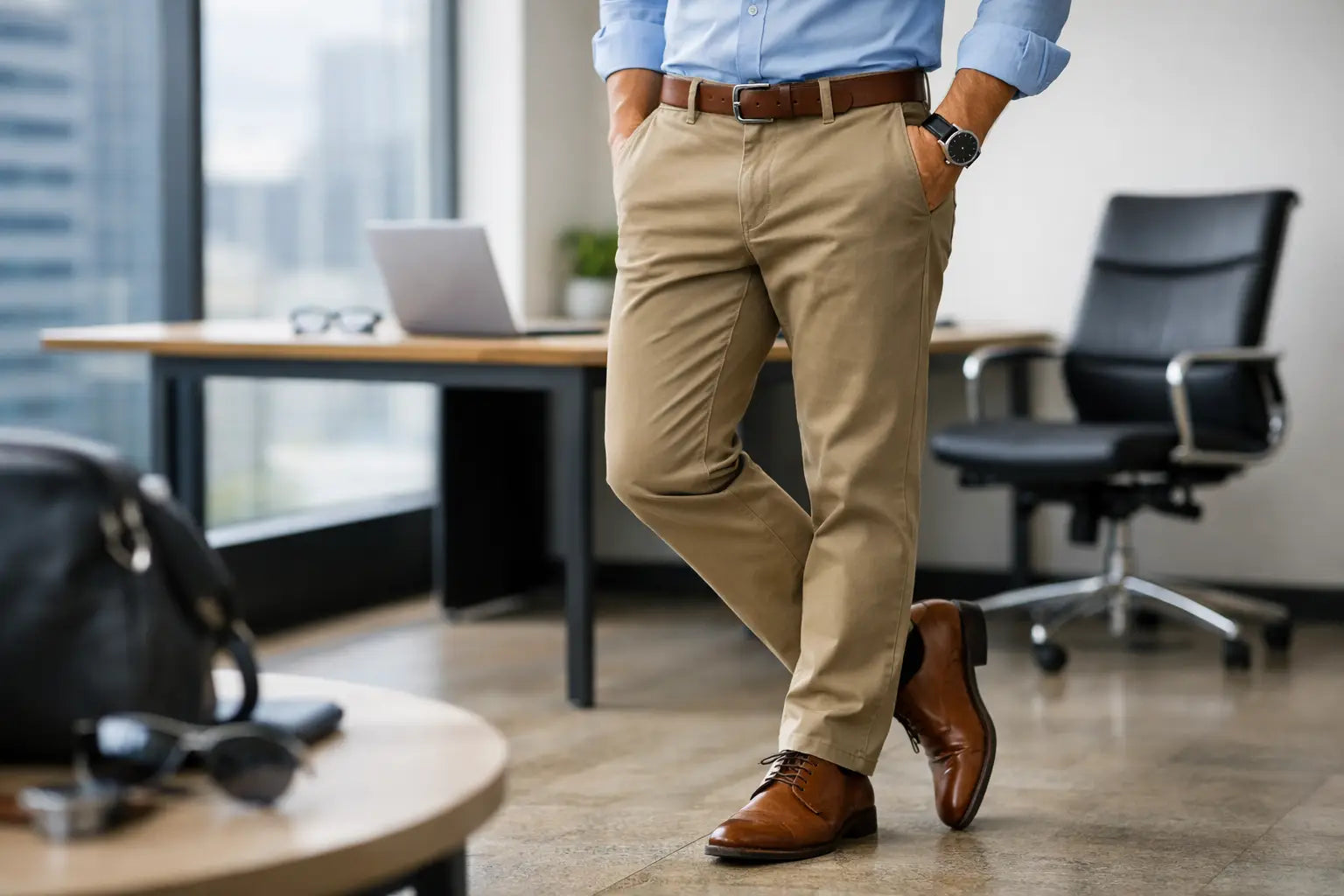
When it comes to trousers, performance twill is one of the strongest all-around options. It gives pants substance, a polished finish, and everyday durability. Add controlled stretch, and you get a pant that can handle commuting, sitting, walking, and extended wear without losing its shape.
This is where performance construction really proves its value. Men want chinos and work pants that look tailored but do not feel rigid by midday. A strong twill blend offers exactly that. It keeps the wardrobe grounded in classic style while making the experience of wearing it far more comfortable.
Synthetic-forward technical blends
Polyester and nylon blends can offer excellent moisture management, durability, and wrinkle resistance. In some garments, especially travel-focused pants or lightweight warm-weather pieces, they perform extremely well. They also tend to dry faster than cotton-heavy fabrics.
Still, this category requires a careful eye. If the fabric has too much shine or feels overly slick, it can cheapen the look of otherwise well-designed workwear. For a polished wardrobe, technical performance should support the appearance of the garment, not dominate it.
How fabric choice changes by garment
A shirt and a pant do not need the same performance profile. Shirts benefit most from breathability, stretch, softness, and wrinkle resistance. They sit closer to the skin, show creasing more easily, and need to maintain a sharp upper-body silhouette. That is why cotton-rich stretch blends and refined knit constructions tend to perform so well.
Pants need durability, recovery, and flexibility first. They handle constant friction, repeated movement, and long periods of sitting. A performance trouser that stretches but loses shape is not doing its job. In this category, structure matters as much as comfort.
Season also affects the right choice. Lightweight fabrics help in spring and summer, but if they are too thin, they can lose drape and look less substantial. Heavier fabrics may hold shape better in cooler months, though they need enough breathability to stay comfortable indoors.
What premium performance should feel like
A quality performance fabric should not feel like a compromise. It should feel smooth, substantial, and easy to wear. You should notice freedom of movement without seeing strain lines across the chest or thighs. You should feel airflow without the garment appearing thin. You should get softness without losing the clean lines that make business-casual dressing look intentional.
That balance is what separates premium workwear from basic stretch clothing. The goal is not to make office clothes behave like activewear. The goal is to refine classic menswear with better engineering.
For that reason, the best guide to performance workwear fabrics is not about chasing the most technical label. It is about choosing fabrics that support how you actually dress. If your wardrobe needs to move from desk to dinner, from weekday meetings to weekend plans, fabric should carry that transition with ease.
Brands that understand this build from the fabric up. At LEVINAS, that means performance materials designed to deliver polish, comfort, and versatility in the same garment. Because when the fabric is right, everything else works harder - the fit looks better, the styling feels easier, and the piece earns its place in your rotation.
The smartest wardrobe upgrades rarely start with louder patterns or trend-driven details. They start with better fabric, because that is what you feel first, what others notice second, and what keeps a good-looking piece in regular use.


Leave a comment
This site is protected by hCaptcha and the hCaptcha Privacy Policy and Terms of Service apply.