
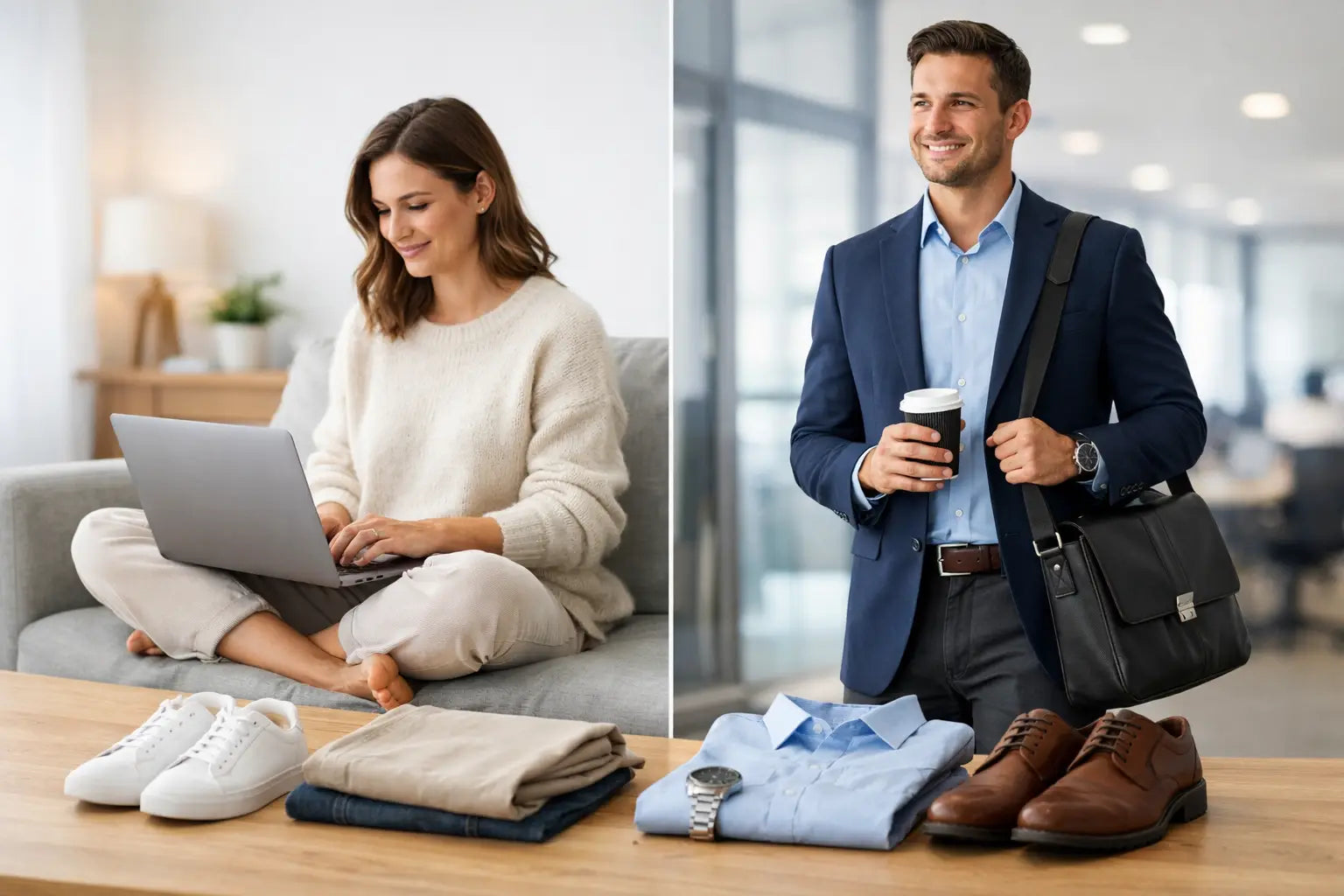
How to Dress for Hybrid Office Work
Monday starts at your kitchen counter. Tuesday puts you in a client meeting. Wednesday is a video call day, and Thursday means a full day in the office. That is exactly why so many men are figuring out how to dress for hybrid office routines without overthinking it every morning. The right answer is not owning two separate wardrobes. It is building a sharper business-casual system around fit, comfort, and versatility.
Hybrid work changed the standard uniform. A full suit can feel overdressed in one setting and completely right in another. A hoodie and joggers may work at home, but they rarely hold up when your day shifts from laptop time to lunch meetings. The most reliable approach sits in the middle - polished enough for professional settings, comfortable enough for long wear, and flexible enough to move with your calendar.
How to dress for hybrid office settings without guessing
If your schedule changes by the day, your clothing needs range. That starts with understanding what hybrid office style actually asks of you. In most workplaces, the expectation is business casual with room to adjust. You need pieces that look intentional on camera, read professional in person, and still feel easy after eight or ten hours.
That is why shirts matter so much. A well-cut button-up gives you immediate structure, even when the rest of your outfit stays simple. It frames the face well for virtual meetings, layers cleanly under outerwear, and works equally well with chinos or performance pants. For most men, it is the foundation of every workday look because it solves the biggest hybrid office problem: looking put together without dressing too formally.
Fit is what separates sharp from sloppy. If a shirt pulls at the buttons, billows at the waist, or collapses at the collar, the whole outfit looks off. A contemporary fit or tailored fit usually gives the best balance. It should skim the body, not cling to it. You want shape through the torso and enough room to move comfortably, especially if your day includes commuting, sitting for long stretches, and heading straight into after-work plans.
Build your hybrid office wardrobe around three anchors
The easiest way to dress well for a mixed schedule is to rely on a small set of dependable categories rather than chasing new outfits every week. In practice, most men need sharp shirts, clean trousers, and a few finishing layers that can shift the tone up or down.
1. The business-casual shirt
Your shirt should do more than look good on a hanger. In a hybrid office, it needs to perform across environments. Cotton shirts with stretch, knit-stretch construction, or lightweight performance blends all make sense because they hold their shape while staying comfortable through a full day. A stiff shirt may look formal at 9 a.m. and feel like a mistake by 3 p.m.
Color also matters. White, light blue, and subtle patterns carry the most mileage because they pair easily with navy, gray, khaki, and black bottoms. If your office leans relaxed, soft checks and understated prints add personality without getting loud. If your week includes leadership meetings or presentations, keep a few cleaner solid options in rotation.
A quality button-up works harder than almost any other item in your closet. It can be worn tucked for a more professional look or untucked if the hem is designed for it and your office allows a looser finish. It can sit under a blazer, over a tee on a commute, or stand on its own. That kind of flexibility is what makes it worth prioritizing.
2. Trousers that feel easy but look elevated
The second anchor is a strong rotation of chinos and performance pants. This is where a lot of hybrid wardrobes either win or lose. Traditional dress pants can feel too formal for casual office days, while denim is not always appropriate depending on your workplace. Well-fitted chinos usually cover the most ground.
Look for clean lines, stretch, and a tailored leg that does not puddle over the shoe. A trim fit works in most settings because it keeps the silhouette modern without looking trend-driven. Navy, charcoal, stone, and olive are especially useful because they pair with nearly every shirt color you already own.
Performance pants are also worth considering if your routine includes travel, long commutes, or frequent movement between environments. The best versions offer polish without the stiffness of classic suiting fabrics. That trade-off matters. Comfort should never come at the expense of appearance, but appearance without comfort rarely gets worn consistently.
3. Layers that adjust the dress code
Hybrid office dressing gets easier when you have one or two layers that instantly change the tone of an outfit. A blazer sharpens a button-up and chinos in seconds. A fine-gauge quarter-zip or clean overshirt can soften the look while keeping it professional. The goal is not to pile on pieces. It is to create options.
This is especially useful if your office culture is inconsistent. Some teams are casual until a leadership meeting appears on the calendar. Some workplaces are relaxed in person but expect more polish when clients visit. A smart layer gives you room to respond without rebuilding the entire outfit.
What to wear on different hybrid office days
One reason men struggle with how to dress for hybrid office work is that not every day deserves the same formula. The better strategy is to dress by purpose.
For a work-from-home day with video calls, a refined button-up with chinos or polished five-pocket pants is usually enough. Even if no one sees the full outfit, dressing completely changes how you carry yourself. A sharp shirt on screen and structured pants off screen keep you ready if the day shifts unexpectedly.
For a standard office day, lean into business casual. A solid or lightly patterned shirt with chinos is reliable, current, and easy to repeat in different color combinations. Add a blazer if your office leans more traditional or if your calendar includes face-to-face meetings.
For client meetings or presentation days, move one step more formal. Choose a crisp shirt, darker trousers, and cleaner shoes. You do not necessarily need a suit, but you do need precision. This is where fit, fabric quality, and finishing details become more visible.
For social plans after work, versatility matters most. A shirt with subtle contrast details, tailored trousers, and a clean leather sneaker or loafer can carry you from office to dinner without looking like you came straight from one or the other.
The details that make hybrid office style look intentional
The difference between dressed and well-dressed usually comes down to the details. Shoes matter more than many men think. If your outfit is built around business-casual pieces, your footwear should support that level of polish. Leather sneakers can work in relaxed offices, but they should be minimal and clean. Loafers, lace-ups, and refined boots generally offer more consistency.
Belts should match the tone of the shoe, and ideally the color family as well. Your shirt collar should stay structured. Sleeves should hit correctly at the wrist. Trousers should break lightly or not at all, depending on the cut. None of this is complicated, but it does require paying attention.
Fabric is another quiet differentiator. In hybrid settings, materials with stretch and recovery have a real advantage because they keep their shape throughout the day. That means fewer wrinkles, better comfort, and a cleaner look by evening. For men who want one wardrobe to cover work, travel, and daily wear, that utility is not a bonus. It is the point.
Common mistakes when dressing for a hybrid office
The biggest mistake is treating hybrid work as permission to dress down all the time. Comfort matters, but there is a difference between relaxed and careless. If your clothing looks like it belongs only at home, it limits you the second your schedule changes.
Another mistake is overcorrecting with overly formal pieces that feel disconnected from the environment. If everyone else is in business casual, a full corporate uniform can look rigid rather than refined. The strongest wardrobe is the one that can move between expectations without looking out of place.
It is also easy to buy too many novelty items and not enough essentials. Bold patterns and trend pieces have their place, but the real workhorses are the shirts and pants you can wear three different ways. Brands like LEVINAS understand that the modern wardrobe needs polish, stretch, and versatility all at once, not in separate categories.
When your workweek changes by the hour, your clothing should make decisions easier, not harder. Start with shirts that fit correctly, trousers that move well, and layers that let you adjust on the fly. If every piece can carry you from desk to meeting to dinner without losing shape or confidence, you are already dressed for the way work actually happens now.



Leave a comment
This site is protected by hCaptcha and the hCaptcha Privacy Policy and Terms of Service apply.