
Men's Office Style Trends That Work Harder
The strongest men's office style trends are not about wearing louder pieces or chasing a new look every week. They are about building a sharper work wardrobe that handles the full calendar: early meetings, client lunches, a long commute, and plans after hours. The modern office uniform has shifted toward clean structure, flexible fabrics, and polished pieces that feel as good at 6 p.m. as they did at 8 a.m.
For men who work in business-casual environments, this is good news. You no longer need a stiff shirt and restrictive trousers to look put together. The better approach is to choose elevated essentials with thoughtful fit, stretch, and enough visual distinction to make a simple outfit feel intentional.
Men's Office Style Trends Start With Better Shirts
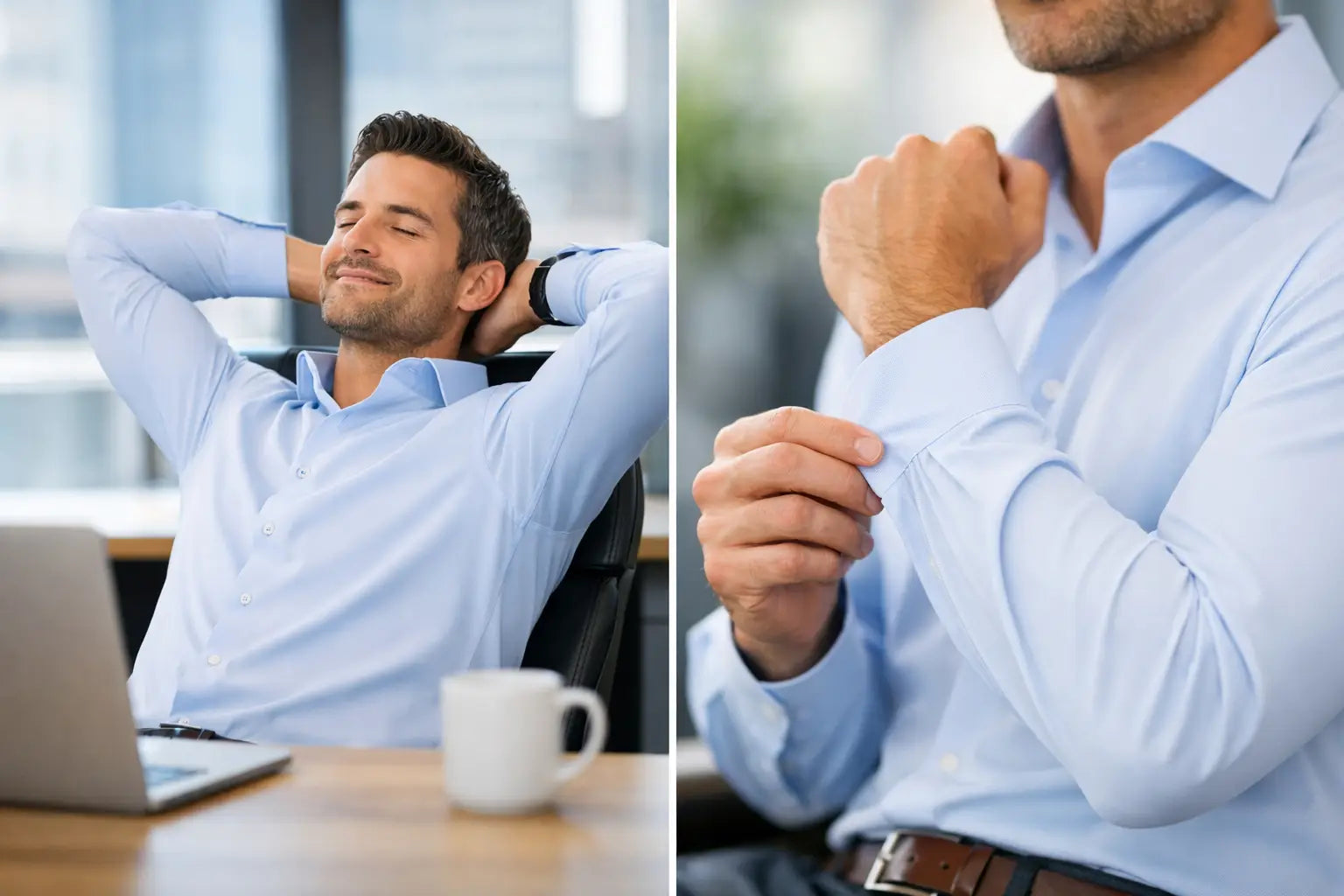
A well-fitting button-up remains the foundation of every man's office wardrobe. What has changed is the expectation. A shirt should hold its shape, look refined under a jacket, and still allow comfortable movement through a full day. Stretch cotton, knit-stretch constructions, and soft performance blends are now central to business-casual dressing for a reason: they answer a practical need without compromising the look of a classic shirt.
Contemporary fits are particularly relevant right now. They provide a clean line through the chest and torso without the excess fabric of a traditional cut or the tightness of an aggressively slim shirt. The result looks tailored, but it does not require you to spend the day adjusting your sleeves or pulling at your collar.
Color and pattern are becoming more considered, too. White and light blue still earn their place because they work with nearly everything. But subtle stripes, small-scale prints, tonal checks, and darker neutrals give your rotation more personality while remaining professional. Contrast trim at the collar or cuffs is another smart detail when it is used with restraint. It creates interest when you loosen the collar or roll a sleeve, rather than competing with the rest of the outfit.
Choose the Collar for the Way You Work
A spread or semi-spread collar offers the broadest versatility. It looks right with a blazer, but it also holds its shape when worn open at the neck. That makes it a strong choice for offices where the dress code changes depending on the meeting.
If your workplace stays more relaxed, a soft collar or refined knit shirt can be a better answer. The trade-off is formality. A knit-stretch button-up delivers exceptional comfort and a modern texture, though a crisp woven shirt will usually read more formal for presentations, interviews, or client-facing days. A wardrobe with both gives you options without making the decision complicated.
Tailored Comfort Is Replacing Stiff Trousers
The office pant has become more functional. Men still want a clean, tailored silhouette, but they expect stretch, recovery, and comfort at the waist and through the seat. Performance pants and super-stretch chinos have moved beyond casual Friday because the best versions retain a structured appearance.
The key is to avoid confusing comfort with looseness. Pants that bunch at the ankle, sag through the thigh, or pull across the front do not look relaxed - they look unfinished. Aim for a trim, natural line that follows the body without clinging. A slight taper from knee to hem keeps the outfit current and works with loafers, leather sneakers, or dress shoes.
Navy, charcoal, stone, and black create the most useful starting point. Navy pairs easily with white, blue, gray, and patterned shirts. Charcoal is slightly more formal and works especially well with black or burgundy footwear. Stone and lighter khaki bring a fresh, polished feel during warmer months, but they require a little more attention to fit and fabric quality because lighter colors reveal wrinkles and bunching more easily.
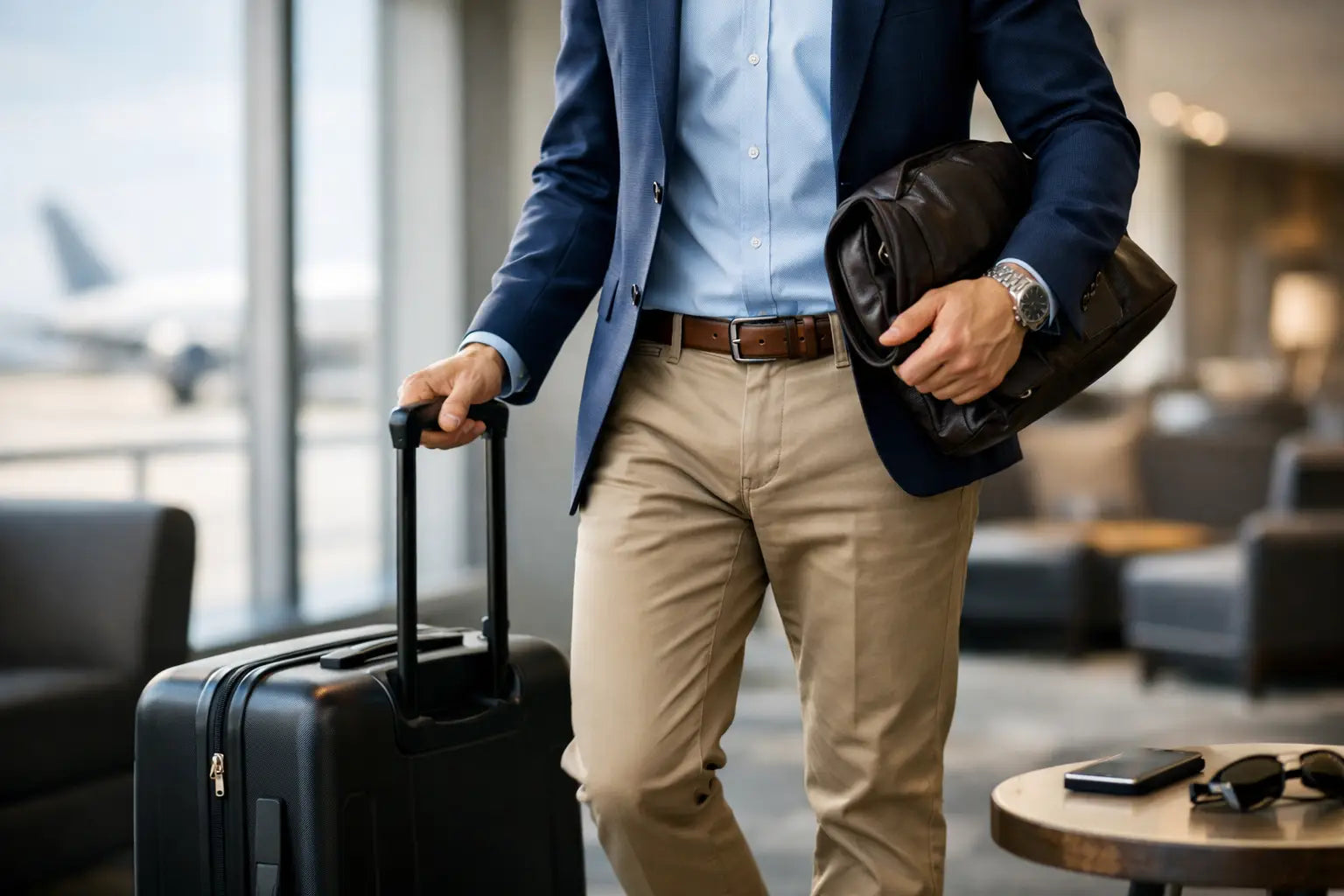
For a dependable office combination, pair a light blue stretch shirt with navy tailored pants and dark brown loafers. When you want a more modern contrast, wear a black, deep olive, or dark blue shirt with charcoal pants. These combinations feel confident without relying on novelty.
Relaxed Tailoring Still Needs Structure
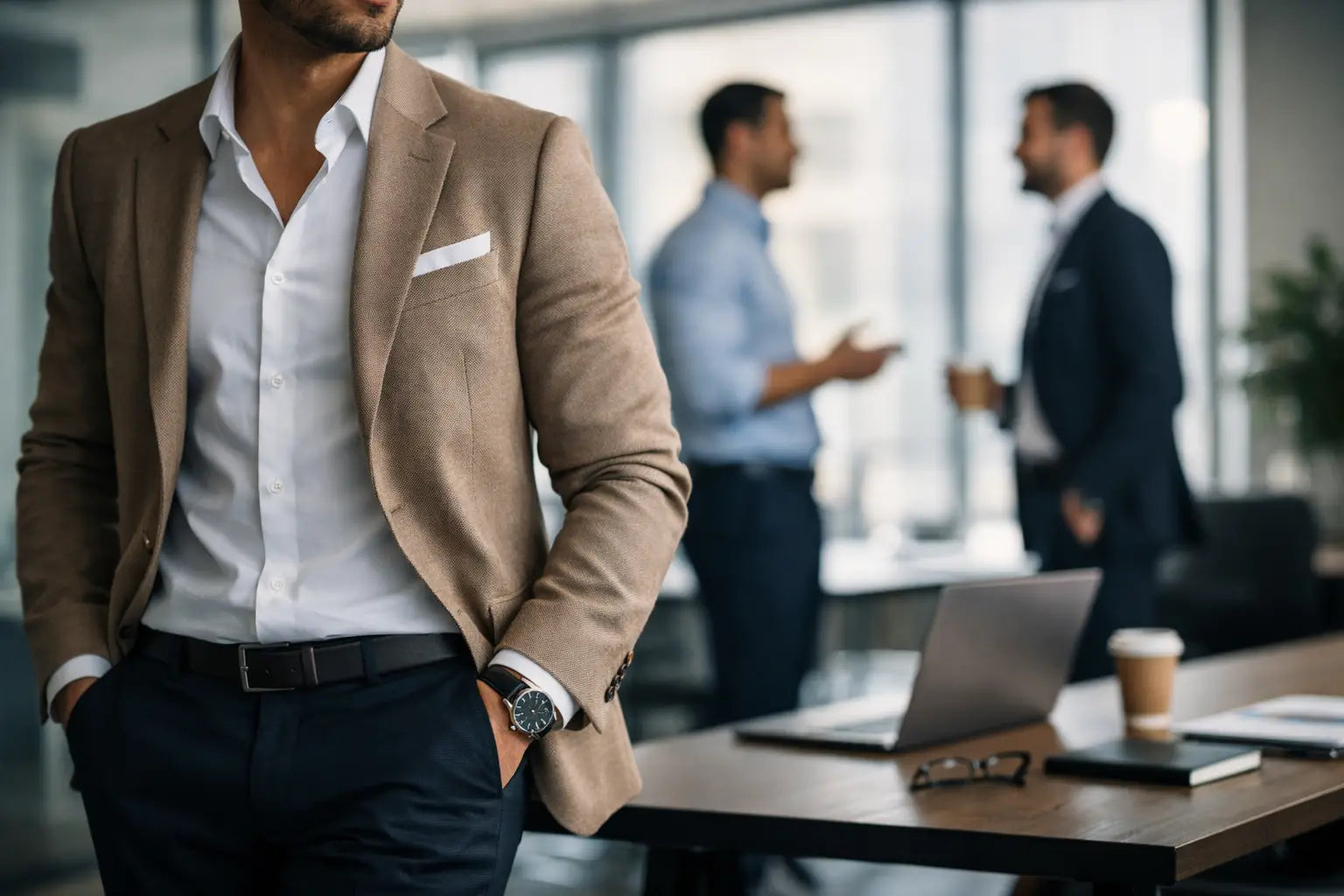
Blazers are less rigid than they were a few years ago, and that is one of the most wearable office style shifts. Unstructured or lightly constructed jackets provide shape through the shoulders while removing the bulk associated with traditional tailoring. Worn with a stretch button-up and tailored chinos, they create a polished uniform that is appropriate for many contemporary offices.
Fit still matters more than construction. The shoulder seam should sit at your natural shoulder. Sleeves should show a small amount of shirt cuff, and the jacket should close without pulling across the chest. A relaxed jacket is not an oversized jacket. Too much width in the shoulder or body can make an otherwise refined outfit look careless.
Navy remains the most versatile blazer color, followed by charcoal and medium gray. Consider a subtle texture such as hopsack, soft twill, or a restrained micro-check if your wardrobe already has solid options. Texture adds depth to a simple shirt-and-pant combination and helps a jacket feel less formal when worn without a tie.
The New Office Palette Is Rich, Not Loud
The current color direction leans toward grounded shades that add range to a professional wardrobe: olive, tobacco, deep burgundy, slate, espresso, and muted blue. These tones feel masculine and substantial, especially in fall and winter, while still pairing easily with familiar neutrals.
That does not mean every office wardrobe should become dark. Lighter blue, crisp white, soft gray, and pale stone remain essential because they bring clarity to an outfit. The most effective strategy is to use one richer color as the focal point and keep the remaining pieces controlled. An olive shirt with navy pants, for example, has more character than a head-to-toe neutral look while staying entirely office-ready.
If your work environment is conservative, bring color in through smaller elements: a patterned shirt under a navy blazer, a burgundy belt, or a textured brown loafer. If your office is more creative or entrepreneurial, a dark green overshirt-style layer or a refined knit polo can work well, provided the fit stays clean and the pants remain tailored.
Footwear Has to Match the Dress Code, Not the Hype
Minimal leather sneakers are still relevant for many workplaces, but they are not a universal substitute for dress shoes. A clean white or off-white leather sneaker works with chinos and a knit-stretch shirt in a casual office. It is less convincing in a formal meeting, a traditional financial setting, or an environment where clients expect classic business attire.
Loafers offer the best middle ground. Penny loafers, bit loafers, and understated suede loafers pair naturally with chinos, performance pants, and blazers. Dark brown is the most versatile choice, while black delivers a cleaner, more formal finish with charcoal, black, or deep navy trousers. For days when the standard is higher, a simple lace-up shoe still has a place.
Keep footwear in good condition. The most carefully chosen shirt and pant combination loses impact when the shoes are scuffed, creased beyond repair, or visibly worn at the heel. Office style is often decided by these small finishing details.
Build a Rotation, Not a Closet Full of One-Time Outfits
A strong work wardrobe should make weekday dressing faster. Start with shirts in white, light blue, and one or two deeper colors or subtle patterns. Add tailored stretch pants in navy, charcoal, and a lighter neutral. Then introduce a versatile blazer, polished casual shoes, and a few layers that fit your office culture.
LEVINAS designs this kind of wardrobe around the pieces men wear most: refined shirts, flexible chinos, and performance-driven pants that transition from work to the rest of the day. The value is not in owning more clothing. It is in owning pieces that combine easily and maintain their shape, comfort, and polish through frequent wear.
Pay attention to proportion as you build. A fuller shirt pairs better with a more tailored pant, while a slim, clean shirt can handle a pant with a slightly more relaxed top block. Avoid stacking every trend at once. A wide pant, oversized jacket, bold sneaker, and statement shirt can turn business casual into costume. One modern element is usually enough.
The right office style should make you feel prepared before the day starts. Choose shirts that move, pants that hold their line, and finishing pieces that meet the level of the room. When your wardrobe does that consistently, getting dressed becomes less of a daily decision and more of a professional advantage.

Leave a comment
This site is protected by hCaptcha and the hCaptcha Privacy Policy and Terms of Service apply.