
Article: Muscular Mens Shirts That Fit Without Pulling

Muscular Mens Shirts That Fit Without Pulling
A shirt can fit your chest and still fit poorly everywhere else. That is the frustration behind most searches for muscular mens shirts: standard button-ups often pull across the shoulders, gap at the chest, and leave excess fabric around the waist. The right shirt should follow your frame with clean definition while giving you enough stretch to move through a full day comfortably.
For work, dinner, travel, or a weekend event, a well-cut shirt does more than look sharp. It removes the constant need to adjust your sleeves, tug at the placket, or choose between a tailored appearance and natural movement.
What Muscular Mens Shirts Need to Do
A muscular build creates different fit demands than a straight or slender frame. Broad shoulders, a developed chest, and stronger arms need room in the upper body, but that extra space should not turn into a boxy torso. A shirt that is simply sized up may solve tightness in the shoulders, yet it often creates a loose collar, long sleeves, and too much fabric at the midsection.
The better approach is a contemporary or tailored fit that accounts for proportion. It should provide measured room through the chest and back, then taper naturally through the waist. The result is structured rather than restrictive: clean lines at the sides, a smooth front placket, and enough mobility for everyday movement.
This distinction matters in business-casual settings. A shirt that strains at every button can make an otherwise polished outfit feel careless. One that hangs too loosely can hide the shape you work to maintain. The goal is not a skin-tight silhouette. It is a controlled fit that looks intentional from every angle.
Start With the Shoulder Fit
The shoulders are the foundation of a good shirt fit. The shoulder seam should sit near the edge of your natural shoulder, not high toward the neck and not halfway down the arm. If it sits too high, the shirt will feel tight when you reach forward or drive. If it drops too far, the shirt can look oversized even when the chest technically fits.
For men with a broad upper body, shoulder mobility is just as valuable as shoulder width. Look for fabrics with mechanical stretch or added stretch fibers that allow the shirt to move with you. This is especially useful when you spend long hours at a desk, commute, travel, or move between meetings and social plans without changing clothes.
A useful test is simple: cross your arms, reach forward, then sit down. The shirt should stay relatively smooth across the upper back and chest. Some tension is normal in a fitted button-up, but sharp pulling lines or buttons that look ready to separate are clear signs that the upper body is too tight.
Check the chest without sizing up
A shirt should close cleanly across the chest with no visible gaping between buttons. If there is slight tension only when you flex or extend your arms, stretch fabric may make it a workable fit. If the placket pulls while you are standing naturally, move to a roomier cut rather than relying on a larger size in a slim pattern.
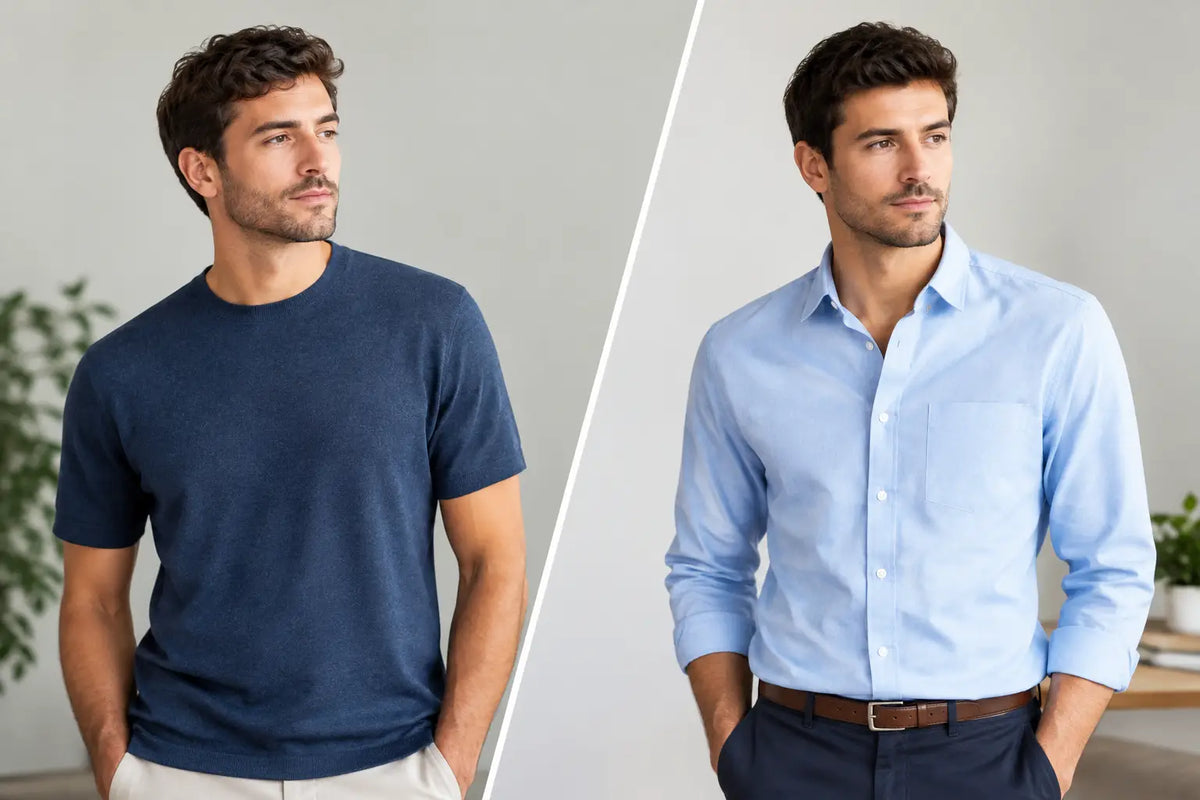
A contemporary-fit shirt is often the most versatile option for athletic or muscular men. It delivers more space than a traditional slim fit while retaining the refined shape needed for office wear. Tailored knit-stretch shirts can also be an excellent choice when comfort is the priority, offering the visual polish of a button-up with a softer, more flexible feel.
The Waist Should Follow Your Shape
The most flattering muscular men's shirts do not need to be aggressively narrow at the waist. Over-tapering can create horizontal pulling at the buttons when you sit, while a straight-cut body can add unnecessary volume. Look for a gradual taper that gives the shirt definition without squeezing the midsection.
Pay attention to the back as well. Excess fabric gathering around the lower back is a common issue when men buy shirts large enough for their shoulders. A better fit keeps the back smooth when standing and avoids billowing when tucked into chinos or performance pants.
Length is part of the equation. A shirt intended to be tucked should stay in place when you raise your arms, while a casual shirt worn untucked should finish around the mid-fly area. Too much length can overwhelm a fitted build, especially when left untucked. Too little can expose the waistband and make a polished outfit feel unfinished.
Choose Fabric That Works as Hard as You Do
Fit starts with the pattern, but fabric determines how the shirt performs over time. Crisp cotton creates a classic, elevated look for professional settings, while stretch construction adds comfort where muscular men need it most: the shoulders, chest, elbows, and upper back.
For a sharper business-casual appearance, choose a woven shirt with a refined surface and controlled stretch. It holds its shape, layers well under a blazer or sweater, and presents cleanly for the office. For more relaxed days, a cotton knit-stretch shirt offers flexibility and softness without giving up the collar and button-front structure that makes it appropriate beyond the gym or weekend errands.
Breathability should influence your choice, particularly if you run warm. Lightweight cotton blends and fabrics with moisture-aware performance are practical for commutes, crowded events, and warmer offices. A heavier fabric may provide more structure, but it can feel less forgiving during long days. The right choice depends on where you will wear it most often.
Details That Make a Shirt Look More Refined
A strong fit earns attention, but the finishing details determine whether a shirt feels ordinary or elevated. A structured collar frames the face and maintains its shape under a blazer. Contrast trim inside the collar or cuffs adds interest without making the shirt difficult to style. Dual cuffs offer another subtle point of distinction when sleeves are rolled or a jacket comes off after work.
Sleeves deserve close attention for muscular arms. They should follow the bicep without cutting into it, then narrow slightly toward the cuff. Excessively wide sleeves can make even a fitted torso look dated, while overly tight sleeves limit movement and can distort the shirt's line. The best balance is close, clean, and comfortable.
Buttons and plackets should lie flat. This is a small detail, but it has a major effect on appearance. When the front of a shirt remains smooth, the garment looks more expensive and more deliberate, whether paired with tailored trousers or dark denim.
How to Style Muscular Mens Shirts for More Wear
A versatile shirt should earn its place in more than one part of your wardrobe. For the office, pair a solid white, light blue, or subtle patterned button-up with stretch chinos and leather shoes. These combinations look composed without feeling overly formal, especially in workplaces where suits are no longer the daily standard.
For client meetings or dinners, add a fitted blazer in navy, charcoal, or a textured neutral. The shirt should sit smoothly beneath the jacket, with no bunching at the shoulders or excess fabric at the waist. A clean collar and defined cuffs keep the outfit sharp when the blazer comes off.
For off-duty plans, wear a stretch shirt untucked with dark jeans or tailored shorts, depending on the season. Keep the colors straightforward: navy, black, white, soft gray, and muted earth tones create more outfit options than overly bold prints. Contrast details can provide personality while keeping the overall look refined.
If you are building a practical rotation, start with two dependable solids and one pattern. That gives you enough range for the workweek without filling your closet with shirts that only work for one occasion. LEVINAS designs its shirts around this kind of wardrobe utility, with contemporary fits and stretch-focused fabrics that transition easily between professional and social settings.
Common Fit Mistakes to Avoid
The first mistake is buying a slim fit because the name sounds athletic. Slim fits vary widely between brands, and some are designed for narrow shoulders and a flat chest rather than a muscular frame. Read the fit description, then judge the shirt by how it wears across your shoulders, chest, and waist.
The second is sizing up to solve a chest issue. This often creates a cascade of problems: sleeves become too long, the collar sits loose, and the body loses shape. A roomier contemporary cut in your proper neck and sleeve size is usually a stronger answer.
Finally, do not confuse tight with tailored. A quality shirt should make your build look defined, but you should be able to sit, reach, drive, and move through the day without thinking about it. When a shirt performs that well, confidence follows naturally. Choose the fit that supports your frame, then let the rest of your wardrobe work around it.

Leave a comment
This site is protected by hCaptcha and the hCaptcha Privacy Policy and Terms of Service apply.