
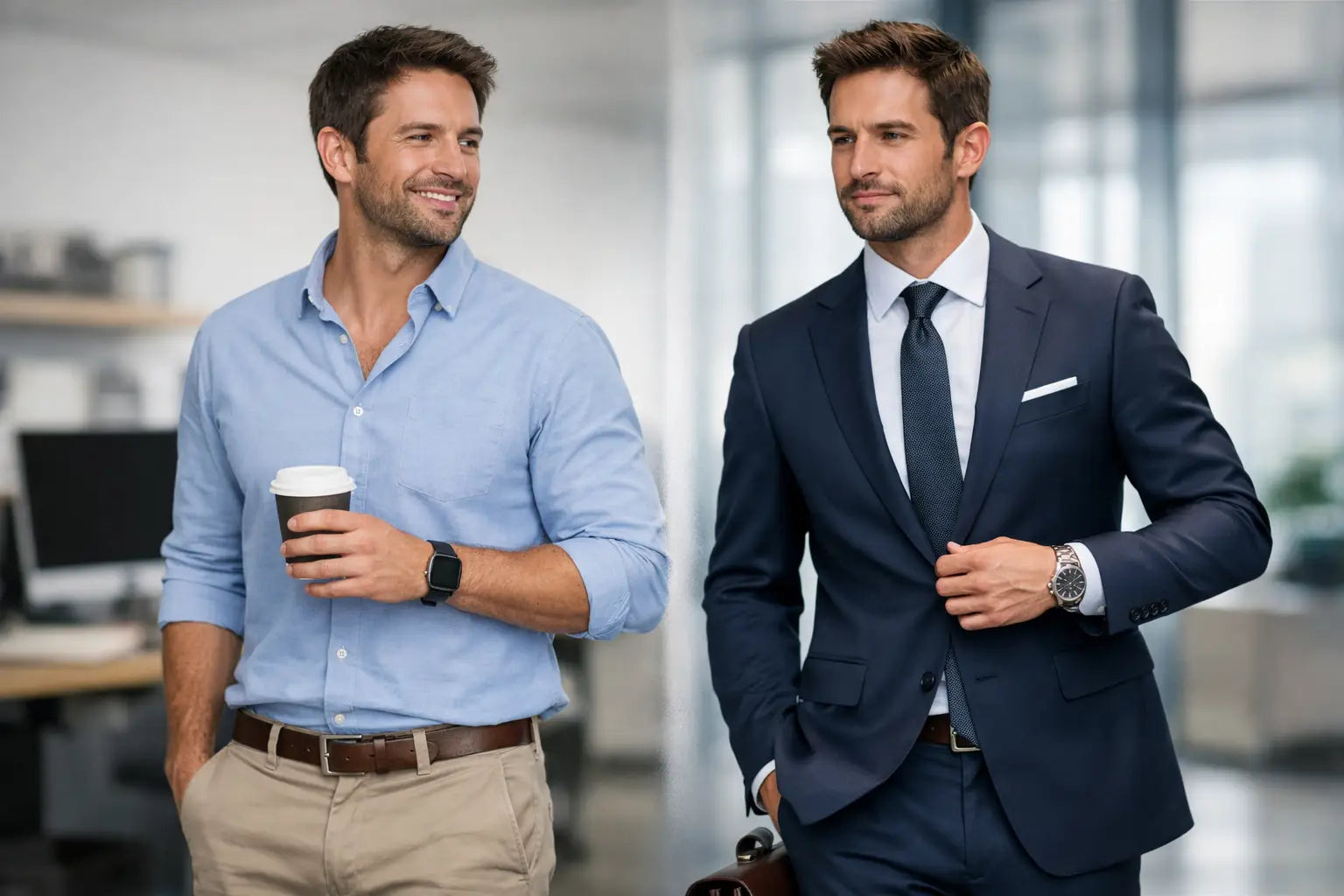
Office Outfit Upgrade Case Study for Men
Monday at 8:15 a.m. is where most office wardrobe problems show up. The shirt pulls across the chest when you reach for your laptop, the pants look tired by noon, and the full outfit feels slightly off even if every piece is technically appropriate. This office outfit upgrade case study looks at a familiar scenario for working men - a closet full of decent basics that still fails to deliver a sharp, comfortable, business-casual result.
The point is not to build a fashion-forward wardrobe from scratch. It is to improve what most men actually wear to work: button-up shirts, chinos, performance pants, and a few reliable layers that can handle long days, meetings, commutes, and after-hours plans. For the professional man, an upgrade works when it improves three things at once - fit, comfort, and range of use.
The starting point in this office outfit upgrade case study
Our subject is a 38-year-old account manager in a hybrid office. His dress code is flexible but not casual enough for tees and jeans during client-facing days. He needs to look polished from morning meetings through dinner without changing outfits, and his current wardrobe is made up of standard cotton dress shirts, stiff chinos, and one blazer he rarely wears because it feels restrictive.
On paper, that sounds workable. In practice, the wardrobe has the problems many men know well. The shirts wrinkle fast and bunch at the waist. The pants lose shape after a few hours of sitting. Colors do not coordinate easily, so getting dressed takes longer than it should. Most important, the overall look feels more like getting by than dressing with purpose.
That is where an office outfit upgrade should begin. Not with trend pieces, and not with a closet purge for the sake of it. The real move is to identify which staples are failing on performance and replace them with versions that look cleaner, fit better, and do more work.
What was not working
The biggest issue was fit imbalance. His shirts were roomy through the midsection but tight across the shoulders, which created a broad, boxy line instead of a tailored one. This is common with off-the-rack office shirts that rely on a traditional cut but do not account for movement, especially on men who spend part of the day commuting, driving, or sitting in conference rooms.
Fabric was the second problem. Standard woven cotton can look crisp at 7:30 a.m. and noticeably fatigued by lunch. That does not mean cotton is wrong. It means the fabric has to be matched to the pace of modern work. Stretch construction, knit textures, and performance blends often make more sense for men who want a polished appearance without the stiffness of old-school office wear.
The third issue was versatility. His wardrobe had too many pieces with a single use. One shirt worked only with one pair of pants. One pair of chinos looked acceptable only with a blazer. When a wardrobe is that narrow, you end up repeating the same outfit combinations and still feeling like nothing works.
The upgrade strategy
This office outfit upgrade case study focused on five core replacements rather than a full reset. That matters because most men do not need more clothing. They need better anchors.
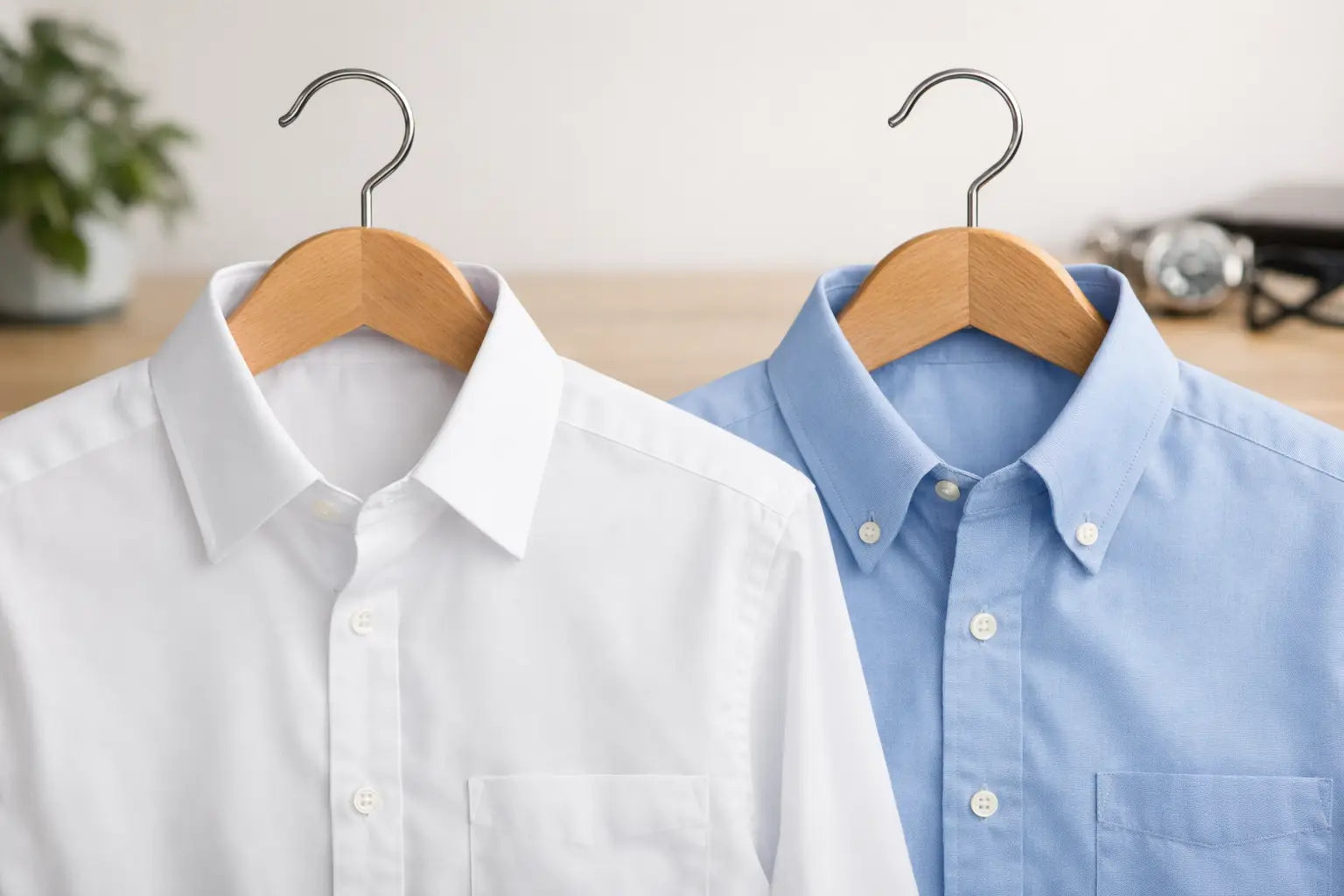
First came shirts. Instead of flat, basic dress shirts that demanded constant ironing and offered little give, the upgrade centered on contemporary-fit button-ups with stretch and cleaner structure. A shirt should follow the body without pulling, and it should hold its shape through a full day. Details matter here: a sharper collar, a smoother placket, and subtle contrast trim can make a shirt feel more elevated without pushing it into flashy territory.
Second came tailored knit-stretch shirts. This is where many office wardrobes improve the fastest. A knit-stretch shirt offers the visual standard of a button-up with more softness and movement than a rigid woven shirt. For men in business-casual environments, that combination is hard to beat. You still look prepared, but you no longer feel dressed in something that fights your body.
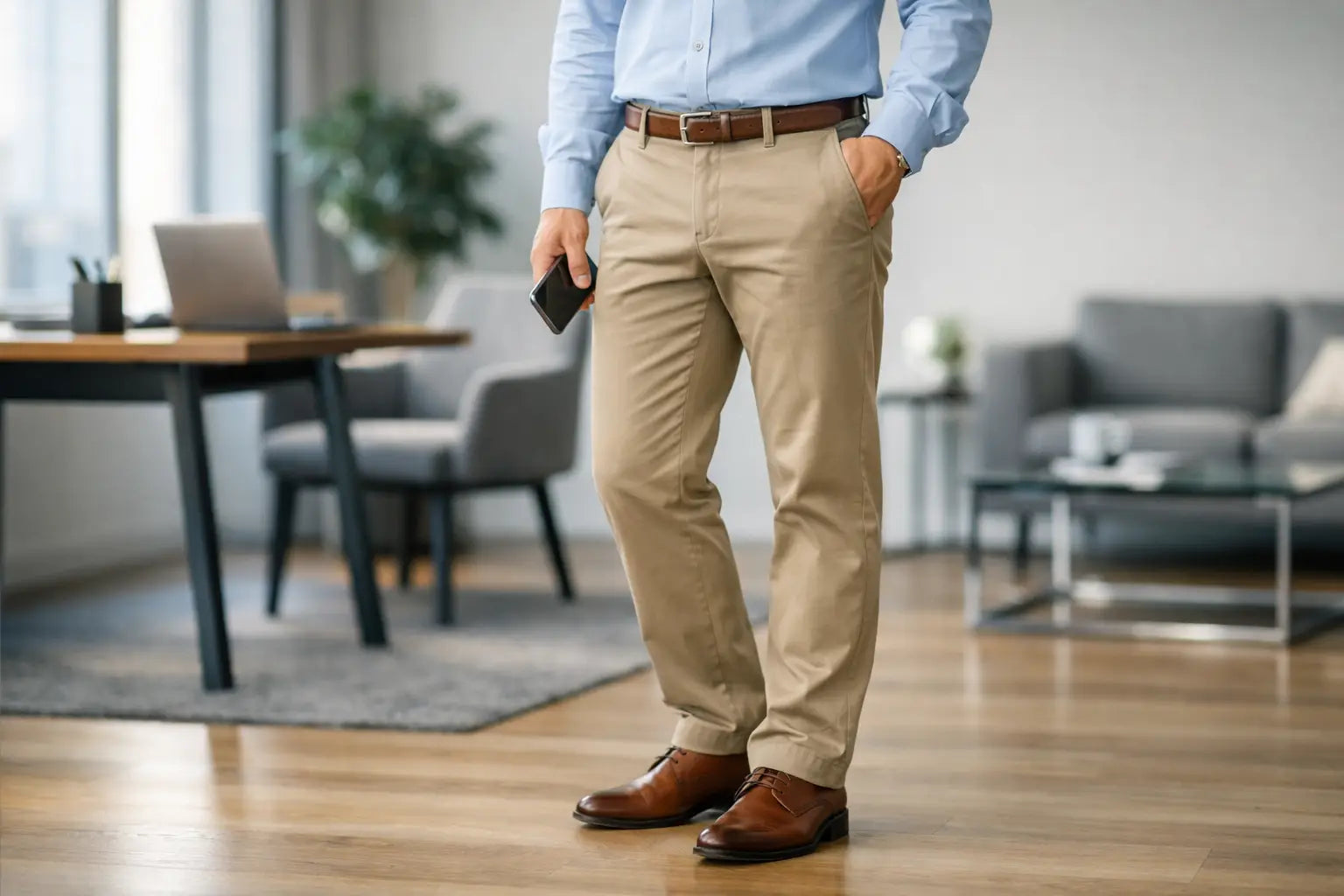
Third, the pants category shifted from standard chinos to super-stretch chinos and performance pants in slimmer, cleaner silhouettes. The goal was not a skinny fit. It was a refined line through the leg with enough flexibility for all-day wear. When pants hold shape and move well, the whole outfit looks more expensive.
Fourth, the color palette was simplified. Instead of scattered checks, random blues, and faded khakis, the upgraded wardrobe focused on white, light blue, navy, charcoal, and stone. That made every shirt more useful and every pair of pants easier to style. A wardrobe feels premium when the pieces speak the same language.
Finally, the outfit formulas were narrowed to a small group of repeatable combinations. That changed the getting-dressed process from guesswork to consistency.
Before and after: what changed
The most visible improvement came from the shirts. A contemporary-fit shirt in a better fabric cleaned up the torso immediately. There was less excess fabric at the waist, less strain at the chest, and a sharper frame at the collar and cuff. That kind of upgrade does not scream for attention, but it changes how a man is read in a room. He looks more put together, more intentional, and more current.
Comfort improved even more than appearance. Once stretch shirts and flexible pants entered the rotation, there was no need to choose between looking polished and feeling at ease. This matters in real office life. Men do not stand still all day. They commute, sit, present, reach, walk, and often go straight from work into the rest of their schedule. Clothing that moves with the body is no longer a bonus. It is the standard a practical business-casual wardrobe should meet.
Versatility was the final payoff. One light blue stretch shirt now worked with charcoal performance pants for meetings, stone chinos for regular office days, or dark trousers for a dinner reservation after work. A navy shirt became a dependable option that looked strong on its own and layered easily. The wardrobe got smaller in decision-making terms, but stronger in outfit combinations.
The pieces that delivered the most value
If there was one category that transformed the wardrobe fastest, it was the stretch button-up. For most men, the shirt is the foundation of every work outfit. It sits closest to the face, defines the level of polish, and often determines whether the look feels business-ready or too relaxed. Upgrading the shirt category first usually gives the highest return.
Performance pants came in second. Men tend to underestimate how much tired, overly casual, or poorly shaped pants drag down an outfit. Even a strong shirt loses impact when paired with pants that sag at the knee or collapse through the seat. A cleaner trouser line makes the entire wardrobe feel upgraded.
The lesson here is simple. Prioritize the pieces you wear most often and the categories that absorb the most daily stress. That is where premium fabric and fit innovation justify themselves.
Trade-offs worth considering
An office upgrade is not about replacing every classic piece with stretch everything. Some men still prefer the structure of a traditional woven shirt for formal presentations or occasions where a crisp, dressier look matters more than softness. That is fair. The right wardrobe usually includes both, with stretch-heavy options carrying more of the weekday load.
Fit also depends on body type and office culture. A very trim shirt may look clean on one man and restrictive on another. A softer knit-stretch button-up may be ideal in a creative or tech office but slightly too relaxed for a conservative finance setting unless paired carefully. The right answer is rarely extreme. It is usually a balanced wardrobe built around sharp essentials that can shift with the day.
Price is another factor. Better fabrics and more considered construction typically cost more than basic department-store options. But cost per wear changes the equation. A shirt that holds shape, feels comfortable, and works across multiple settings will earn more use than a cheaper shirt that stays in the closet because it never feels quite right.
How to apply this case study to your own wardrobe
Start with your real week, not your ideal one. If you spend four days in business casual and one day dressed up, build around that. If you need pieces that can go from office to dinner, prioritize versatility over formality. Your wardrobe should reflect how you actually live.
Then audit your shirts and pants with a stricter eye. Which pieces wrinkle too fast, pull when you move, lose shape during the day, or only work in one outfit? Those are the first replacements to make. Focus on fit-driven staples with stretch, clean lines, and enough design detail to feel elevated without becoming hard to wear.
A brand like LEVINAS fits naturally into this kind of upgrade because the formula is clear: contemporary fit, comfort-focused fabric, and business-casual versatility built into the core product categories men rely on most. That is exactly what turns a decent office wardrobe into a dependable one.
The best office style does not come from owning more. It comes from wearing fewer pieces that do their job better every time you put them on.

Leave a comment
This site is protected by hCaptcha and the hCaptcha Privacy Policy and Terms of Service apply.