
Article: Pant Inseams and the Right Fit for Every Day
Pant Inseams and the Right Fit for Every Day
A sharp pair of pants can lose its edge at the ankle. Pant inseams determine where the hem lands, how the fabric breaks over your shoes, and whether your overall look feels intentionally tailored or simply too long. For business-casual dressing, this measurement matters as much as waist size, fabric, and silhouette.
The right inseam gives chinos, performance pants, and dress trousers a cleaner line from the hip to the shoe. It also affects comfort. Too much fabric can bunch as you walk or sit, while a hem that is too short can look accidental when you are standing in a professional setting. Finding the proper length is not about following one rule. It is about choosing a proportion that works with your height, preferred fit, footwear, and daily routine.
Why Pant Inseams Set the Tone of Your Fit
An inseam is the measurement from the crotch seam to the bottom of the pant leg. It is different from an outseam, which runs from the waistband down the outside of the leg. When shopping for pants, the inseam is the number that tells you where the hem should fall.
That small number has a visible effect. A 30-inch inseam and a 32-inch inseam may sound close, but two inches can change a pant from neatly cropped to noticeably pooled at the ankle. The difference becomes even more apparent in contemporary-fit pants, where a trimmer leg opening leaves less room for extra fabric to disappear.
For men building a versatile wardrobe, the goal is a length that looks polished with the shoes they wear most often. If your week moves from office meetings to dinner reservations and weekend plans, your pants should hold their shape and maintain a clean line in each setting. A considered inseam makes that easier.
Inseam Length Is Only Part of the Fit
A proper length cannot rescue a poor fit through the seat, thigh, or calf. Pants that are overly tight in the thigh can pull upward, making the inseam appear shorter than it is. A loose, wide leg can stack heavily around the shoe even when the inseam measurement is technically correct.
Start with pants that fit comfortably at the waist and sit cleanly through the seat. The leg should follow your frame without restricting movement. Stretch fabrics are especially useful here because they provide the mobility needed for long workdays without asking you to size up for comfort. Once the upper fit is right, inseam length becomes much easier to judge.
How to Measure Pant Inseams at Home
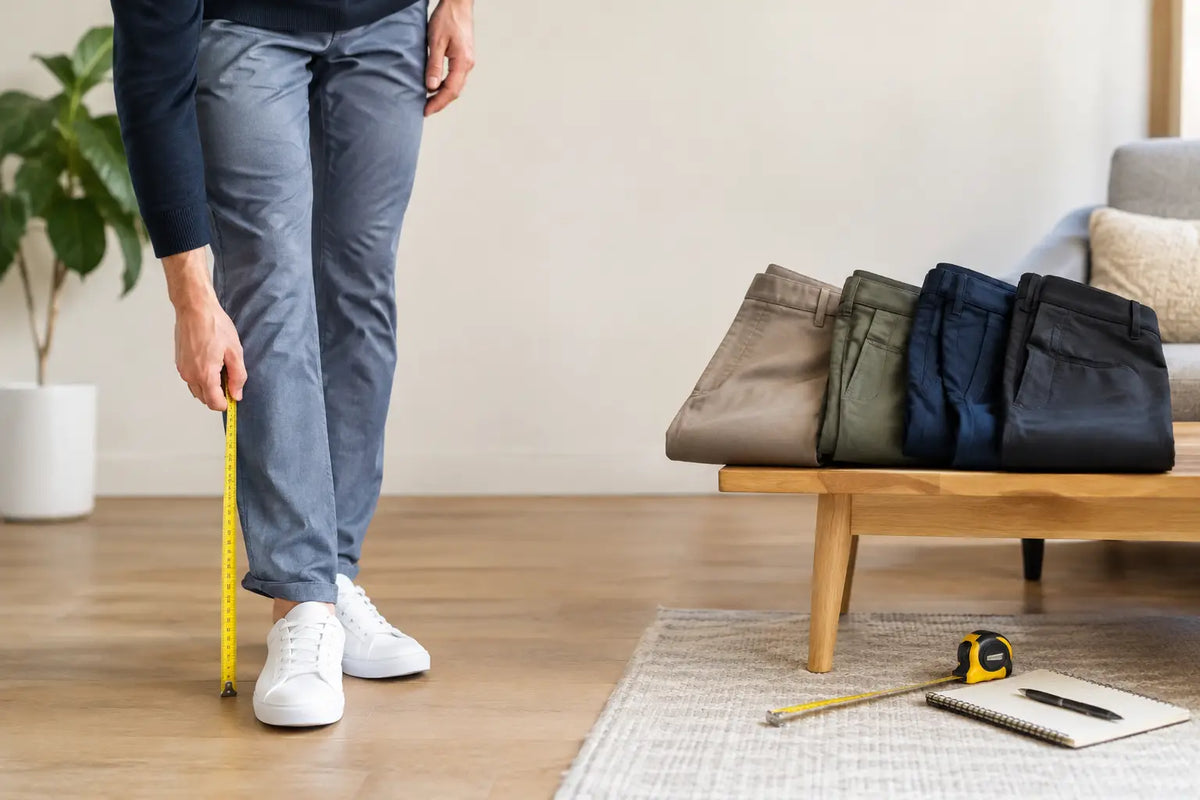
The most dependable way to find your preferred inseam is to measure a pair of pants you already wear well. Choose a pair that fits properly at the waist, has the amount of break you like, and works with the shoes you wear most. Avoid measuring a pant that has been stretched out at the knees or has a damaged hem.
Lay the pants flat on a firm surface with the legs aligned. Follow the inside seam from the point where the front and back inseams meet at the crotch down to the edge of the hem. Keep the measuring tape straight, but do not pull the fabric tight. That number is the inseam you can use as a reliable starting point.
If you are measuring your body instead, wear close-fitting pants or shorts and stand naturally. Ask someone to measure from the crotch to the point where you want the hem to end. This method can help, but measuring a favorite pair is usually more practical because it accounts for your posture, footwear, and style preference.
Do not assume your height provides a perfect answer. Height charts can point you in the right direction, but leg length varies significantly from one man to the next. Two men of the same height may need different inseams based on torso length, shoe choice, and how high they wear their waistband.
Choosing Pant Inseams for Your Shoes
Your shoes influence the best pant length more than most men realize. A dress shoe with a defined heel can support a slightly longer hem than a low-profile sneaker. Chunkier soles also lift the pant higher from the ground, which can make the same inseam appear shorter.
For classic leather loafers, derbies, and lace-up dress shoes, a slight break is usually the most versatile choice. The front of the pant rests lightly on the shoe with one small crease, while the back hem sits close to the top of the heel. This length feels refined without looking overly formal.
With clean sneakers, many men prefer little to no break. A more streamlined hem keeps the pant from gathering over the shoe and gives stretch chinos or performance pants a modern, intentional finish. The trade-off is that a shorter length is less forgiving when sitting down, so make sure the pant does not rise so far that it exposes more sock than you want.
Boots can handle a slightly longer inseam because the shaft and heavier profile create more structure beneath the fabric. Still, avoid excessive stacking. When multiple folds collect at the ankle, even premium fabric can appear untidy rather than relaxed.
If one pair of pants needs to work with every shoe in your rotation, choose the footwear you wear most for the fitting decision. For many business-casual wardrobes, that means a slight break with leather shoes or minimal break with versatile sneakers. You can always reserve a shorter inseam for a more contemporary, sneaker-focused look.
The Break Makes the Difference
The break is the fold or crease created when your pant hem meets your shoe. It is the visual result of inseam length, leg shape, and footwear working together. Understanding break helps you evaluate pants in the mirror rather than relying on measurements alone.
No Break
A no-break hem ends just above the shoe and creates a crisp, uninterrupted line. It is a strong choice for slim or tailored-fit pants, especially with minimalist sneakers or loafers. This look is clean and current, but it is less traditional and may feel too abbreviated if you prefer a conservative office wardrobe.
Slight Break
A slight break creates one subtle bend in the front of the pant. It remains the strongest all-around option for men who want one length that works across work, travel, and social occasions. It looks composed with dress shoes, does not crowd the ankle, and complements contemporary business-casual fits.
Full Break
A full break leaves enough extra length for the fabric to fold noticeably over the shoe. It can work with fuller-cut trousers or a more traditional tailored look, but it requires control. On tapered chinos and stretch pants, a full break often creates unnecessary bunching and makes the leg look shorter or wider than it is.
Fit Checks Before You Commit
Try pants on with the shoes you plan to wear, then stand, walk, and sit. The hem should not drag against the ground, catch beneath your heel, or climb excessively when you move. Check the back of the pant as carefully as the front. A hem that looks fine from the front may be too long if it folds over the heel behind you.
Look at the pants from a few steps away, not only from directly above. This is how other people see the proportion. A clean, tapered leg with a controlled break generally creates the most lengthening effect, while too much fabric at the ankle interrupts the line of the outfit.
Also consider fabric behavior. Soft cotton blends and performance stretch fabrics move differently than rigid wool trousers. A flexible pant may settle differently after several hours of wear, particularly around the knee and ankle. If you are between inseam lengths, the better choice depends on the silhouette: a trimmer pant often benefits from the shorter option, while a straighter leg may need a bit more length.
When Tailoring Is Worth It
Off-the-rack pants are designed around standard measurements, not your exact proportions. If the waist, seat, and thigh fit exceptionally well but the inseam is slightly off, hemming is a worthwhile adjustment. A clean hem can make an accessible business-casual pant look more custom and considered.
Ask the tailor to preserve the original hem style when appropriate, especially on casual pants where the finishing detail is part of the design. Bring the shoes you expect to wear most often and explain whether you prefer no break, slight break, or a more traditional full break. Clear direction leads to a more useful result.
Avoid buying a pair that is dramatically too long solely because it can be hemmed. Once the hem is raised, the leg opening can sit differently, and design details near the ankle may become less balanced. It is better to begin with a close inseam and make a small refinement.
A well-chosen inseam is a quiet detail, but it changes the authority of an entire outfit. Whether you favor polished chinos, comfortable stretch pants, or refined trousers from LEVINAS, aim for a length that supports how you actually move through your day. When the hem meets the shoe with purpose, everything above it looks more put together.


Leave a comment
This site is protected by hCaptcha and the hCaptcha Privacy Policy and Terms of Service apply.