
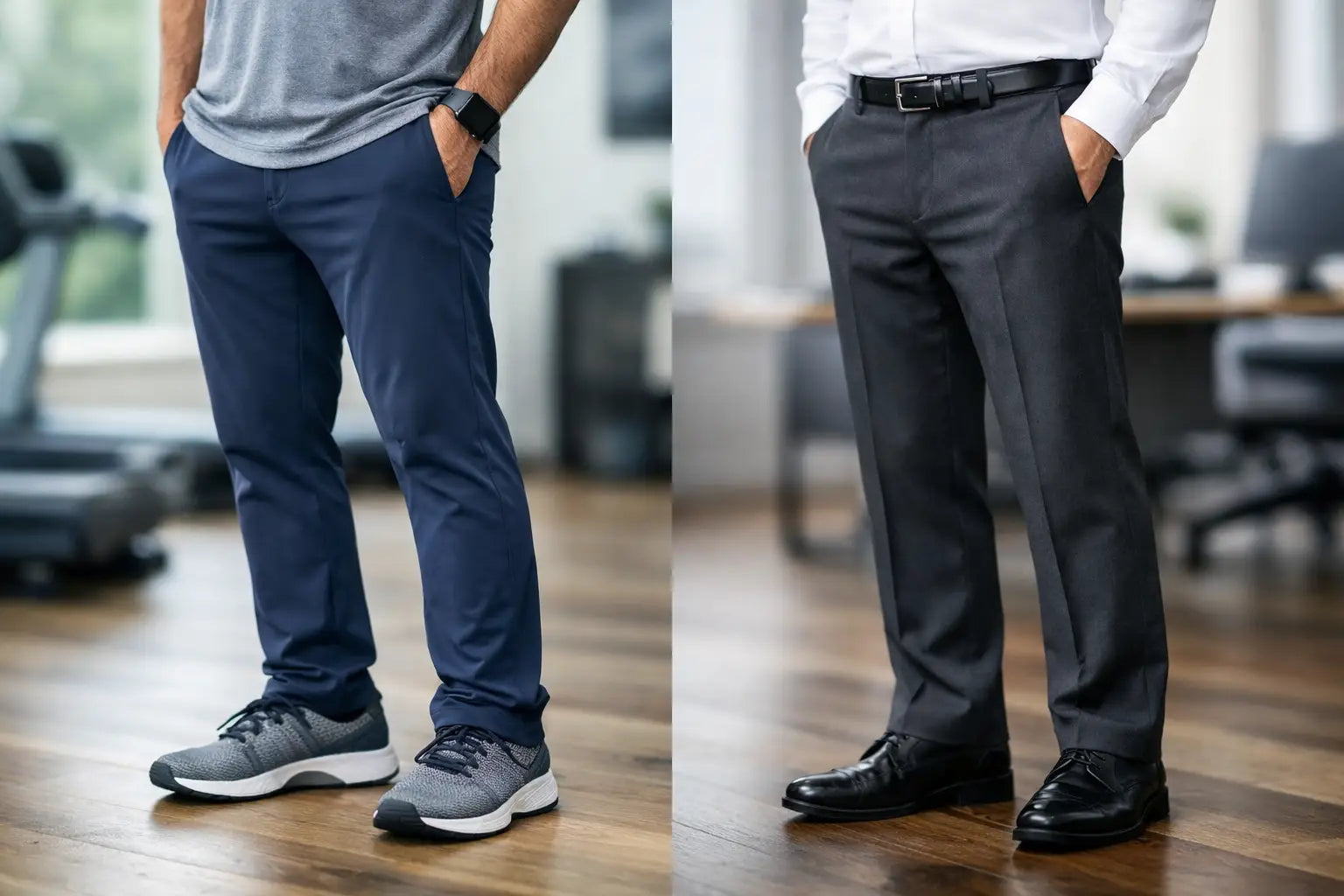
Performance Pants vs Dress Pants
You can spot the difference by 3 p.m. One pair still looks clean, moves easily, and feels comfortable after hours at a desk, in meetings, and on the commute home. The other may still look sharp, but it asks more from you. That is the real conversation around performance pants vs dress pants - not just appearance, but how each option handles the demands of modern wear.
For most men, this is not a formalwear question. It is a wardrobe decision tied to workdays, client lunches, travel, date nights, and everything in between. The right answer depends on dress code, fabric expectations, and how much comfort you want built into a polished look.
Performance pants vs dress pants: what sets them apart?
At a glance, performance pants and dress pants can look similar. Both can be tailored, clean, and office-appropriate. The difference is in construction.
Dress pants are traditionally built around a more formal standard. They are often made from wool, wool blends, or more structured woven fabrics. The goal is visual sharpness - crisp lines, drape, and a refined finish that pairs naturally with a dress shirt, blazer, or suit jacket. In more formal business settings, that structure still matters.
Performance pants are designed to deliver that same polished impression with fabrics that work harder. They typically include stretch fibers and lightweight technical blends that improve mobility, breathability, and recovery. Instead of feeling restrictive after a full day, they are built to move with you. That makes them especially appealing for men who want a cleaner look without giving up comfort.
This is where the category has changed. Performance no longer means sporty. Done well, performance pants look elevated enough for office wear while offering the practicality most men actually need.
Fabric is the biggest difference
If you are comparing these two categories, start with the fabric. That is where comfort, maintenance, and daily usefulness are decided.
Dress pant fabrics
Traditional dress pants usually rely on wool or structured woven blends because they drape well and read as more formal. The fabric often has a smoother, richer surface and a more classic hand feel. That makes dress pants a strong choice for business formal settings, evening events, and occasions where traditional tailoring carries weight.
The trade-off is that many dress pant fabrics offer less give. Some can feel warm, especially during long commutes or in hotter climates. Others wrinkle more easily or require more careful care to keep them looking their best.
Performance pant fabrics
Performance pants are built around utility. Stretch yarns, lightweight constructions, and wrinkle-resistant finishes help them hold shape and stay comfortable over long periods of wear. Many also manage moisture better than traditional dress fabrics, which matters if your day includes walking between meetings, travel, or simply spending a lot of time on the move.
A quality pair should still look refined. The best versions do not advertise themselves as technical. They simply wear better, flex easier, and stay cleaner through the day.
For a man building a practical business-casual wardrobe, that fabric advantage is significant. You are not just buying pants for how they look standing still. You are buying them for how they perform through real life.
Which looks more polished?
In strict formal terms, dress pants still have the edge. They are the more traditional choice with sport coats, suits, and dressier event wear. If you are attending a wedding, a formal office presentation, or a setting with a conservative dress code, dress pants usually make more sense.
That said, the gap has narrowed. Well-made performance pants with a contemporary fit and clean finish can look just as sharp in most business-casual environments. Pair them with a tailored button-up shirt, a belt, and polished shoes, and the overall impression is streamlined and intentional.
The real distinction is context. Dress pants signal formality. Performance pants signal versatility. For many offices today, versatility wins more often than formality.
Comfort and movement are where performance pants lead
This is the category that has pushed performance pants into everyday rotation. Men who spend long hours seated, commuting, traveling, or moving between work and social settings do not want to feel boxed in by their clothing.
Performance pants are built for that reality. Stretch construction supports easier movement through the seat, thigh, and knee. The fabric tends to recover better after wear, so the pants keep their shape instead of looking tired by the end of the day. Breathability also matters more than many men realize until they wear a pair that actually stays comfortable from morning to night.
Dress pants can feel excellent when tailored properly, but their comfort often depends more heavily on exact fit and fabric softness. A traditional fabric with little flex leaves less room for error. If the rise, thigh, or seat is off, you feel it quickly.
That is why many men now reserve dress pants for occasions that call for them and rely on performance pants as the foundation of daily wear.
Performance pants vs dress pants for work
For the office, the right choice depends on your environment.
If your workplace leans business formal, dress pants still belong in the rotation. They pair more naturally with structured jackets and more traditional shirting, and they communicate a higher level of formality without explanation.
If your office is business casual, smart casual, or somewhere in between, performance pants often make more sense. They deliver a sharp appearance with far more flexibility. That matters if your day shifts between desk work, lunch meetings, after-hours plans, and commuting.
For hybrid schedules, performance pants are especially strong. They travel well, require less maintenance, and bridge settings more easily. A man can wear them with a crisp shirt during the day and keep the same look working into the evening.
That versatility is a major reason brands like LEVINAS have leaned into performance-driven essentials. The modern wardrobe is expected to do more, and men are shopping accordingly.
Fit matters more than the label
A poor fit will ruin either option. A clean, contemporary fit will improve both.
Men often compare performance pants and dress pants as if fabric alone decides everything, but silhouette is just as important. Pants that are too full look dated. Pants that are too tight lose polish, even if the fabric stretches. The best fit sits clean through the waist and hip, follows the leg without clinging, and creates a sharp line from top to hem.
Performance fabrics can sometimes tempt brands to cut pants too slim because the stretch allows it. That is not always a better result. The goal is comfort with structure, not compression. On the dress pant side, too much fabric can make a refined outfit feel heavy and older than intended.
For most men, a tailored but not restrictive fit gives the best return. It keeps the look modern while allowing enough ease for all-day wear.
When dress pants are still the better choice
Performance pants are versatile, but they are not a replacement for every occasion. There are still moments when dress pants are the stronger option.
Formal events are the obvious example. So are conservative business environments, high-level presentations, and occasions where you are wearing a matching suit or a more traditional tailored jacket. In those settings, the texture, drape, and visual language of dress pants still carry more authority.
There is also a preference factor. Some men simply like the feel and appearance of classic tailored trousers. If your wardrobe leans more formal and your lifestyle supports the upkeep, dress pants remain a strong investment.
The key is recognizing what you need most often. Buying only for ideal occasions leaves gaps in your daily wardrobe. Buying only for comfort may leave you underdressed when formality matters.
How to choose the right option for your wardrobe
If you wear tailored clothing a few times a year, dress pants may be a secondary category for you. Keep one or two reliable pairs for formal use, then put most of your budget into performance pants that can handle regular rotation.
If your calendar includes client-facing meetings, office wear, dinners, and travel, performance pants usually offer the better balance of appearance and function. They simplify dressing without making you look casual.
If your environment is highly traditional, keep dress pants in heavier rotation and add performance pants where the dress code allows. The smartest wardrobes do not choose one category exclusively. They use each where it performs best.
The strongest closet is built around use, not theory. If a pair of pants looks polished, fits correctly, and keeps up with your day, it earns its place.
The better question is not whether performance pants or dress pants are universally superior. It is which pair helps you look sharper, feel better, and move through your schedule with less friction. For most men today, that answer is becoming clearer every season.


Leave a comment
This site is protected by hCaptcha and the hCaptcha Privacy Policy and Terms of Service apply.