
Article: Should Shirt Cuffs Show? The Right Amount
Should Shirt Cuffs Show? The Right Amount
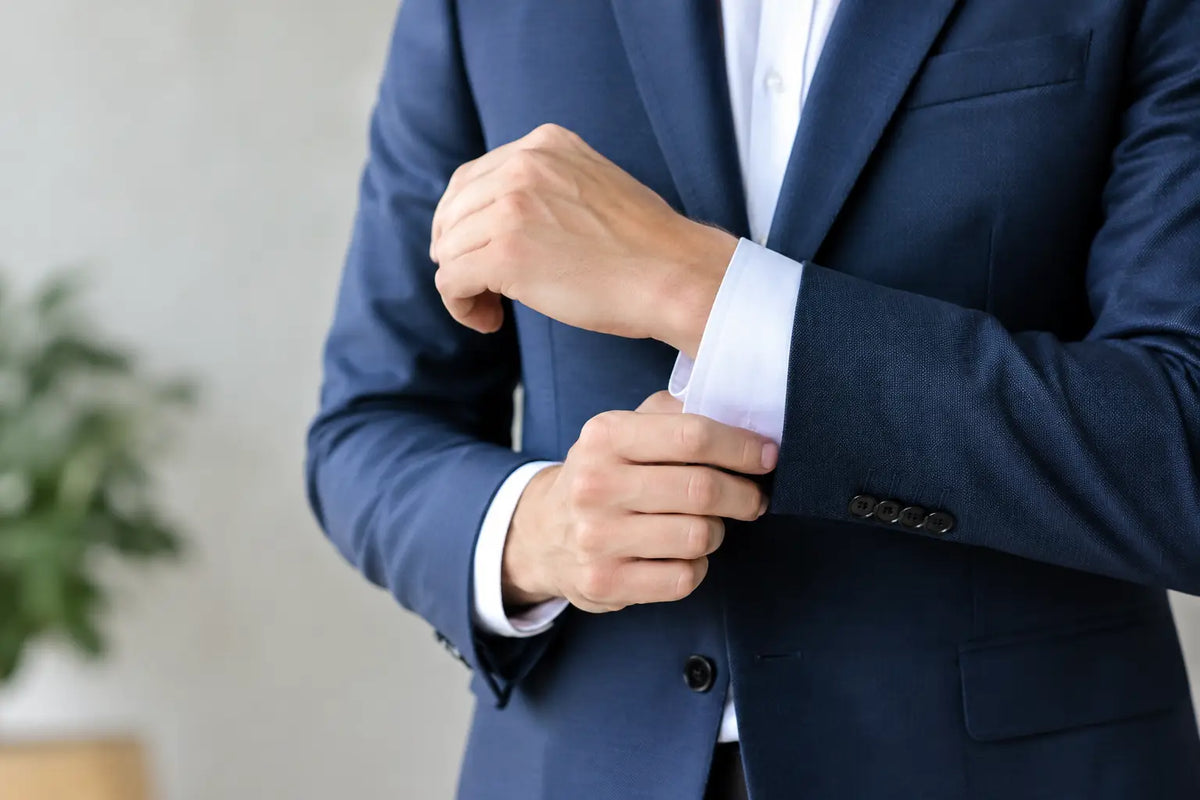
A jacket sleeve that swallows your shirt cuff can make an otherwise sharp outfit look borrowed. So, should shirt cuffs show? In most tailored and business-casual situations, yes: showing a small, intentional amount of cuff creates a cleaner proportion and signals that your shirt and jacket fit correctly.
The goal is not to turn your cuff into the focal point. It is to create a polished line from shoulder to wrist, whether you are heading into a client meeting, a dinner reservation, or a day that moves between the office and everything after it.
Should Shirt Cuffs Show Under a Jacket?
The classic rule is to show about one-quarter to one-half inch of shirt cuff beyond the jacket sleeve. That small margin frames the jacket, breaks up the sleeve visually, and gives your look the finished quality associated with well-fitted menswear.
For most men, one-half inch is the sweet spot. It is visible enough to look deliberate without appearing overly formal or fussy. If you prefer a more conservative office look, stay closer to one-quarter inch. If your jacket has a slightly shorter, contemporary sleeve or you are wearing a more expressive shirt, a bit more can work.
The key is consistency. Both cuffs should show by roughly the same amount when your arms rest naturally at your sides. A major difference from one wrist to the other often points to an issue with jacket balance, posture, or sleeve length rather than a styling choice.
Why the visible cuff matters
A visible cuff is partly tradition, but it is also practical design. Dress shirts are built to extend farther down the arm than tailored jackets. The shirt cuff protects the jacket sleeve from direct contact with skin and helps the layers move comfortably together.
Visually, the cuff creates contrast at the end of the sleeve. A crisp white or light blue cuff against a navy, charcoal, or textured sport coat adds dimension without requiring a bold pattern or accessory. It is a small detail, but details are what separate a simply acceptable outfit from one that feels considered.
Get the Shirt Sleeve Right First
Your jacket cannot compensate for a shirt with sleeves that are too short or too long. Start with the shirt, because it is the foundation of the entire look.
A properly fitting long-sleeve shirt cuff should reach the base of your thumb or sit just below the wrist bone when your arms are relaxed. When you bend your arm, it should not ride several inches up your forearm. It also should not extend so far that the cuff covers the center of your hand.
The cuff should fit closely enough to stay in place, yet comfortably enough to move. You should be able to slide one finger between the buttoned cuff and your wrist. A cuff that is too loose will drift down over your hand and disappear unevenly under a jacket. One that is too tight will bunch at the wrist and make a long day feel longer.
Stretch fabric is especially useful here. A shirt with natural recovery holds a clean cuff shape while giving you room to reach, type, drive, and move through the day without the restricted feeling of a rigid shirt.
Cuff styles change the effect
A standard button cuff is the most versatile choice for business-casual wardrobes. It works with chinos, performance pants, sport coats, and suits, and it delivers the controlled amount of cuff exposure most men want.
French cuffs are more formal and often show slightly more prominently because of their folded construction. They are best reserved for dressier events, formal business settings, or occasions where cuff links make sense. Convertible or dual cuffs offer flexibility, but the fit rule remains the same: the cuff should end at the wrist and sit cleanly beneath the jacket.
Match the Jacket Sleeve to the Shirt
Once the shirt fits properly, assess the jacket. With your arms relaxed, the jacket sleeve should end near the wrist bone, leaving that quarter- to half-inch of shirt cuff visible.
If no cuff shows, your jacket sleeves are likely too long, your shirt sleeves are too short, or both. Do not solve the issue by repeatedly pulling your shirt cuff down. It may look right for a moment, then shift as soon as you move. The better solution is correcting the garment that is out of proportion.
If more than an inch of cuff shows, the jacket sleeve is usually too short. This can look intentional on fashion-forward tailoring, but it is less forgiving in professional settings. For a dependable business-casual wardrobe, a moderate amount of cuff exposure will always look more refined than an exaggerated gap.
Jacket sleeves can often be altered, though the ease and cost depend on details near the cuff. Functional buttonholes, contrast lining, and button placement can make adjustments more complex. That is why it pays to check sleeve length before committing to a jacket, especially when buying online.
The Fit Details That Affect Cuff Exposure
Sleeve length gets most of the attention, but several fit details influence whether your cuffs look right throughout the day.
First, look at the shoulder. If a jacket is too narrow across the shoulders, it can pull upward and shorten the apparent sleeve length. If it is too large, the jacket may sit low and make the sleeves appear longer. A clean shoulder line keeps the entire sleeve positioned where it belongs.
Next, consider the armhole. Higher, well-shaped armholes allow the jacket to move with your body rather than lifting the whole coat when you reach. This helps your shirt cuffs stay visible and even instead of disappearing every time you use your arms.
Finally, pay attention to shirt body fit. Excess fabric through the chest and arms can bunch under a jacket sleeve, pushing the cuff into an awkward position. A contemporary or tailored fit provides enough room for comfort while keeping the line from shoulder to cuff clean. This is where a fit-driven shirt makes a real difference, especially for men who want a polished look without a stiff, restrictive feel.
When Shirt Cuffs Do Not Need to Show
Not every outfit calls for visible cuffs. If you are wearing a casual overshirt, unstructured layer, sweater, or knit polo, there is no rule requiring a shirt cuff to appear. The same applies when you roll your sleeves or wear a casual shirt untucked without a jacket.
Even with a blazer, some relaxed looks can work with cuffs hidden, particularly if the jacket is soft, lightly constructed, and styled with dark denim or casual trousers. But understand the trade-off: hidden cuffs tend to read more casual and can make sleeves look slightly longer. That may be exactly what you want on a weekend, but it is usually not the strongest choice for a presentation, interview, or polished dinner outfit.
Watch bands also affect the result. A slim watch should sit beneath the shirt cuff, allowing the cuff to rest naturally over it. A large, bulky watch can push the cuff up and create uneven exposure. If your watch changes how the sleeve hangs, choose a lower-profile piece when wearing a jacket.
Build a Reliable Business-Casual Formula
For a dependable outfit, pair a fitted cotton-stretch shirt with a tailored sport coat, clean chinos or performance pants, and leather shoes or refined sneakers appropriate to the setting. Let a quarter- to half-inch of cuff show, keep the shirt collar structured, and make sure the sleeves do not bunch at the elbows.
Color makes this easy to personalize. A white shirt offers the clearest contrast under navy or gray tailoring. Light blue is equally versatile and slightly softer for everyday wear. Subtle contrast trim can add interest when the jacket comes off, while still keeping the overall outfit professional when it is on. LEVINAS shirts are designed around that balance of tailored appearance, stretch comfort, and details that continue to work beyond the office.
Avoid treating cuff exposure as a rigid measurement that matters more than comfort. Your posture, arm length, jacket construction, and preferred level of formality all play a role. What matters is that the cuff looks intentional, balanced, and comfortable when you are standing, sitting, and moving naturally.
Before you leave, stand in front of a mirror with your arms relaxed, then bend them as if reaching for a door handle. If the cuffs remain even, the jacket sleeves sit cleanly at the wrist, and nothing pulls or bunches, you have the right amount. That quiet precision is what makes business-casual style look effortless.

Leave a comment
This site is protected by hCaptcha and the hCaptcha Privacy Policy and Terms of Service apply.