
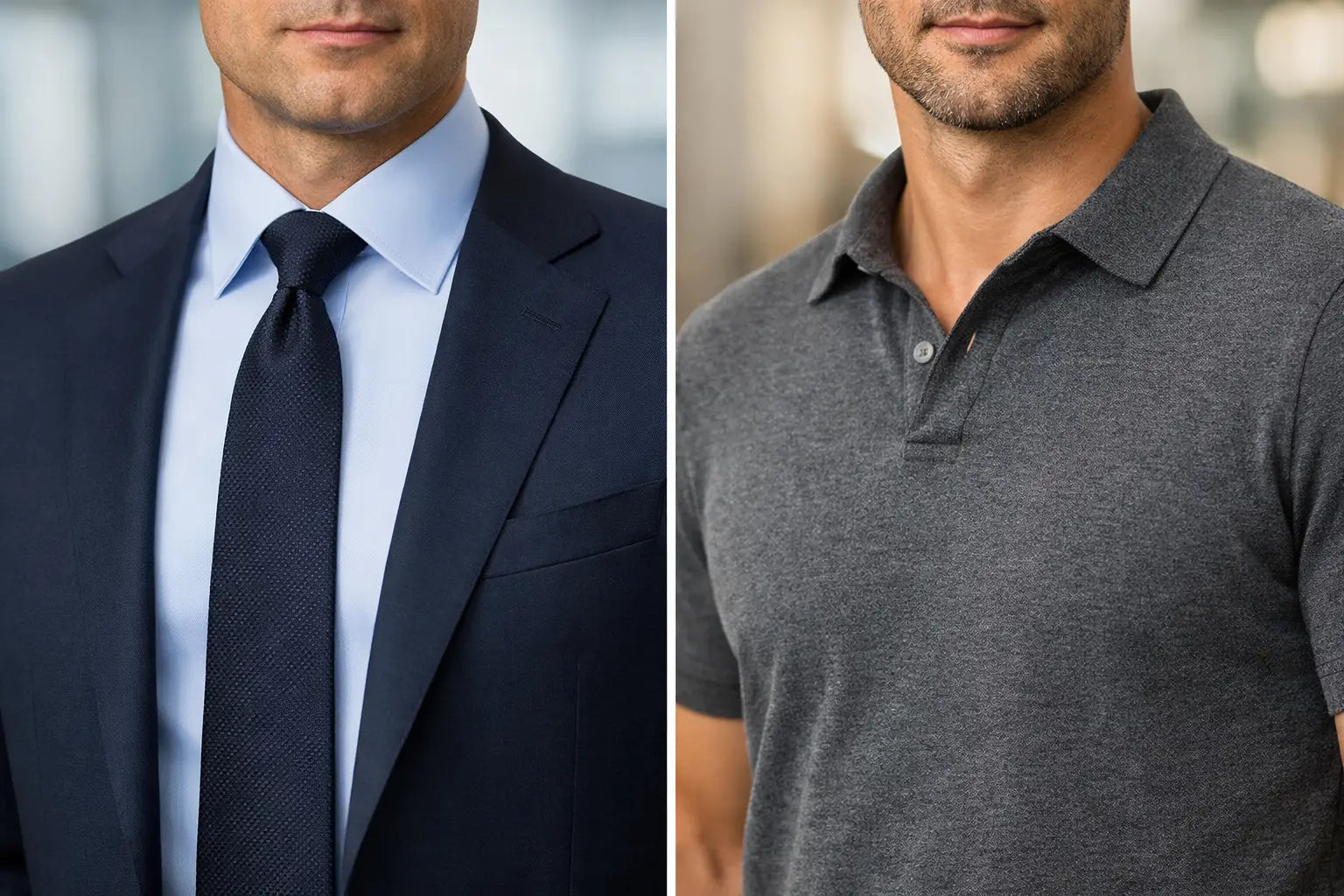
Dress Shirt vs Knit Shirt: What to Wear
A shirt can look sharp on the hanger and still feel wrong by noon. That is usually where the dress shirt vs knit shirt decision becomes real. For men building a business-casual wardrobe, the difference is not just about appearance. It affects comfort, polish, movement, and how confidently a shirt carries you from work to dinner.
Both styles deserve a place in a modern rotation. The right choice depends on what you need the shirt to do. If your priority is clean structure and traditional dress appeal, a dress shirt still sets the standard. If you want softness, stretch, and easier everyday wear, a knit shirt often has the edge.
Dress shirt vs knit shirt: the core difference
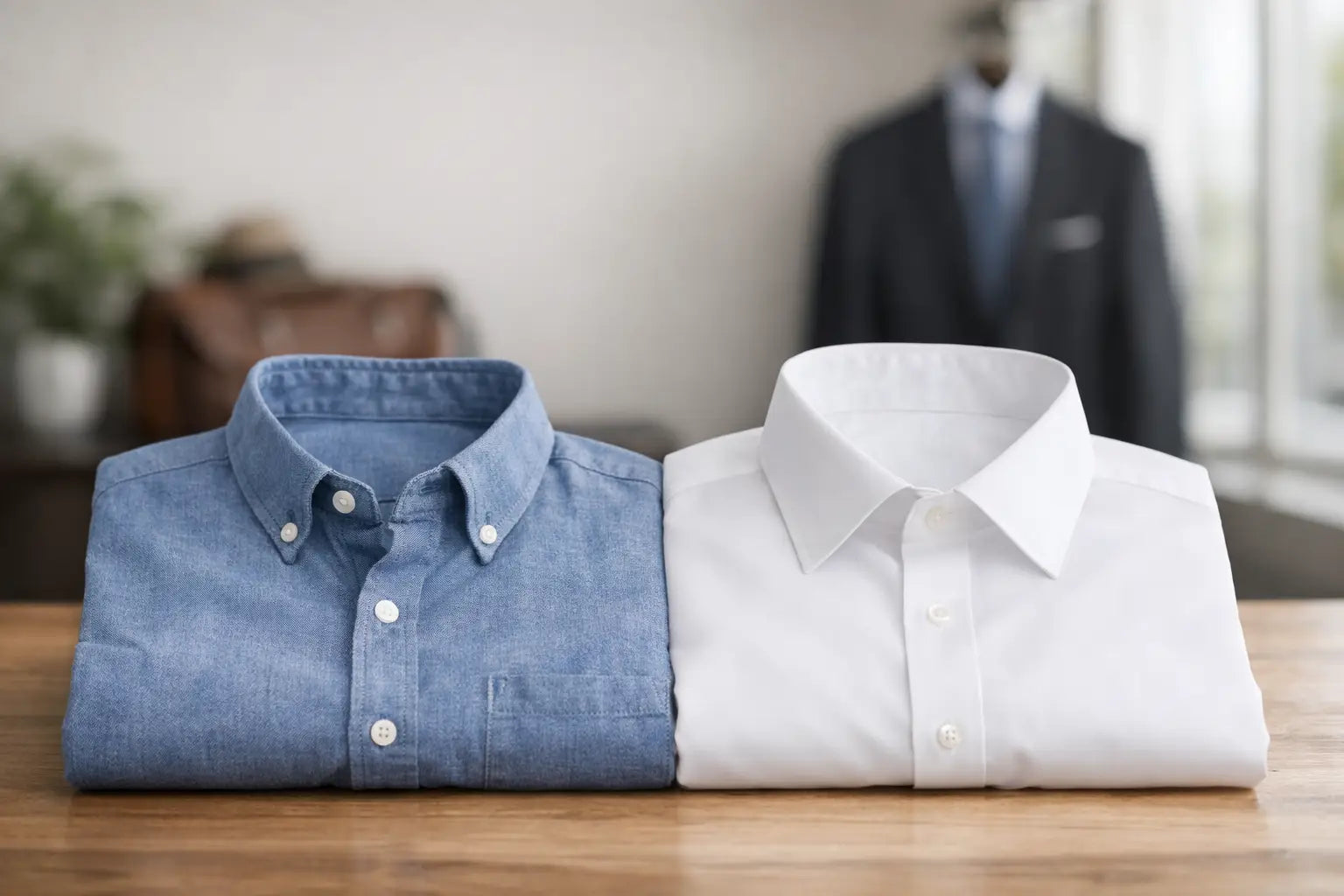
The simplest way to understand dress shirt vs knit shirt is to look at the fabric construction. A traditional dress shirt is usually made from woven fabric. That weave creates a crisp, structured surface that holds its shape well and presents a more formal appearance. It is the classic foundation for office wear, suiting, and dressier events.
A knit shirt, even when styled like a button-up, is made from knit fabric rather than woven fabric. That changes the feel immediately. Knits tend to be softer, more flexible, and naturally more forgiving in motion. When done well, they still look refined, but they wear closer to the comfort level of elevated casual clothing.
That difference in construction changes almost everything else - drape, stretch, breathability, texture, and how the shirt reads in a room.
When a dress shirt makes more sense
A dress shirt earns its place when polish is the first requirement. If you are wearing a suit, dressing for a formal office, heading to a wedding, or want a sharper silhouette under a blazer, a woven dress shirt usually performs better. The collar tends to stand more cleanly, the placket looks more defined, and the overall shape feels more tailored.
This is also the better choice when you want a more traditional menswear finish. Poplin, twill, and pinpoint cotton dress shirts create a visual crispness that knit fabrics generally do not match in the same way. Even before anyone notices details like cuff design or contrast trim, they register the structure.
That said, structure comes with a trade-off. Some dress shirts can feel restrictive, especially across the shoulders, chest, or waist if the fit is too trim or the fabric has little give. Men who sit for long hours, travel frequently, or move between meetings and errands often notice that by the end of the day.
When a knit shirt has the advantage
A knit shirt is built for men who want a more flexible version of a polished shirt. It works especially well in business-casual environments, hybrid offices, social settings, and daily wear where comfort matters as much as appearance. The fabric stretches more naturally, often feels softer against the skin, and adapts better to movement.
That matters if your day is not static. Commuting, driving, walking between appointments, lifting kids, sitting at a desk, and going out after work all put pressure on a shirt. A quality knit shirt handles that better than many traditional woven options.
The best knit shirts also solve a common style problem. Many men want the clean look of a button-up without the stiff feel that can come with it. A tailored knit-stretch shirt gives you that middle ground. It presents as refined, but it wears easier.
For modern wardrobes, that versatility is a major advantage. It is one reason brands like LEVINAS put so much focus on knit-stretch shirting as part of the business-casual core.
Fabric feel changes the entire experience
Most men notice fit first, but fabric feel is what determines whether a shirt becomes a favorite or stays in the closet. Dress shirts made from woven cotton usually feel smoother and firmer. They create a cleaner frame, which is why they pair so well with dress pants and jackets. Depending on the weave and finish, they can range from lightweight and crisp to more substantial and textured.
Knit shirts feel more relaxed from the start. They usually offer more softness and a more natural stretch. Some also provide better recovery, which helps the shirt maintain shape through a long day. If you have ever worn a shirt that looked good at 8 a.m. and tired by 3 p.m., you already understand why fabric performance matters.
The trade-off is visual. Knit fabric can read slightly less formal, even when cut as a button-up. That is not a flaw. It just means context matters. In many offices today, that softer finish looks current and appropriate. In more formal settings, woven fabric still has more authority.
Fit matters more with both styles than most men think
A poor fit can make either shirt underperform. A dress shirt that is too full looks sloppy. One that is too tight feels restrictive and pulls at the buttons. A knit shirt that is too relaxed can lose the clean line that makes it versatile enough for work. One that is too tight can start to look more casual than intended.
The sweet spot is a tailored shape that follows the body without clinging. You want enough room through the chest and shoulders for movement, a clean line through the torso, and sleeves that stay neat whether you wear them down or slightly pushed up.
This is where contemporary fit and tailored fit options matter. Men are no longer choosing only between boxy classic cuts and ultra-slim silhouettes. The strongest modern shirts are built to look streamlined while still allowing movement. That balance is the real upgrade.
Which shirt works better for the office?
If your office leans formal, the dress shirt is still the safer move. It pairs more naturally with a tie, sharper trousers, and traditional jackets. If your workplace expects a clean, executive look, you will likely get more use from woven styles.
If your office is business casual or mixed-code, knit shirts often make more sense day to day. They look intentional with chinos, performance pants, or a blazer, but they do not feel overdone. They also transition better after hours, which is valuable if your schedule does not stop when the workday ends.
For many men, the answer is not either-or. It is having both and using each where it performs best. A dress shirt handles the higher-polish moments. A knit shirt covers the majority of the week with more comfort.
Dress shirt vs knit shirt for travel and long wear
This is one of the clearest dividing lines. If you travel, spend long hours seated, or need a shirt that keeps up with a packed schedule, knit shirts often win on wearability. Their stretch and softness make a real difference over time.
Dress shirts can absolutely work for travel, especially if they include performance features or stretch blends. But in pure comfort terms, knit construction usually has the advantage. The shirt moves with you, resists that stiff feeling, and often feels easier to wear from morning to evening.
Still, if the trip includes formal dinners, presentations, or suit-heavy dress codes, a dress shirt may be worth the extra structure. The right answer depends on whether comfort or formality carries more weight on that specific day.
Style pairing is part of the decision
A dress shirt looks strongest with tailored trousers, blazers, suits, and dress shoes. It can also sharpen dark denim, but its natural home is in more elevated combinations. If your goal is a cleaner, more dressed-up outfit, it gives you a stronger starting point.
A knit shirt is more flexible across smart-casual dressing. It pairs easily with chinos, five-pocket pants, clean sneakers, loafers, and unstructured jackets. It can still look polished, but it does so with less effort. That is a major advantage for men who want to look put together without feeling overdressed.
This is why knit shirts have become such a strong category in modern menswear. They fit the way men actually dress now - polished, practical, and ready for more than one setting.
How to choose the right one for your wardrobe
If you are deciding between the two, start with your real schedule, not an idealized version of your wardrobe. If you wear suits often, attend formal meetings, or need a shirt for dressier occasions, start with a strong dress shirt. It will give you the most traditional versatility.
If most of your week is business casual, hybrid office wear, dinners, travel, and everyday polished dressing, start with a knit shirt. You will likely wear it more often, and comfort tends to increase repeat use.
The best wardrobe usually includes both. Think of the dress shirt as your sharper instrument and the knit shirt as your high-frequency performer. One gives you structure. The other gives you range.
A great shirt should do more than look good for ten minutes in the mirror. It should hold its shape, work with your lifestyle, and make getting dressed easier. Choose the one that meets the moment, and your wardrobe will start working harder with less effort from you.


Leave a comment
This site is protected by hCaptcha and the hCaptcha Privacy Policy and Terms of Service apply.