

Dress Shirts That Work Harder
A great wardrobe usually breaks down at the same point - the shirt that looks sharp at 8 a.m. but feels stiff by lunch, wrinkles by dinner, or only works with one type of outfit. That is exactly why dress shirts remain the foundation of every man's wardrobe. When the fit is right, the fabric has enough give, and the styling is versatile, one shirt can carry you through the office, dinner plans, travel days, and everything in between.
Why dress shirts still matter
Men dress differently than they did a decade ago. Offices are more relaxed, social settings are less rigid, and most wardrobes now need to cover multiple roles instead of a single dress code. Even with that shift, dress shirts have not lost relevance. They have simply become more versatile.
The modern shirt is no longer reserved for a full suit and tie. It is just as useful under a blazer with chinos as it is worn open at the collar with performance pants. That flexibility is what makes a well-made shirt worth buying. It gives structure to casual outfits and brings comfort to more polished ones.
For most men, the goal is not formalwear. It is looking put together without feeling overdressed. A strong rotation of dress shirts solves that problem quickly.
What separates better dress shirts from average ones
Not all shirts are built for real life. Some look crisp on a hanger but lose their shape after a few wears. Others feel soft at first but lack the structure that gives a clean, tailored appearance. The difference usually comes down to three things: fabric, fit, and finishing details.
Fabric should look polished and feel easy
Fabric is where comfort starts. Traditional woven cotton still has a place because it offers a classic, clean surface and dependable structure. But for everyday wear, many men need more than that. Stretch matters. Breathability matters. The ability to move, sit, commute, and wear a shirt all day without feeling restricted matters even more.
That is why cotton blends and knit-stretch constructions have become such a smart choice. They maintain the appearance of a dress shirt while adding softness and flexibility. The result is a shirt that works harder across long days and changing settings.
There is a trade-off, of course. A very crisp shirt may feel more formal, while a softer stretch shirt may read slightly more relaxed. The right choice depends on how you wear it. If your week includes client meetings, office hours, and dinner out, a shirt with structure and stretch usually gives you the broadest range.
Fit is what makes the shirt look expensive
A shirt can have premium fabric and sharp styling, but if the fit is off, none of it shows the way it should. Too full, and the shirt looks generic. Too slim, and it pulls across the chest or restricts movement. The best dress shirts create shape without strain.
Most men are better served by a contemporary or tailored fit than by either extreme. A clean line through the body, enough room in the shoulders, and sleeves that sit properly at the wrist create the polished look most shoppers want. You should be able to move naturally while still seeing a defined silhouette.
This is where many wardrobes improve immediately. Instead of buying shirts based only on neck size or defaulting to the loosest option, it pays to look at the entire cut. A fit-driven shirt simply looks more intentional, whether you wear it tucked or untucked.
Details do more than decorate
The finishing details on a shirt often signal its quality before anyone notices the fabric blend or construction. Collar shape, cuff design, placket structure, button choice, and contrast trim all contribute to how elevated the shirt feels.
The key is restraint. Details should sharpen the shirt, not overwhelm it. Subtle contrast inside the collar or cuff can add dimension. Dual cuffs can create extra styling flexibility. A well-proportioned collar frames the face and works whether you wear it open or with a tie.
These details also affect usefulness. A shirt that looks refined with a blazer but still feels current on its own will get worn more often than one built only for occasional formal use.
How to choose dress shirts for your wardrobe
The smartest way to shop is to think in terms of use, not just color. Most men do not need a closet full of highly specific shirts. They need a dependable mix that covers work, events, and everyday business-casual dressing.
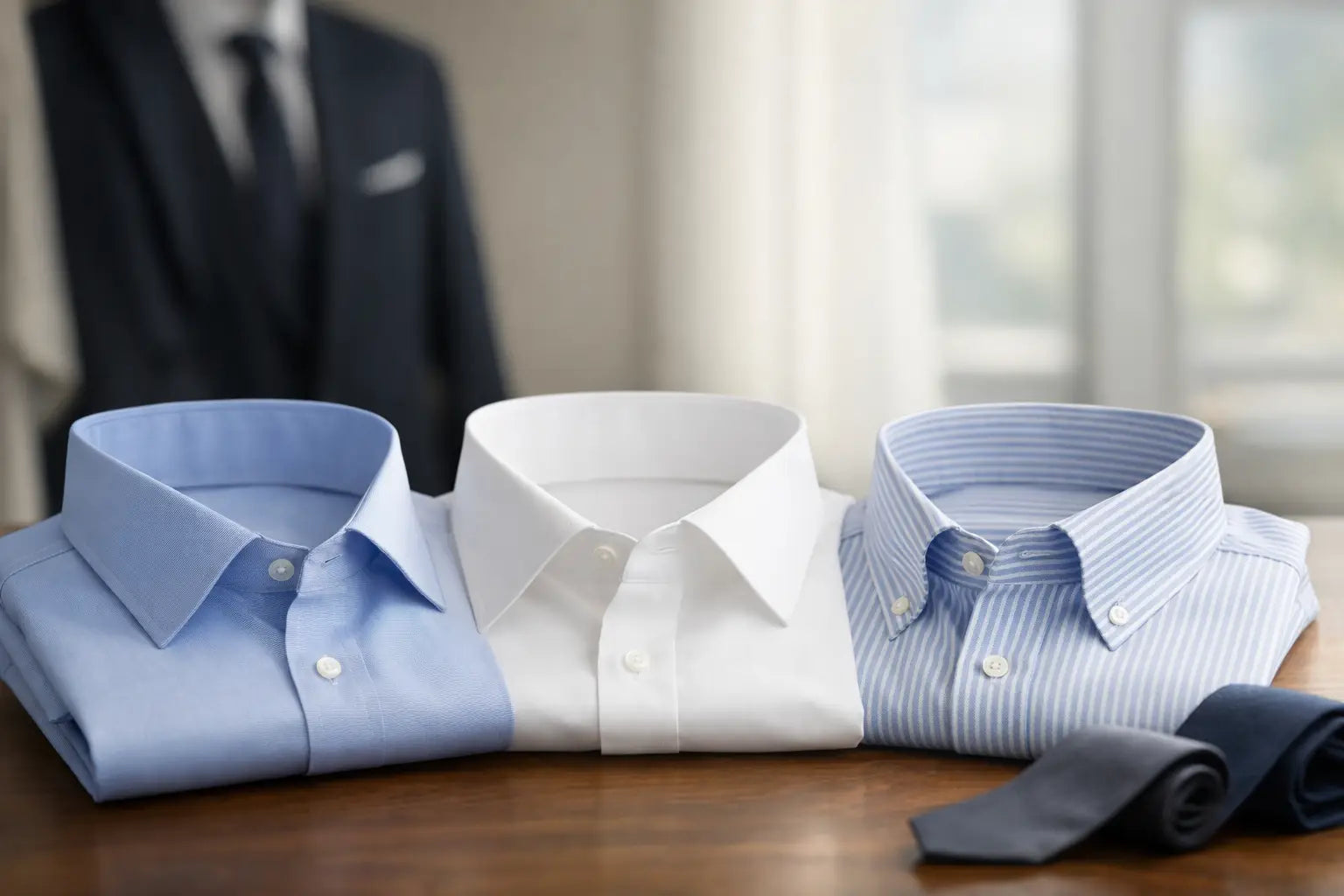
Start with the shirts that carry the most weight. White and light blue remain essential because they pair easily with navy, charcoal, black, tan, and olive. They also move well between dressier and more relaxed looks. From there, subtle patterns, tonal textures, and deeper neutral shades can round out the rotation without making outfit planning complicated.
Think about how your shirts will be worn most often. If you regularly layer with jackets, pay attention to collar structure and bulk through the body. If you wear shirts on their own, fit and fabric become even more visible. If your day runs long, stretch and wrinkle resistance matter more than a purely traditional hand feel.
It also helps to be realistic about maintenance. Some men do not mind ironing and dry cleaning. Most would rather have a shirt that comes out of the wash looking clean with minimal effort. There is no wrong answer, but there is a right answer for your routine.
The best dress shirts for work and beyond
The strongest shirts are the ones that do not need to stay in one lane. A shirt that only works in a boardroom has limited value for the way most men dress now. The better investment is a shirt that handles multiple settings without losing its edge.
For office wear, look for smooth fabrics, balanced collars, and colors that pair easily with chinos or tailored trousers. For evening plans, darker tones or shirts with subtle contrast details can feel more refined without being flashy. For travel or long days, stretch construction and soft hand feel become essential.
This is where modern business-casual dressing has improved. You no longer have to choose between a shirt that looks polished and one that feels comfortable. Brands like LEVINAS have built around that exact idea - dress shirts designed to deliver structure, stretch, and versatility in one piece.
Styling dress shirts without overthinking it
A good shirt should simplify getting dressed. If every shirt in your closet requires a specific jacket, tie, or pair of shoes, your wardrobe is doing too much.
For a clean weekday uniform, pair a fitted dress shirt with chinos or performance pants and leather loafers or simple dress shoes. Add a blazer when the setting calls for more polish. For a more relaxed office or dinner look, wear the shirt open at the collar with dark trousers and a belt that matches your shoes. If the shirt has enough structure, it will still look sharp without extra layers.
Tucking also depends on the shirt and the occasion. A longer shirttail and sharper finish usually call for a tucked look. A more versatile business-casual shirt can often be worn either way, which makes it more useful across the week.
Color coordination should stay simple. White, blue, gray, and subtle patterns earn their place because they work hard. They reduce decision-making and increase the number of combinations you can build from a smaller closet.
When it is worth upgrading your shirts
Many men keep wearing shirts that are just good enough. The collar softens too much, the cuffs fray, the fabric loses recovery, or the fit no longer reflects how they want to dress. None of those issues seem major on their own, but together they change how the entire outfit reads.
Upgrading makes sense when your shirts stop doing their job. If they wrinkle too easily, feel restrictive, or only work in narrow situations, they are costing you convenience. If they fit poorly, they are costing you presence.
A better shirt earns its keep through repetition. It becomes the piece you reach for before meetings, on travel mornings, before date nights, and anytime you want to look prepared without second-guessing it. That kind of reliability is what makes quality worth noticing.
Dress shirts are not just another category in a men's closet. They are often the deciding factor between looking fine and looking sharp. Choose the ones that give you comfort, range, and a clean fit, and the rest of your wardrobe gets easier from there.


Leave a comment
This site is protected by hCaptcha and the hCaptcha Privacy Policy and Terms of Service apply.