
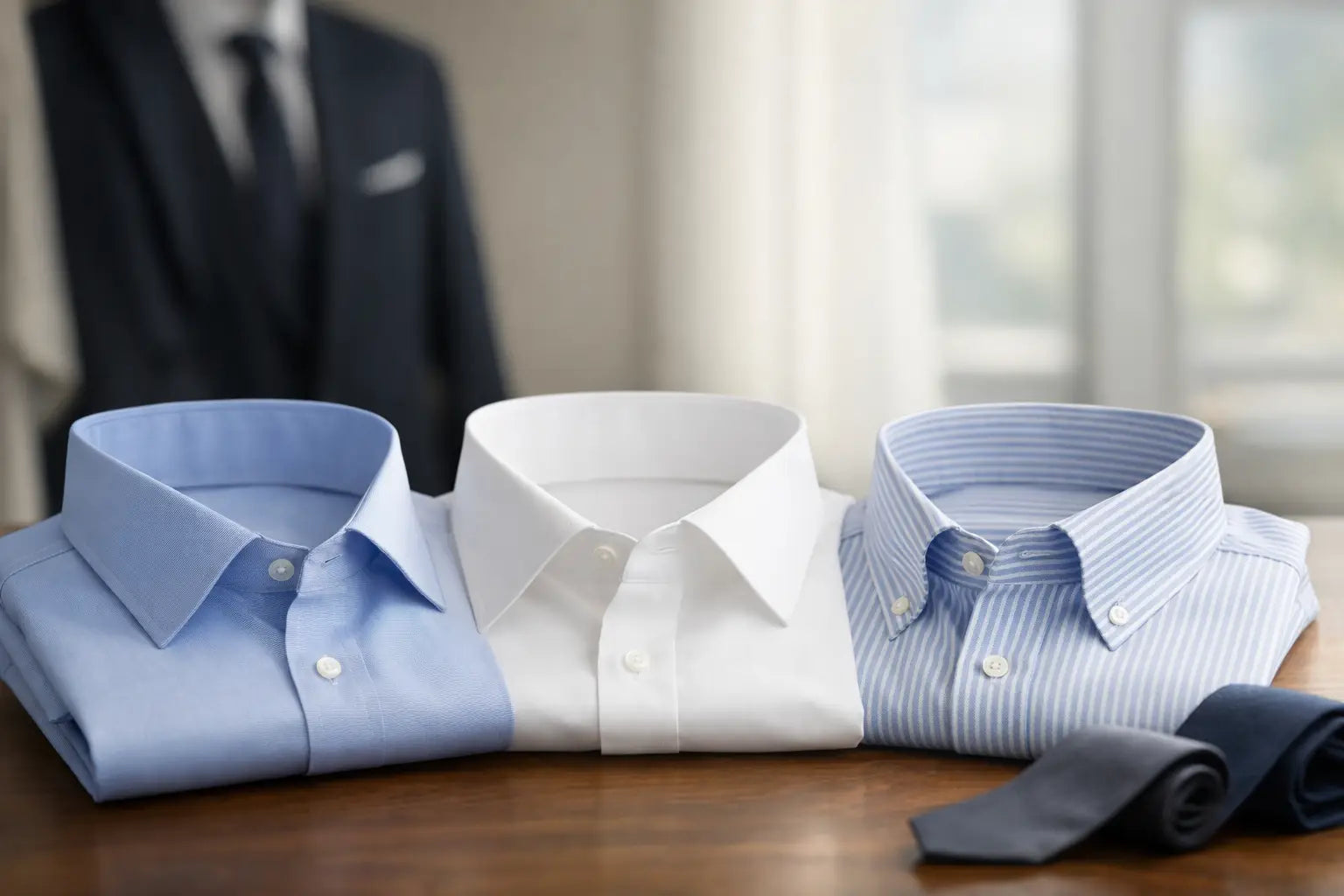
How to Match Shirt Collar Styles Right
A shirt can fit well, feel great, and still look slightly off if the collar is doing the wrong job. That is why understanding how to match shirt collar styles matters. The collar frames your face, sets the formality of the shirt, and affects how everything else reads - your tie, your jacket, even your overall proportions.
For most men, the right collar is not about chasing rules for the sake of rules. It is about making business-casual dressing easier. When your collar works with your face shape, your tie choice, and the setting, your shirt looks intentional. That is the difference between simply getting dressed and looking fully put together.
How to match shirt collar styles to the occasion
The fastest way to choose the right collar is to start with where you are wearing it. Collar styles carry different levels of structure, and that structure changes how polished or relaxed your shirt looks.
A spread collar is one of the most versatile options in a modern wardrobe. It has enough presence for office wear, dinners, client meetings, and dressier social events, but it does not feel overly formal. If your calendar moves between business-casual and more refined settings, this is often the safest and strongest choice.
A point collar feels slightly more traditional. It works especially well in conservative office environments, under a jacket, or anytime you want a cleaner, longer visual line. It is dependable and understated, which makes it useful for men who want a dress shirt that never feels overstyled.
A button-down collar sits on the more relaxed end of the spectrum. It is ideal for casual offices, weekend dinners, travel, and off-duty wear. It can still look polished, especially in a sharp contemporary fit, but it carries a softer attitude than a spread or point collar. If you are wearing chinos, knitwear, or an unstructured blazer, a button-down often feels right.
A cutaway collar makes more of a statement. Because the collar points are spread wider, it looks more fashion-forward and works best when the rest of your outfit is equally clean and intentional. This can be an excellent option for evening wear or elevated business-casual looks, but it is not always the most natural fit for conservative workplaces.
The key is simple: the more structure and width in the collar, the more dressed-up the shirt tends to feel. The softer and more anchored the collar, the easier it is to wear casually.
Match collar styles to your face shape
One of the most useful ways to think about collar choice is balance. A collar should complement your face, not exaggerate it.
If you have a rounder or wider face, point collars and narrower spread collars usually help create a longer, leaner impression. They draw the eye vertically, which adds definition. Extremely wide cutaway collars can make a fuller face appear broader, so they are often less flattering unless the rest of the styling is very sharp.
If you have a longer or narrower face, spread collars and cutaway collars tend to work well because they add width. That wider opening balances the length of the face and gives the shirt more visual presence. A very narrow point collar can sometimes make a long face look even longer.
If your face is more balanced or oval, you have the most flexibility. Most collar styles will work, so your decision can focus more on dress code, tie preference, and personal style.
This is where fit-driven menswear makes a difference. A well-cut shirt already improves your proportions through the body and shoulders. The collar should finish that effect, not compete with it.
How to match shirt collar styles with ties
Not every collar works equally well with every tie. The space between the collar points affects the knot size that looks best, and that relationship matters more than many men realize.
Spread collars pair naturally with medium and larger tie knots because they leave enough room for the knot to sit cleanly. If you wear ties often, a spread collar gives you flexibility without looking stiff. It is one of the strongest options for modern office dressing because it keeps the look crisp and proportional.
Point collars usually look best with smaller or more moderate knots. Since the collar points sit closer together, an oversized knot can look crowded. If your style leans classic and streamlined, this pairing is hard to beat.
Cutaway collars need a tie knot with presence. A small knot under a wide collar can look lost, which leaves the shirt feeling unfinished. When wearing a cutaway, the knot should fill the space confidently.
Button-down collars are different. They can be worn with a tie, especially in classic American business-casual styling, but they usually look best with a simpler knot and a more relaxed overall outfit. If the occasion is distinctly formal, a spread or point collar is often the better move.
If you rarely wear ties, collar roll and structure become more important than knot compatibility. In that case, focus on how the collar sits open at the neck. It should frame the face cleanly and hold its shape without collapsing.
Jacket, blazer, or no jacket?
Your outer layer changes what the collar needs to do. Under a blazer or sport coat, the collar should hold enough structure to stand up against the lapels. A spread collar or point collar usually performs best here because both maintain a sharper line.
If you are wearing the shirt on its own, especially in a business-casual office or for evening plans, you can be more flexible. A button-down collar often looks excellent without a jacket because it keeps its shape and adds subtle personality. A soft spread collar can also work well, particularly in stretch or knit fabrics that are designed for comfort and movement.
This is where fabric matters. A collar cut from a performance or stretch shirt can feel more comfortable through a long day, but it still needs enough body to look refined. The best shirts combine softness with shape retention so the collar stays clean from morning meetings to dinner.
How to match shirt collar styles with your build
Collars do not exist in isolation. They sit on your frame, and scale matters.
If you have broader shoulders or a larger build, a collar with slightly more spread or structure often looks more proportional. Smaller collars can disappear visually, especially under a jacket. A substantial collar helps the shirt feel balanced and premium.
If you have a slimmer frame, overly large cutaway collars can feel overpowering. A moderate spread or point collar usually keeps everything in proportion. The goal is not to make the collar noticeable on its own. The goal is to make the whole shirt look right.
Neck size also plays a role. Men with a shorter or thicker neck often benefit from collars that create a bit more opening, since that can reduce a crowded look around the neckline. Men with a longer neck can usually wear more collar variations comfortably.
The most practical collar choices for a modern wardrobe
If you want to simplify your closet, focus on collar styles that cover the most ground instead of collecting one for every possible scenario.
A moderate spread collar is the foundation. It works with tailored pants, chinos, blazers, and most office settings. It can be worn with or without a tie, which gives it real wardrobe value.
A button-down collar is the second essential. It handles casual Fridays, travel days, dinners, and relaxed weekend outfits while still looking polished. For men who want comfort and versatility without losing structure, it earns its place quickly.
A point collar is worth adding if your workplace leans more traditional or if you prefer a sharper, classic profile. It is not as casual as a button-down and not as contemporary as a spread, but that is exactly why it works so well for certain wardrobes.
If you already have those covered, then a cutaway collar becomes a style choice rather than a necessity. It can elevate your rotation, but it should support your actual lifestyle, not just your mirror.
Common mistakes when matching collar styles
The most common mistake is choosing a collar because it looks good on the hanger without considering how it works on your face and frame. The second is ignoring the occasion. A casual button-down at a formal event can feel underdressed, while a dramatic cutaway in a laid-back office can look too calculated.
Another issue is pairing the wrong tie knot with the collar opening. Even a premium shirt can look awkward if the proportions are off. The same goes for wearing a soft collar that collapses under a structured jacket.
Finally, do not overlook shirt fit. A strong collar cannot rescue a shirt that pulls at the buttons, billows at the waist, or sits poorly at the shoulders. The collar gets attention first, but fit is what makes the look believable.
For men building a dependable business-casual wardrobe, the smartest approach is to buy shirts that work across multiple settings and feel as good at 8 a.m. as they do at 8 p.m. That is where a brand like LEVINAS has an advantage - modern fits, refined detailing, and comfort-driven fabrics make the collar easier to wear the way it was meant to be worn.
The right collar does not need to announce itself. It just needs to sharpen your face, support the outfit, and make the shirt feel exactly right for the moment.


Leave a comment
This site is protected by hCaptcha and the hCaptcha Privacy Policy and Terms of Service apply.