
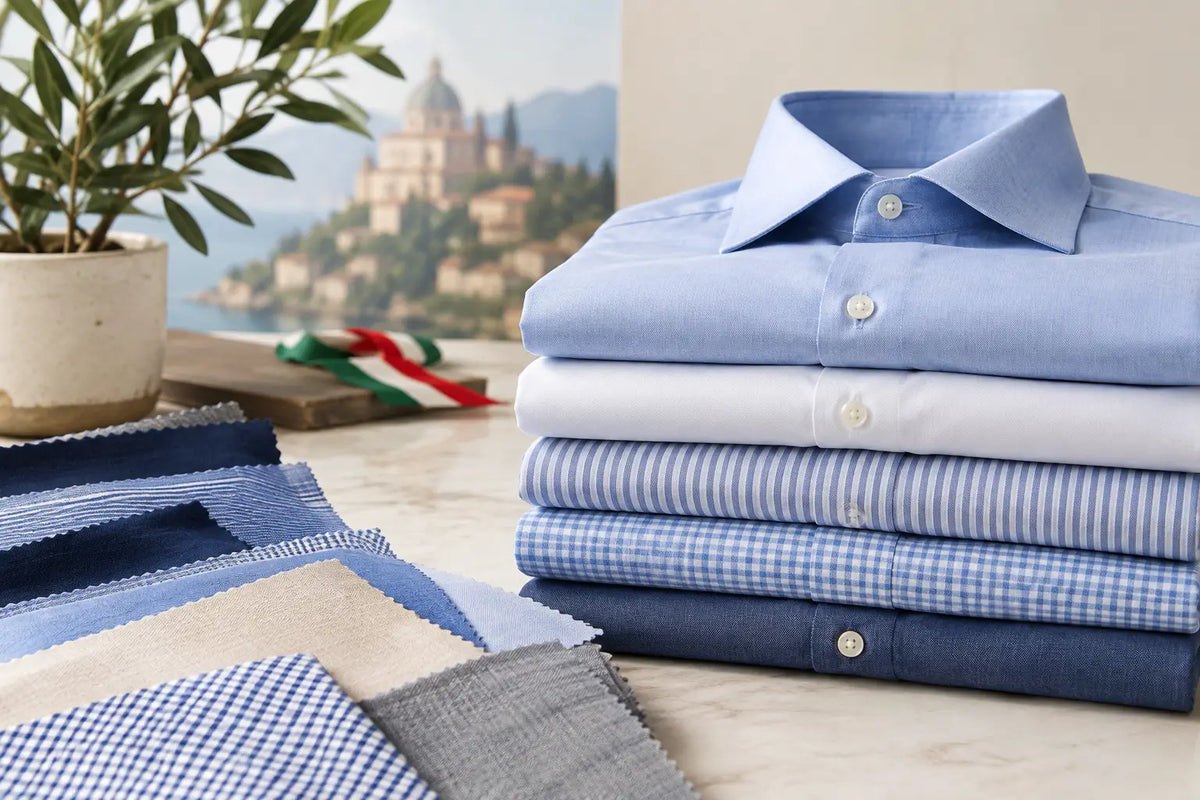
A Guide to Italian Shirt Fabrics for Men
A shirt can have a sharp collar, clean contrast trim, and a modern silhouette, but fabric determines how it performs by 3 p.m. This guide to Italian shirt fabrics helps you choose shirts that hold their shape, feel comfortable through long days, and look right from the office to dinner.
Italian shirting has earned its reputation through careful yarn selection, refined weaving, and finishing techniques that create a softer hand and more polished surface. Still, “Italian fabric” is not one fabric type. The right choice depends on the level of formality you need, the weather, your preference for texture, and whether all-day stretch is non-negotiable.
What Makes Italian Shirting Different?
The difference often starts before the fabric reaches the loom. Quality mills pay close attention to fiber length, yarn twist, weave density, and finishing. The result can be a shirt that feels smooth without becoming thin, stays breathable without looking casual, and develops character with wear.
A fine Italian cotton fabric is also designed with visual restraint in mind. The color is typically rich, the pattern is clean, and the surface has enough depth to look considered under office lighting or at an evening event. That refinement is valuable when your shirt needs to do more than fill a gap in the wardrobe.
It is worth separating the country of origin from the weave itself. Poplin, twill, Oxford, and linen describe constructions or fibers that can be made anywhere. Italian mills are known for producing elevated versions of those classics, often with more considered finishing and a more luxurious feel.
Guide to Italian Shirt Fabrics: The Core Choices
Poplin for crisp, polished dressing
Poplin is a smooth, tightly woven cotton fabric with a light, clean finish. It is the natural choice for client meetings, presentations, formal business settings, and any occasion when you want a shirt to look precise. White, light blue, and subtle striped poplin shirts are foundational because they pair easily with chinos, performance pants, or a tailored jacket.
Its advantage is structure without heavy weight. Poplin usually feels cool and looks crisp, especially when freshly pressed. The trade-off is that it can show wrinkles more readily than a textured weave, and a very fine poplin may feel less forgiving if you prefer a more relaxed, casual look.
Twill for depth and easy wear
Twill is identified by its subtle diagonal weave. That diagonal line gives the fabric more texture, a softer drape, and often a little more wrinkle resistance than poplin. It is an excellent fabric for men who want a business-casual shirt that still looks elevated after a commute, a full calendar, and dinner afterward.
A twill shirt has visual depth without being loud. It works particularly well in blue, navy, charcoal, and rich seasonal colors, where the weave gives the color dimension. Twill can be slightly warmer than poplin, so it is often strongest for year-round office wear rather than the hottest days of summer.
Oxford for approachable business casual
Oxford cloth has a more visible basket-like texture than poplin or twill. It feels substantial, wears well, and brings a more relaxed character to button-up dressing. An Oxford shirt is ideal when the dress code calls for polish but not formality: casual Fridays, creative offices, travel days, weekend lunches, and smart evenings out.
Because the texture is more pronounced, Oxford looks especially good with chinos and casual trousers. It is less formal than a smooth poplin shirt, which is exactly the point. Choose it when you want the ease of a casual shirt with the collar, fit, and finish of a refined wardrobe essential.
Linen for warm-weather comfort
Linen is prized for breathability, airflow, and its naturally relaxed texture. It is the right fabric for hot-weather events, resort travel, outdoor dinners, and summer weekends when a traditional dress shirt feels too restrictive. A well-cut linen shirt looks intentional with tailored shorts, lightweight trousers, or chinos.
The characteristic wrinkle of linen is part of its appeal. It should look lived-in, not perfectly pressed. If your work environment requires a crisp appearance from morning through evening, linen may not be your primary office fabric. For warm climates and off-duty polish, however, it is difficult to beat.
Cotton stretch for movement without compromise
Cotton stretch fabrics combine the familiar look and breathability of cotton with a small amount of stretch fiber. This category is built for movement: reaching for a presentation screen, getting in and out of a car, traveling, or simply sitting through a long workday without feeling pulled across the shoulders or chest.
The best stretch shirts do not advertise their performance at first glance. They retain a clean, tailored appearance while offering flexibility where it matters. For men who have moved away from stiff dress shirts but still want a polished button-up, a contemporary-fit stretch shirt is often the most practical everyday option.
Stretch does require a balanced approach. Too much synthetic content can reduce breathability and change the natural hand of cotton. Look for a fabric that uses stretch as a functional enhancement, not as a substitute for quality construction.
Choose Fabric by the Way You Dress
The most useful shirt fabric is not necessarily the finest or the lightest. It is the one that matches the demands of your week.
For a traditional office, client-facing role, or formal event, start with crisp cotton poplin. It presents cleanly under a jacket and gives a tie or collar enough structure to look composed. Twill is the stronger all-around choice when your work wardrobe shifts between meetings, travel, and after-hours plans.
For business-casual offices, Oxford and stretch cotton are hard-working options. Oxford provides texture and durability, while stretch cotton brings comfort without sacrificing a sharp line. Both pair naturally with performance pants and refined chinos, making them easy to repeat throughout the week without looking uniform.
For heat, linen should lead the rotation. A linen or linen-blend shirt keeps the outfit breathable and relaxed, though it asks you to accept more texture and natural creasing. That is a fair exchange when temperatures rise.
Fabric Weight, Texture, and Fit Matter Together
A fabric never works in isolation. The same cotton poplin can feel completely different in a slim, restrictive cut than it does in a contemporary fit that gives the torso and shoulders room to move. Fabric and fit should support each other.
Lightweight fabrics are cooler and cleaner under a jacket, but they may reveal more wrinkles or require more attention to opacity. Heavier fabrics feel more substantial and can drape better, but they may be less comfortable in warm weather. Midweight cotton twill and refined Oxford cloth are reliable choices for men who want one shirt category that handles most of the year.
Texture also changes the message of an outfit. Smooth fabrics read more formal. Visible texture reads more relaxed and approachable. If you are building a compact shirt wardrobe, include both: smooth poplin for sharper moments and textured twill or Oxford for everyday versatility.
Care That Protects the Fabric
Premium shirting rewards simple, consistent care. Wash cotton shirts in cool water, avoid overloading the machine, and remove them promptly to limit deep wrinkles. Hang drying is gentler on fibers and stretch components, while a low dryer setting can work when time is limited.
Press shirts while they are slightly damp for the cleanest finish. Focus on the collar, placket, cuffs, and front panel first, since those areas shape the overall impression. Linen does not need to be pressed into submission. A light press that leaves some natural texture usually looks more confident than a perfectly flat finish.
Avoid treating every shirt the same way. A crisp poplin shirt benefits from a sharper press, while Oxford, linen, and knit-stretch fabrics should retain some of their natural ease. Care should preserve the intended character of the fabric, not erase it.
A well-chosen shirt fabric makes getting dressed faster because the shirt already suits the setting. Build around the fabrics you will actually wear, then let fit, color, and detail do the rest. That is how a shirt becomes more than a basic: it becomes the dependable foundation of a sharper everyday wardrobe.


Leave a comment
This site is protected by hCaptcha and the hCaptcha Privacy Policy and Terms of Service apply.