

A Professional's Guide to Non-Iron Shirts
A shirt can look perfectly pressed at 8 a.m. and lose its authority by lunch. That is exactly why this guide to non iron shirts matters for men who move between meetings, commutes, client lunches, and after-hours plans. The right non-iron shirt keeps a cleaner line through a full day, reducing the time spent at the ironing board without asking you to settle for a stiff or synthetic-looking finish.
A non-iron shirt is not simply a convenience purchase. It is a wardrobe tool. When fabric, fit, collar construction, and care are working together, it becomes one of the most dependable pieces in a business-casual rotation.
What Makes a Non-Iron Shirt Different?
Non-iron shirts are typically made from cotton that has been treated to resist wrinkles after washing and wearing. The treatment helps the fibers return closer to their original shape, so the shirt holds a crisp, smooth appearance with far less effort than untreated cotton.
That does not mean every non-iron shirt feels or performs the same. A quality version should still look like a refined cotton shirt, not like a slick performance layer. It should feel soft against the skin, retain enough structure at the collar and cuffs, and maintain its shape from morning to evening.
The trade-off is worth understanding. Traditional, untreated cotton can develop a more natural character over time and may feel exceptionally breathable, but it generally requires pressing for a polished result. A non-iron shirt offers greater convenience and consistency, especially when your schedule leaves little room for garment maintenance. For most professional wardrobes, there is room for both, but non-iron styles earn their place through everyday reliability.
Choosing the Right Fabric and Feel
The best starting point is fabric composition. Cotton remains the benchmark for a shirt that looks elevated, feels breathable, and works across seasons. A finely woven cotton non-iron shirt offers a sharp surface and professional finish, making it a strong choice for the office, presentations, dinners, and events where appearance carries weight.
Fabric weight matters as much as fiber content. Lightweight cotton is cooler and easier to layer under a blazer, though it may show wrinkles slightly more than a denser weave. A midweight fabric usually provides the most versatile balance: enough body to hold its shape, enough breathability for all-day comfort, and enough substance to wear confidently on its own.
Stretch can make a meaningful difference, particularly for men who spend long hours seated, travel often, or prefer a closer fit through the chest and shoulders. A small amount of stretch helps the shirt move with you and recover after movement. The goal is controlled comfort, not a shirt that feels overly casual or loses its tailored silhouette by the end of the day.
Pay attention to the finish as well. A premium non-iron fabric should have a clean, matte-to-subtle-luster appearance. Excessive shine can make even a well-fitted shirt look less refined. Look for fabric that appears polished in natural light and remains substantial enough that the undershirt beneath it does not become the focal point.
Fit Is What Makes the Shirt Look Expensive
Wrinkle resistance can improve a shirt's appearance, but it cannot correct a poor fit. A shirt that pulls at the buttons, balloons at the waist, or collapses around the collar will look unfinished regardless of its fabric technology.
Start with the shoulders. The shoulder seam should sit at the edge of your natural shoulder, not droop down the arm or cut inward. From there, choose a contemporary or tailored fit based on your build and how you prefer to dress. A contemporary fit provides a clean profile with room to move, while a tailored fit creates a more defined shape through the torso.
The collar deserves equal attention. It should sit neatly around the neck with enough room for comfort, but not so much space that it gaps when worn open. A structured collar frames the face, supports a tie when needed, and gives a button-up shirt its polished presence even when styled without a jacket.
Sleeve length is a smaller detail with a major visual impact. Cuffs should end at the wrist bone, allowing a clean break when your arms are at rest. If you wear a blazer, roughly a quarter to a half inch of cuff showing creates a balanced, intentional finish.
A Guide to Non-Iron Shirts by Occasion
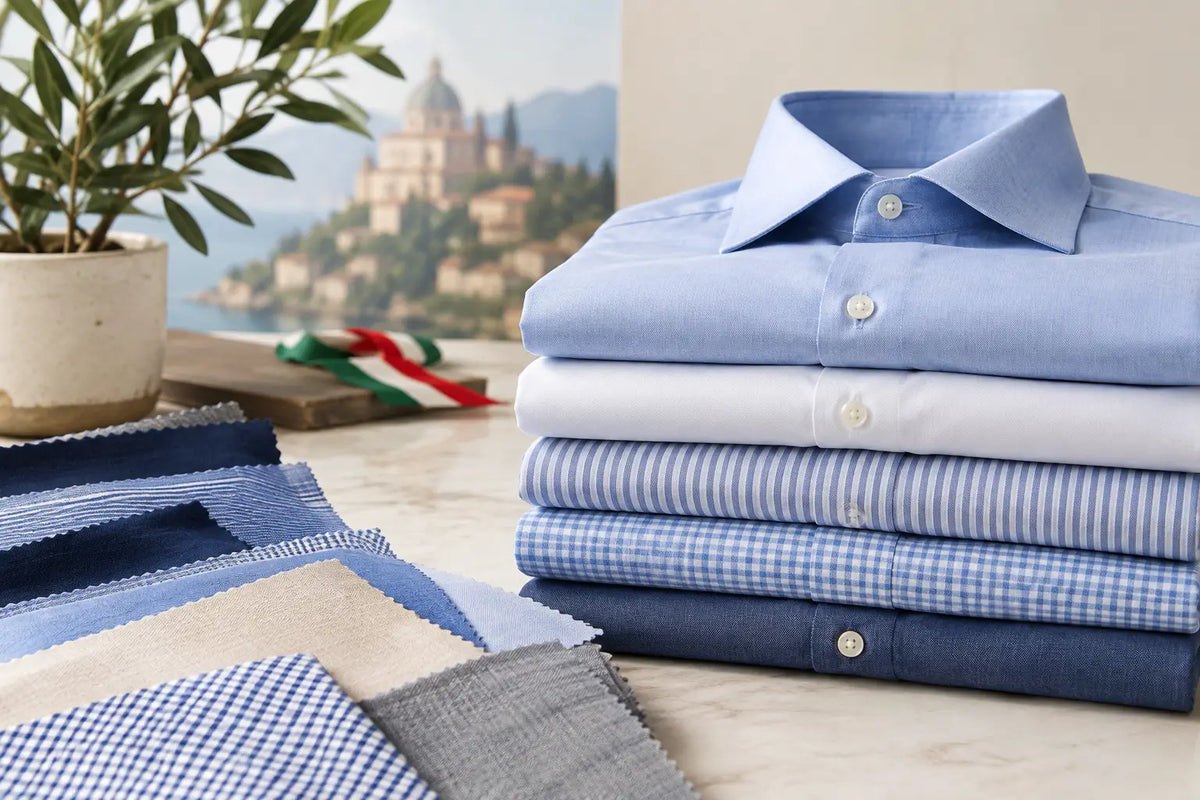
A light blue or white non-iron dress shirt is the foundation of a professional wardrobe. White is direct, formal, and easy to pair with navy, charcoal, gray, and black tailoring. Light blue feels slightly more relaxed while remaining appropriate for nearly every office setting. Both work with chinos as easily as they work with dress pants.
For business-casual offices, expand into subtle patterns such as fine checks, restrained stripes, or textured solids. These add depth without competing with the rest of the outfit. Pair them with stretch chinos and leather loafers for a look that is comfortable enough for a long workday but still sharp enough for a client-facing role.
Darker shades and richer patterns work well for dinner, social events, and days when a traditional white shirt feels too formal. Keep the fit precise and the styling simple. A navy, black, or deep burgundy button-up can carry an outfit with dark denim or tailored trousers, especially when the collar and cuffs retain their structure.
For travel, prioritize a non-iron shirt with stretch and a versatile color. A shirt that can be worn tucked in with trousers for a meeting, then untucked with chinos for dinner, earns valuable space in a carry-on. The practical benefit is clear: less packing, less maintenance, and fewer compromises once you arrive.
How to Wash Non-Iron Shirts Without Reducing Performance
Non-iron treatment reduces the need for pressing, but the shirt still needs proper care. Wash it promptly after wear, especially in warm weather, since allowing perspiration and body oils to sit can affect the fabric over time. Turn darker shirts inside out to help preserve color and wash similar colors together.
Use cold or warm water and a mild detergent. Very hot water can be unnecessarily harsh on cotton fibers and may shorten the life of the wrinkle-resistant finish. Avoid overloading the machine, because tightly packed garments emerge with deeper creases that even a non-iron finish cannot fully prevent.
Remove shirts from the dryer while they are still slightly damp, then place them on a quality hanger and smooth the collar, placket, cuffs, and sleeves by hand. This simple step is the difference between a shirt that looks ready to wear and one that needs a last-minute touch-up. If you prefer to dry on a hanger, reshape the collar and button the top button to help it maintain a clean line.
Skip heavy starch. Non-iron shirts already have the structure they need, and excess starch can leave fabric feeling rigid. When a stubborn crease appears, a quick pass with a warm iron or a few minutes of steam is usually enough. Convenience does not mean zero care. It means better results from less effort.
Details That Elevate Everyday Shirts
Small construction choices determine whether a non-iron shirt feels standard or distinguished. A well-built collar maintains its shape without feeling restrictive. Clean stitching, durable buttons, and neatly finished cuffs help the shirt hold up through repeated wear and laundering.
Contrast detailing can add personality when it is used with restraint. A subtle contrast inside the collar or cuff brings dimension to an otherwise classic shirt, giving you an extra point of distinction when sleeves are rolled or the collar is worn open. Dual cuffs can offer similar versatility, moving easily between a more traditional work setting and a relaxed evening look.
At LEVINAS, the strongest business-casual shirts combine these finishing details with contemporary fits and comfort-minded fabrics. That combination matters because a polished wardrobe should work hard without looking like it is trying too hard.
Build a Rotation That Makes Mornings Easier
Rather than buying several versions of the same shirt, build a focused rotation around the situations you actually dress for. Start with white and light blue, then add a subtle pattern and a deeper solid. Four to six quality non-iron shirts can cover most workweeks when they are rotated properly and paired with different trousers, jackets, and shoes.
Keep one shirt reserved for higher-stakes moments: interviews, presentations, formal client meetings, or events where a jacket may come off. Choose a crisp white or pale blue style with a precise collar and minimal visual distraction. That shirt becomes the dependable answer when you need to look prepared without overthinking the outfit.
A great non-iron shirt should give you back time, not demand more of it. Choose one that fits with intention, feels comfortable through a full day, and still looks composed when the calendar runs longer than expected.


Leave a comment
This site is protected by hCaptcha and the hCaptcha Privacy Policy and Terms of Service apply.