
How to Match Chinos With Shirts for Any Day
Chinos earn their place as the foundation of a modern business-casual wardrobe because they can move between the office, dinner, and weekend plans without looking out of place. Knowing how to match chinos with shirts comes down to a few smart decisions: color contrast, the level of formality, fabric texture, and a fit that keeps the entire outfit looking intentional.
The right pairing should feel easy, not overworked. A crisp button-up shirt and tailored chinos create a polished profile for the office. A soft knit-stretch shirt with clean-cut chinos brings the same refinement to a more relaxed setting. Start with versatile colors, then use pattern and texture to add personality.
How to Match Chinos With Shirts by Color
Color is the fastest way to determine whether an outfit looks sharp or simply thrown together. Neutral chinos offer the most flexibility, while darker shades create a more dressed-up foundation. The goal is not to match every piece exactly. It is to create enough contrast that the shirt and trousers each have their own presence.
Navy Chinos
Navy chinos are among the most useful options a man can own. They pair naturally with white, light blue, pale pink, and soft gray shirts for work. A white shirt offers clean contrast and is reliable for presentations, business lunches, and evening reservations. Light blue is slightly more relaxed but equally professional.
For a richer look, pair navy chinos with a burgundy, muted olive, or small-scale patterned shirt. Keep the pattern controlled if the pants are dark. A shirt with subtle contrast detailing at the collar or cuffs adds distinction without making the outfit feel busy.
Khaki and Stone Chinos
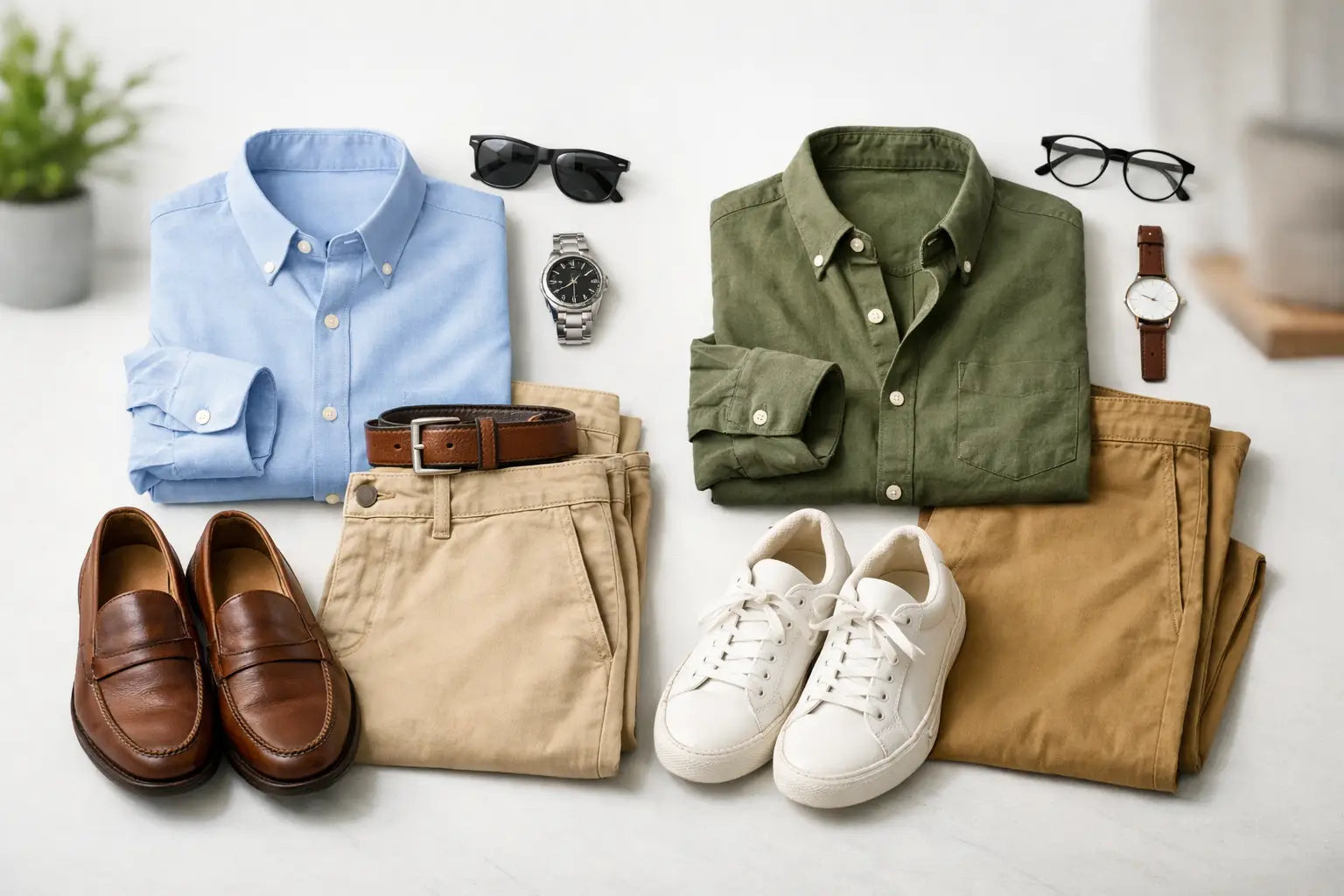
Khaki chinos have a warmer, more casual character. They work especially well with blue shirts, from pale blue poplin to deeper chambray-inspired tones. White, navy, forest green, and burgundy also create strong pairings.
Avoid shirts that sit too close to the color of the pants unless there is a clear difference in shade or texture. A beige shirt with khaki chinos can look flat. A deep navy shirt with khaki chinos, on the other hand, gives the outfit definition and a confident business-casual edge.
Gray Chinos
Gray chinos are clean, versatile, and easy to dress up. Light gray works with white, blue, navy, black, and soft pastels. Charcoal chinos look more formal and perform well with a white dress shirt, light blue shirt, or refined micro-print.
Because gray is neutral, it can support a more expressive shirt. A subtle floral print, fine check, or contrast-trim button-up can become the focal point while the pants keep the outfit grounded. For professional environments, stay with smaller patterns and understated colors.
Black Chinos
Black chinos create a sleek, modern base, particularly for dinners, events, and offices with a sharper dress code. White and light gray shirts are the easiest choices, while black-on-black can work for evening if the fabrics have enough contrast. A black chino paired with a dark navy shirt may appear too heavy in low light, so use a lighter shirt or add a textured layer when possible.
Black also pairs well with bolder seasonal colors such as deep red, emerald, or cobalt. The result should still feel tailored, not trend-driven.
Match the Shirt Fabric to the Occasion
Color matters, but fabric is what determines the outfit's overall character. Chinos sit between denim and dress trousers, so they can support several shirt styles. The key is choosing fabrics that speak the same visual language.
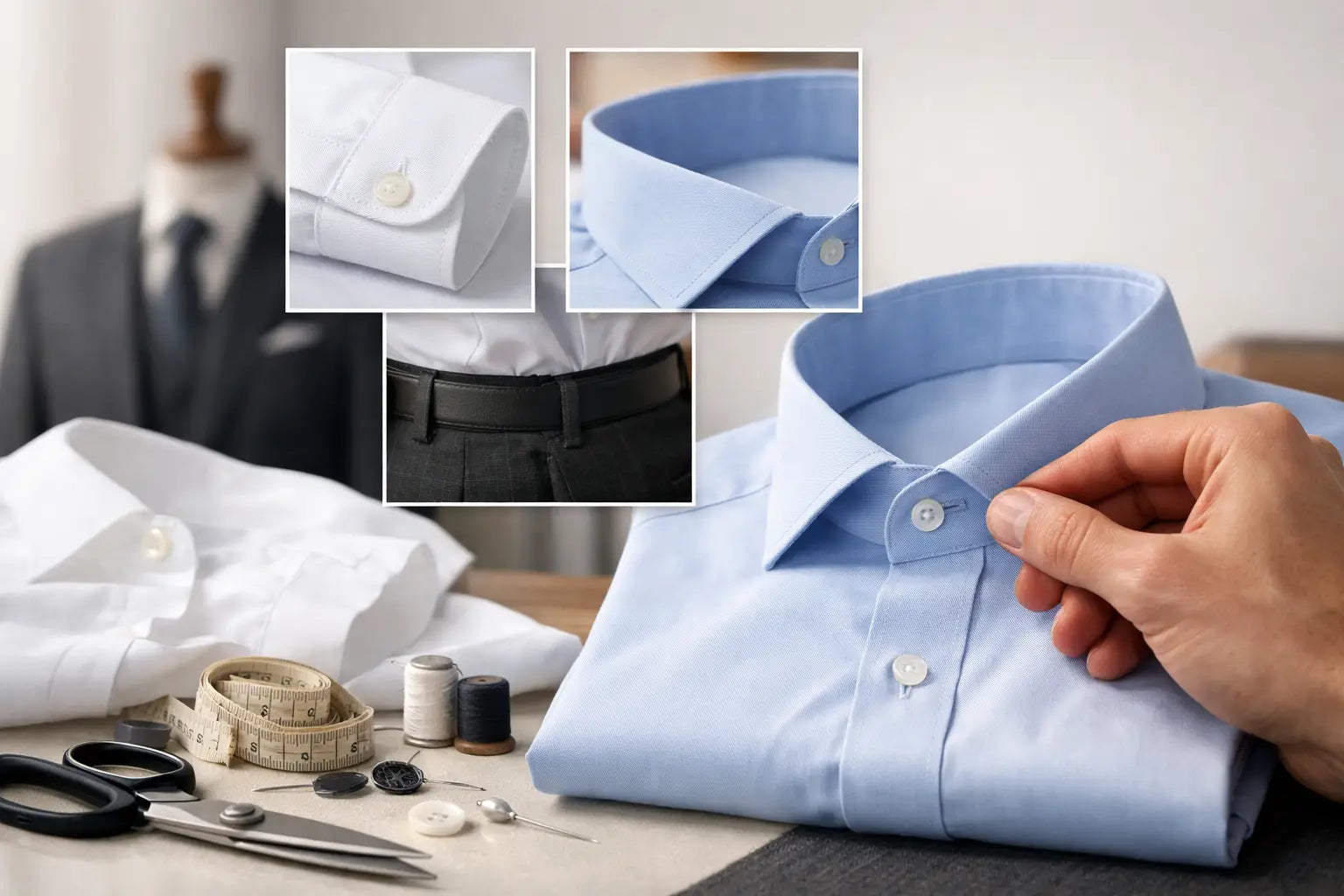
A smooth cotton dress shirt is the right choice when chinos need to look office-ready. Its clean surface complements the structured appearance of tailored trousers and works well tucked in with a belt. Choose a contemporary fit that follows the body without pulling across the chest or bunching at the waist.
Cotton knit-stretch shirts bring a more flexible, modern approach to business casual. Their softness and mobility make them ideal for long workdays, travel, and social plans after the office. With super-stretch chinos, they create a polished outfit that feels considerably less restrictive than traditional dresswear.
Textured shirts, such as brushed cotton or a refined casual weave, suit weekends and relaxed dinners. Pair them with stone, olive, or navy chinos. The texture adds depth, so keep the color palette simple. A textured navy shirt with tan chinos is a dependable example of casual refinement.
Choose Patterns With Purpose
A patterned shirt can elevate solid chinos, but the scale of the pattern should fit the setting. Small checks, fine stripes, and understated prints are the most versatile because they look composed under a blazer yet remain interesting without one.
If your chinos are solid, which they usually should be, you have room for a patterned shirt. Just avoid competing patterns elsewhere in the outfit. A checked shirt, patterned pocket square, loud belt, and statement shoes all at once dilute the clean lines that make chinos effective.
For the office, a light blue micro-check shirt with navy or gray chinos looks professional without feeling predictable. For a more relaxed setting, a subtle geometric print with olive or khaki chinos adds personality while keeping the outfit mature. If the shirt has contrast details, let those details do the work and keep accessories restrained.
Fit Is What Makes the Pairing Look Expensive
Even the best color combination loses impact when the fit is off. Chinos should sit comfortably at the waist, follow the leg cleanly, and taper enough to avoid excess fabric around the ankle. They should not be skin-tight, but they also should not collapse into loose folds over the shoe.
Your shirt should complement that profile. A contemporary or tailored fit creates a balanced silhouette with slim or straight chinos. If the shirt is too full, the outfit can look dated. If it is too tight, it can make stretch fabrics appear strained rather than refined.
Tucking is another important decision. A tucked-in dress shirt with chinos is the strongest choice for meetings, client-facing work, and occasions where a blazer may be added. An untucked shirt works when it has a shorter, cleanly finished hem and the occasion is more relaxed. The shirt should fall around mid-fly, not extend far below it.
A half-tuck is rarely the best answer for this wardrobe category. Clean, deliberate styling always looks stronger.
Build Reliable Chino and Shirt Combinations
When time is limited, rely on combinations that consistently deliver. A white shirt with navy chinos is crisp and adaptable. A light blue shirt with gray chinos is polished for nearly any office. A navy shirt with khaki chinos offers depth for casual dinners, while a subtle patterned shirt with charcoal chinos handles events that call for more character.
Consider the shoes before you leave. Brown leather loafers, derbies, or clean leather sneakers pair naturally with khaki, navy, and gray chinos. Black shoes are strongest with black or charcoal chinos, though a dark brown shoe can work well with navy. The belt should generally match the shoe color, especially in professional settings.
For cooler weather, add a navy blazer, lightweight quarter-zip, or structured overshirt. The shirt and chinos should still look complete after the layer comes off. That is the mark of a versatile outfit.
Dress Chinos Up or Down Without Changing the Foundation
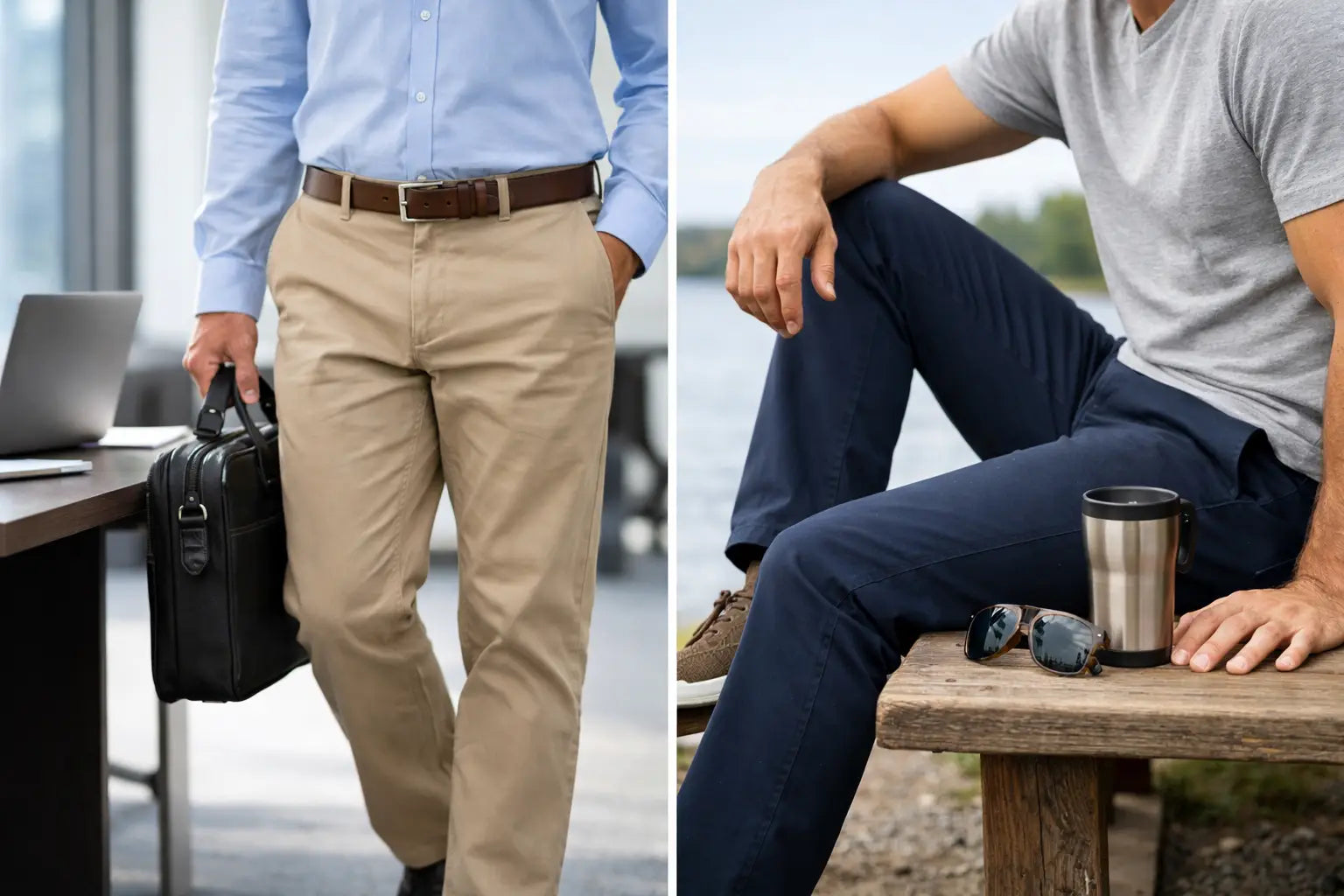
The same chinos can serve very different roles depending on the shirt and finishing pieces. For a sharper business-casual look, choose dark chinos, a crisp button-up, leather belt, and dress shoes. Tuck the shirt and keep the colors classic.
For a relaxed but elevated look, wear stretch chinos with a knit shirt or a refined casual button-up. Leave the shirt untucked when the hem is designed for it, and finish with minimal sneakers or loafers. LEVINAS shirts and stretch chinos are designed around this kind of flexibility: polished enough for a professional setting, comfortable enough to wear well beyond it.
The strongest chino outfits do not depend on complicated rules. They rely on clothes that fit well, colors that create clear contrast, and fabrics suited to where the day takes you. Build around a few dependable combinations, then let thoughtful details make them your own.

Leave a comment
This site is protected by hCaptcha and the hCaptcha Privacy Policy and Terms of Service apply.